
Reviewed by Josh N · Updated August 25, 2026 · How we verify
Reported Phenomena
- Familiar spirit Redcap Sly
- Ghost of Mary Stuart
- Sinister atmosphere reported
Reported by visitors & local legend. Stories, not verified claims.
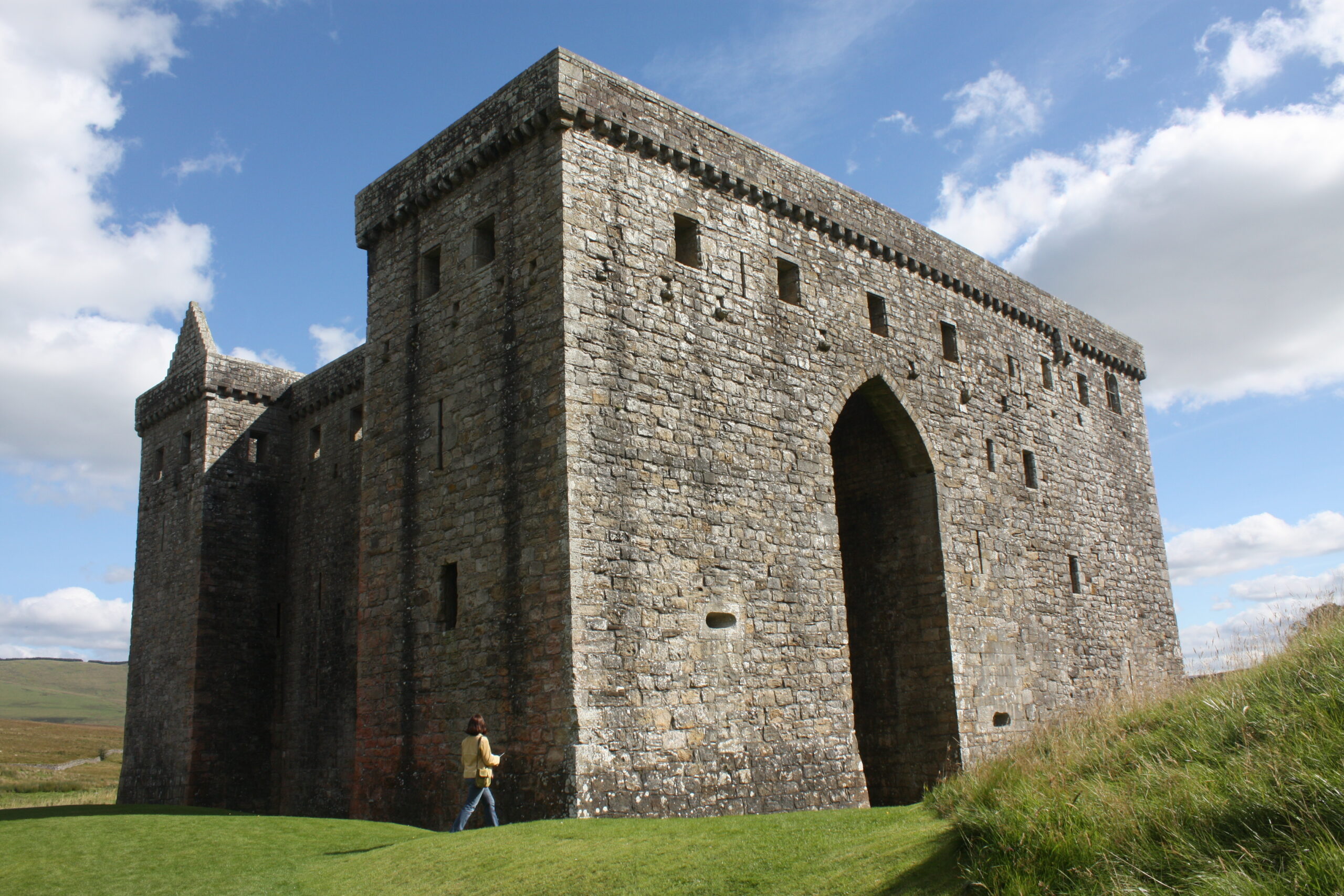
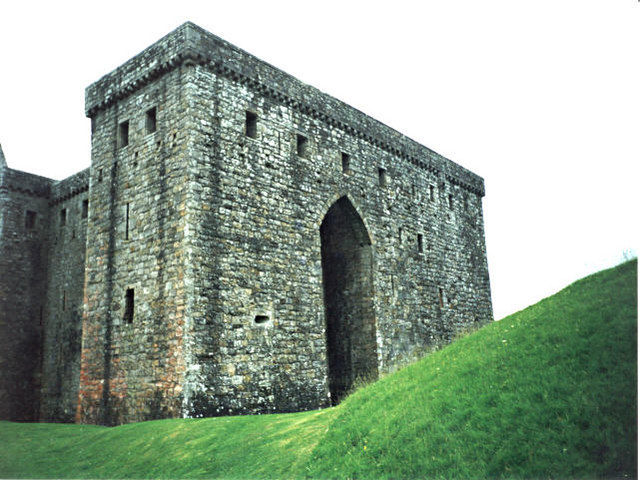
Few ruins earn their reputation as squarely as the haunted Hermitage Castle, a squat, blackened block of masonry standing alone in the valley of the Hermitage Water, part of Liddesdale in Roxburghshire. It is a semi-ruined castle in the border region of Scotland, and it has a reputation, both from its history and its appearance, as one of the most sinister and atmospheric castles in the country. Nothing about the setting softens it: no village, no shelter, just grazing land, the burn and the hills.
Quick orientation for anyone planning a trip: the castle is cared for by Historic Environment Scotland, an executive agency of the Scottish Government, and it opens to visitors from 1 April to 31 October each year, closing for the winter season. The castle, together with a series of ancillary features, is protected as a scheduled monument.
Guardhouse of the Bloodiest Valley in Britain
The name is thought to derive from the Old French l’armitage, meaning guardhouse, which fits the building far better than any notion of a hermit’s cell. It was known as the guardhouse of the bloodiest valley in Britain, and also as the “Strength of Liddesdale”. That was not a poetic flourish. This was reiver country, and the castle existed to hold a frontier that changed hands with the fortunes of raids, sieges and royal favour.
It was supposedly built by one Nicholas de Soulis around 1240, in a typical Norman motte and bailey pattern, and stayed in his family until approximately 1320.
William de Soulis, the Lead Sheet and the Ninestane Rig
The de Soulis story is where record and legend part company, and it is worth being blunt about which is which. On the record: William de Soulis forfeited the castle because of suspected witchcraft and the attempted regicide of King Robert I of Scotland, and he died a prisoner in Dumbarton Castle.
The legend is far better known and far less true. It holds that Soulis’s tenantry, having suffered unbearable depredations, arrested him and, at the nearby Ninestane Rig, a megalithic circle, had him encased in a lead sheet and boiled to death. It is a tale that has stuck to the stones for centuries, and it feeds directly into the castle’s ghostlore.
Douglas Ambition and the Starving of Sir Alexander Ramsay
The documented cruelty here needs no embellishment. In 1338 the then incumbent, the Englishman Sir Ralph de Neville, was besieged by Sir William Douglas, the Knight of Liddesdale, known as the “Flower of Chivalry”. It was at Hermitage that Douglas imprisoned and starved to death Sir Alexander Ramsay of Dalhousie, his competitor for royal favour.
After the Battle of Neville’s Cross and Liddesdale’s capture by the English, the castle fell into English hands for a time and was given to the care of William Dacre, 2nd Baron Dacre. Liddesdale’s death was brought about by a near kinsman, William Douglas, 1st Earl of Douglas, who enabled the construction of most of the present building, possibly with the help of John Lewin, master mason at Durham Cathedral. The castle remained with the Black Douglases until 1455, when James Douglas, 9th Earl of Douglas, was forfeited, never to return to Scotland.
The Hepburns, Bothwell and Mary’s Ride from Jedburgh
On 6 March 1492 Patrick Hepburn, 1st Earl of Bothwell, had a charter of the lands and lordship of Liddesdale, including Hermitage Castle, on the resignation of the same by Archibald Douglas, Earl of Angus. In December 1562 Mary, Queen of Scots sent Adam MacCulloch, Marchmont Herald, to the castle demanding its surrender to John Stewart of Traquair.
The episode the guides all reach for came later. James Hepburn, 4th Earl of Bothwell, held the castle when he was injured by John Elliot of Park: Bothwell had captured Elliot with other border reivers and brought him to the Hermitage, Elliot tried to escape, Bothwell shot him with his pistol, and the wounded man managed to injure Bothwell with a two-handed sword. Mary made a famous marathon journey on horseback from Jedburgh to visit him there, only a few weeks after the birth of her son.
Bothwell’s end came a long way from Liddesdale. After Mary’s forced abdication he fled to Norway, was arrested for breach of marriage contract with Anna Throndsen, and was imprisoned at Dragsholm Castle in Denmark, where he died insane and in appalling conditions.
The lordship kept changing hands. Thomas Kerr of Ferniehirst was made keeper of Liddesdale and Hermitage Castle in 1584. Francis Stewart, 1st Earl of Bothwell, was arrested, tried, gaoled and forfeited in 1591 for his supposed involvement with the infamous North Berwick Witches, pardoned in 1593, then attainted again by Act of Parliament on 21 July 1593. The castle then went to Sir Walter Scott of Buccleuch, the “bold Buccleuch”, a notorious border reiver who led the daring attack on Carlisle Castle to rescue Willie Armstrong of Kinmont.
Redcap Sly and What Local Ghostlore Claims
The reported haunting is narrow and old rather than sprawling and modern. Hermitage Castle is the subject of local ghostlore where it is reputed to be haunted by two figures: Redcap Sly, said to be de Soulis’s familiar spirit, and Mary, Queen of Scots, whose one recorded visit has been enough to attach her name to the ruin for good.
These are traditions, not verified events, and the source material records them as stories told locally rather than as documented encounters. What visitors do reliably report is the atmosphere, and the castle’s standing as one of the most sinister and atmospheric in Scotland owes as much to its bare, brutal silhouette in an empty valley as to anything spectral.
Planning a Visit to Hermitage Castle in Liddesdale
The castle became obsolete after the Union of the Crowns in 1603 and fell into disrepair, and by the turn of the eighteenth century it was a ruin. Some repairs were carried out in 1820 by the fifth Duke of Buccleuch. It remained a property of the Scotts until 1930, when it was handed over to the care of the nation.
Today it is open from 1 April to 31 October, closed through the winter, and access is free-standing rather than urban: this is a remote valley, so plan the drive and check Historic Environment Scotland’s visitor guide for opening times before setting off. Go late in the day if you want the ruin to look the way its reputation suggests.
Address: Hermitage Castle, Liddesdale, Roxburghshire, Scottish Borders
See Hermitage Castle for Yourself
Sources
- The Shadowlands: Famous Hauntings
- 4. Redcaps
- historicenvironment.scot
- Hermitage Castle & Mary, Queen of Scots
- Hermitage Castle Visitor Guide: History, Getting There & Tips
- Wikipedia: Hermitage Castle
Frequently Asked Questions
Where is Hermitage Castle Liddesdale Ruin located?
Hermitage Castle Liddesdale Ruin is located at Hermitage Castle, Liddesdale, Roxburghshire, Scottish Borders.
Can you visit Hermitage Castle Liddesdale Ruin?
Hermitage Castle Liddesdale Ruin is open to the public. Always follow posted rules and respect private property.
Reader sightings
Nobody has reported anything here yet. If you have been, you would be the first.
Report your own visit to Boiled in Lead by Legend: Haunted Hermitage Castle
How haunted is this place?
Be the first to rate
Leave a Reply