
Reviewed by Josh N · Updated August 26, 2026 · How we verify
Reported Phenomena
- Blue Boy apparition
- Radiant boy sightings
- Human bone remains
Reported by visitors & local legend. Stories, not verified claims.
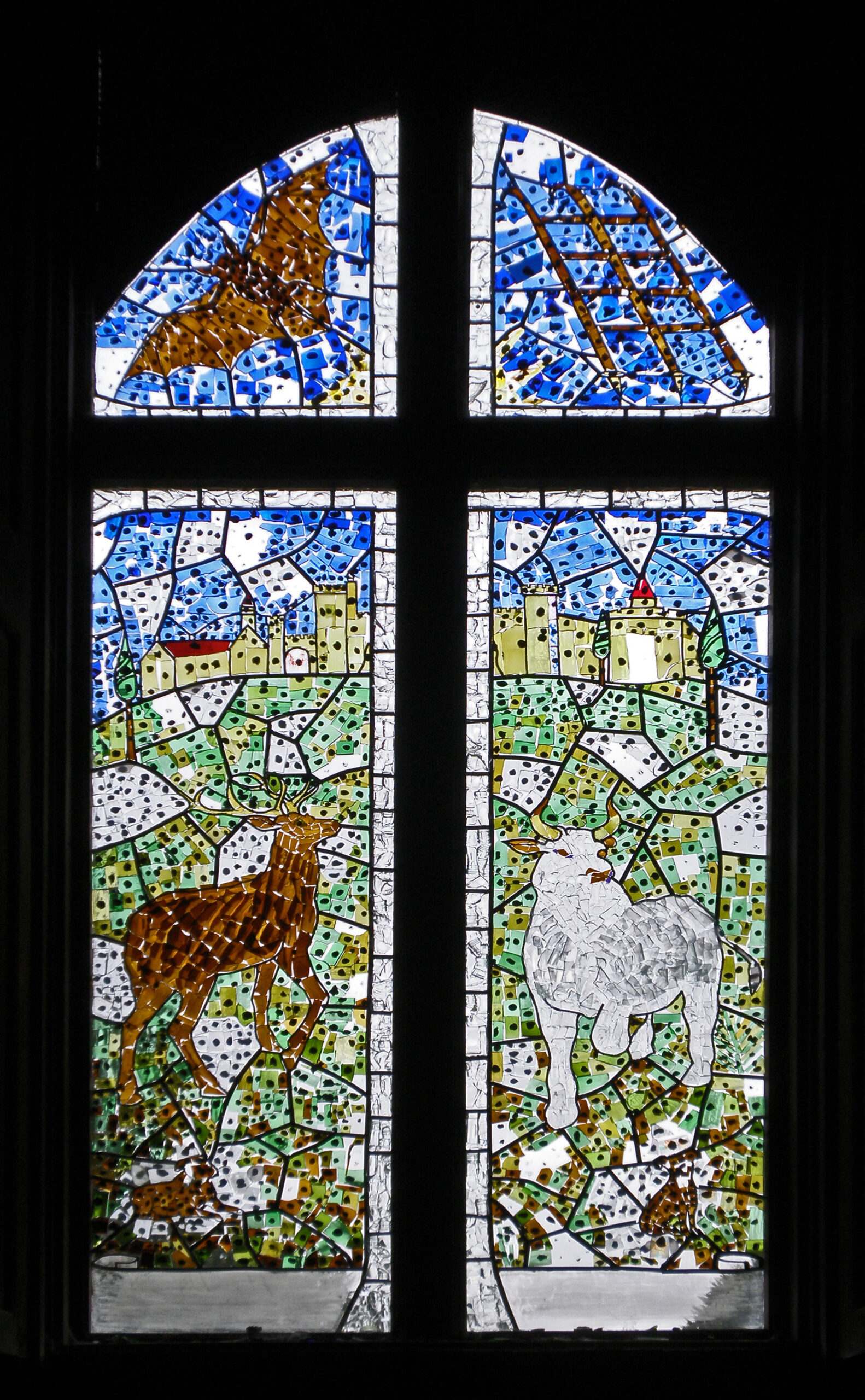
Talk of Chillingham Castle ghosts almost always begins with a boy in blue and ends with a marketing claim: the owners of this medieval castle in the village of Chillingham, in the northern part of Northumberland, promote it as the most haunted castle in Britain. That is a boast rather than a finding, and it is worth saying so early. What is not in dispute is the building itself, a Grade I listed stronghold that spent centuries on the frontier between two nations at war, was used as an army barracks in the Second World War, and was nearly lost to weather and neglect before a single family took it on again in the 1980s.
Quick orientation: the castle sits inland in north Northumberland, it was the seat of the Grey and Bennet families, later Earls of Tankerville, from the 15th century until the 1980s, and a large enclosed park in the grounds holds the rare Chillingham cattle, a herd of roughly 130 head of white cattle. Sections of the castle are open to the public, and eight apartments in the castle and its outbuildings are let as holiday accommodation.
From Late 12th Century Monastery to Border Fortress
The site began as a monastery in the late 12th century. Its later importance was entirely military: Chillingham stood on the border between two feuding nations, serving as a staging post for English armies moving into Scotland while being repeatedly attacked and besieged by Scottish armies and raiding parties heading south. There was a moat, and in places the fortifications reached 12 feet, about 3.7 metres, in thickness.
In 1298 Edward I stayed here on his way north to fight a Scottish army led by William Wallace, and a glazed window in a frame was specially installed for the king, a genuine rarity in a building of that kind at the time. In 1344 Edward III issued a Licence to crenellate, permitting battlements and effectively promoting the stronghold to a fully fortified castle of quadrangular form.
Royal Guests, a Filled Moat and a Banquet Hall
Anne of Denmark, Queen of Scotland, and her children broke their journey to London at Chillingham on 6 June 1603, and a poem celebrating her welcome there was probably written by her secretary, William Fowler. In 1617 James I, whose reign unified the crowns of England and Scotland, stayed at the castle while travelling between his two kingdoms.
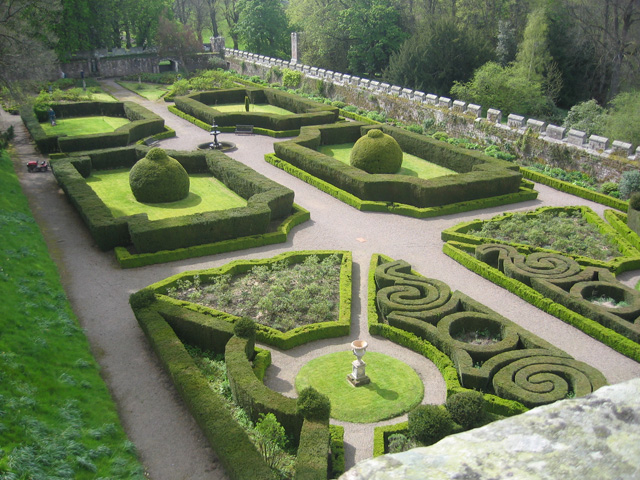
Peace was the making and the unmaking of the place. With the union of the crowns the need for a military stronghold in the area declined, the moat was filled, and the battlements were converted into residential wings. A banquet hall and a library were added. The grounds were landscaped in the 18th and 19th centuries, work that included the hand of Sir Jeffry Wyattville, though the once extensive park is now under separate ownership from the castle. The Prince and Princess of Wales stopped here on their way to Scotland in 1872.
Barracks, Stripped Lead and the Wakefield Restoration
During the Second World War the castle served as an army barracks, and much of the decorative wood is said to have been stripped out and burned by the soldiers billeted there. Afterwards the building fell into disrepair, and with the lead removed from the roof, large parts of it suffered extensive weather damage. The castle and estate stayed tied to the Earls of Tankerville until the 10th Earl succeeded in 1980, after which the landed estate was broken up and sold. In 1982 Sir Humphry Wakefield, 2nd Baronet, whose wife Catherine is descended from the Greys of Chillingham, bought the castle and began a painstaking restoration.
Film crews have left their mark too. Chillingham appeared in the 1997 film Elizabeth as Leith Castle and as the hunting lodge, and the fibreglass fireplaces made for the production remain in the great hall, sitting over 18th-century white marble fireplaces salvaged from the demolished Wanstead House in east London.
What Is Said About the Pink Room
The best known of the reported spirits is the “blue” or “radiant” boy, who according to the owners used to haunt the Pink Room. That is the extent of the record: an attribution passed on by the castle itself, not a documented case with dates, witnesses or an identified child. Treat it as house tradition.
The castle has drawn a steady stream of television and online paranormal attention, including a visit from Most Haunted. In 2024 the YouTube investigators Project Fear filmed human bone remains in a box in the dungeon, which is an unsettling object rather than evidence of a haunting. Sam and Colby also explored the castle with Daz Black and UK Haunted, with Daz investigating twice.
Cattle, Scott and Three Novels
Chillingham’s fame is not only spectral. In Sir Walter Scott’s 1819 novel The Bride of Lammermoor, the castle is singled out as a last refuge for an ancient breed of Scottish cattle. The castle and its white herd inspired Eva Ibbotson’s 2005 children’s book The Beasts of Clawstone Castle, and Chillingham is the setting for LJ Ross’s 2019 murder mystery Ryan’s Christmas.
Planning a Visit or a Night at Chillingham
As of 2020, sections of the castle were open to the public, including late-night ghost tours, and eight apartments within the castle and its outbuildings were available as holiday rentals, so it is possible to stay on site rather than simply pass through. Beyond the castle, several structures in the grounds are listed Grade II on the National Heritage List for England, among them the West Lodge and gateway, garden walls and gateways to the west, north and south east, and a pair of urns in the Italian Garden. The cattle park is worth understanding before you arrive: it is a separate concern from the castle, and the herd is a rare breed rather than an attraction to be approached casually. Check current opening times and tour availability with the castle directly before travelling, as access to a privately owned family home changes from season to season.
Address: Chillingham, Northumberland, England
See Chillingham Castle for Yourself
Sources
- A British beast rarer than the panda
- Elizabeth: 1997
- Ghosts
- Castle's ghostly reputation leads to expansion plans
- Eva just gets better
- Wikipedia: Chillingham Castle
Frequently Asked Questions
Where is Chillingham Castle Northumberland Ghosts located?
Chillingham Castle Northumberland Ghosts is located at Chillingham, Northumberland, England.
Can you visit Chillingham Castle Northumberland Ghosts?
Chillingham Castle Northumberland Ghosts is a place where you can stay overnight. Always follow posted rules and respect private property.
Reader sightings
Nobody has reported anything here yet. If you have been, you would be the first.
Report your own visit to The Blue Boy and the Bone Box: Chillingham Castle Ghosts
How haunted is this place?
Be the first to rate
Leave a Reply