
Reviewed by Josh N · Updated March 30, 2026 · How we verify
Reported Phenomena
- Phantom children
Reported by visitors & local legend. Stories, not verified claims.
Address: Duval property records list the site as 650 Chelsea St., Jacksonville, FL 32204. Some historic preservation coverage also refers to 1011 Peninsular Place, which reflects the old street layout around the building.
Access: this is private property, not a public attraction, and there are no public hours or tours. Local preservationists and News4Jax have warned that trespassers can be arrested.
What many people in Jacksonville call the “Devil’s School” is the abandoned Annie Lytle Elementary building in the Brooklyn neighborhood, sitting in the shadow of I-95. It has one of the most famous haunted reputations in North Florida, but the true story is more interesting than the rumors. Behind the nickname is a real early 20th century schoolhouse, decades of abandonment, repeated failed redevelopment plans, and a folklore legacy that turned a local landmark into one of Jacksonville’s best known urban legends.
The real history behind the Devil’s School
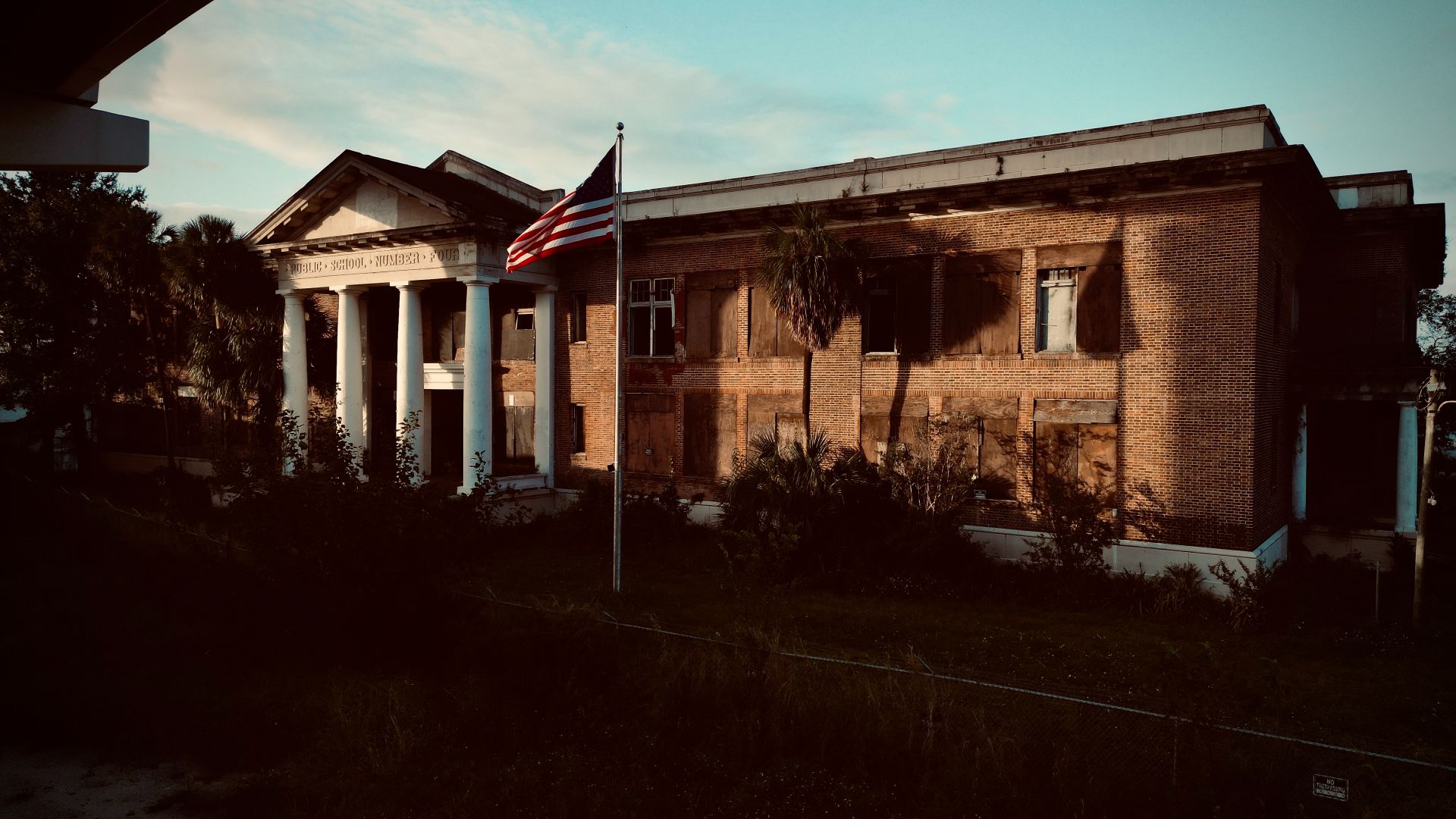
The site began as a wooden Riverside Grammar School in 1891, built when Riverside was still a fast-growing neighborhood. After that first structure became inadequate and unsafe, Duval County voters approved a $1 million bond in 1915 to build sturdier brick schools, and the present school building was completed in 1917 or 1918. It was designed by architect Rutledge Holmes in a Neoclassical style, with the imposing pediment and Doric columns that still make it instantly recognizable from the road.
Although many people know it as Annie Lytle Elementary, the inscription on the building reads “Public School Number Four,” a reference to its place in Duval County’s school system. The school was later renamed for educator Annie Lytle Housh, who taught there, became principal in 1914, retired in 1949 after 35 years as principal, and died in 1957.
Its downfall came with Jacksonville’s expressway construction. Work tied to what became the Fuller Warren Bridge and I-95 cut the school off from the neighborhood it served and removed part of nearby Riverside Park. The school closed in 1960, then spent about a decade being used for offices and storage before that use ended in 1971. A brief 1975 sale to Central Christian School collapsed, and a later 1980 plan to turn the building into senior housing also failed.
That long vacancy is a huge part of why the building became so notorious. By the 1990s and 2000s, it had already become a magnet for graffiti, vandalism, thrill-seeking trespassers, and ghost stories. The school received local historic landmark status in 2000, which helped stop demolition plans, but that protection did not solve the harder problem of funding a viable restoration.
Why it became known as the Devil’s School
The nickname did not come from any documented mass killing or supernatural event. It came from folklore. Jacksonville Today and The Jaxson both note that the building’s reputation grew through wildly exaggerated stories told and retold by generations of local teenagers: a boiler explosion that killed children, a murderous janitor, a cannibal principal, and later claims of satanic activity during the moral panics of the 1980s and 1990s. Those stories helped brand the site as “The Devil’s School.”
Just as important, local preservation advocates have flatly rejected those stories as fiction. In a 2019 News4Jax report, preservation group member Paul Bremer said the boiler never exploded and the janitor never killed children. Jacksonville Today likewise reported that there is no truth to the best known lurid versions of the legend.
What did happen is simpler and, in some ways, sadder. The building was abandoned for decades, damaged by weather and neglect, and repeatedly scarred by trespassing and fire. In January 2012, a fire at the vacant school was ruled arson, with damage estimated at about $30,000. That kind of real-world decay helped the myths stick.
Reported hauntings and real encounter stories
Even though the most sensational backstory is unsupported, Annie Lytle still has a strong haunting tradition. Jacksonville Today reported that visitors have long claimed to hear children’s voices in the ruins, and one local, James Shannon, said he experienced what sounded like dozens of children’s voices while standing on the auditorium stage around 2003, despite believing his group was alone in the building.
At the same time, the same article offered an important counterweight. Patsy Bryant of the Annie Lytle Preservation Group, who spent years working in and around the structure, said she never had a supernatural encounter there. That contrast is part of what keeps the Devil’s School story alive. It sits right on the line between personal experience, local legend, suggestion, and atmosphere.
In other words, Annie Lytle’s haunted reputation is real as a piece of folklore, even if the core origin stories are not supported by the record. The building became Jacksonville’s classic “legend-tripping” destination, a place where people went precisely because the stories were scary, inconsistent, and impossible to fully prove or disprove.
What the building looks like today
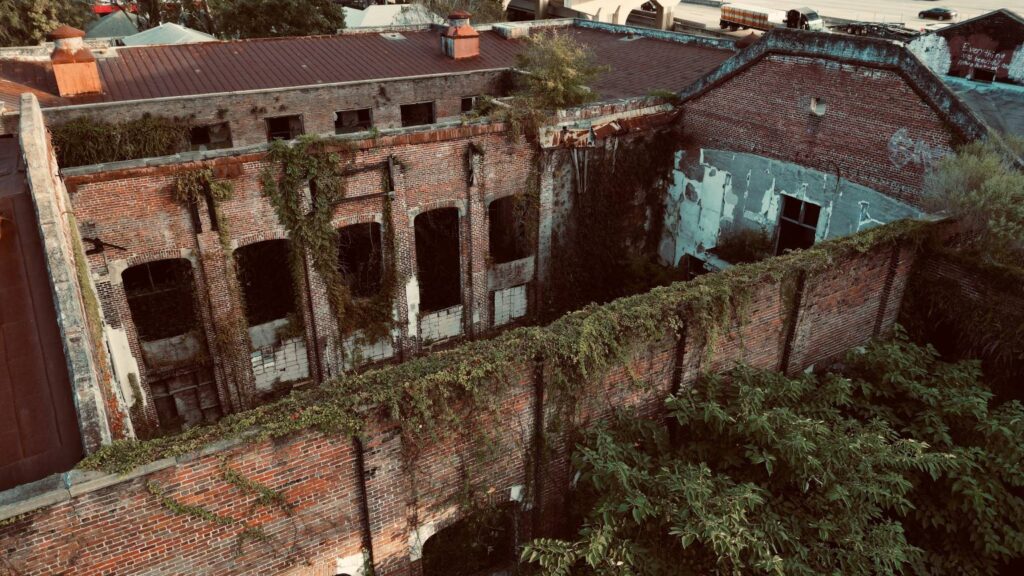
The school still stands, and that alone is remarkable. Preservation material describes it as a thick brick and poured-concrete structure designed with fire resistance in mind after Jacksonville’s 1901 fire. Even after decades of neglect, fires, graffiti, broken windows, and collapsed interior sections, it remains one of the city’s most striking abandoned landmarks.
As of 2025, the Jacksonville History Center again included Annie Lytle Public School on its endangered historic buildings list. City records also show an active issue called “Redevelopment of 650 Chelsea Street,” and Duval property records list the primary site under Annie Lytle LLC. So the story is not over yet, but the building’s future is still unsettled.
Why the Devil’s School still matters
Annie Lytle is not just a spooky Jacksonville landmark. It is also a case study in how cities create folklore. A beautiful old school was isolated by highway construction, left vacant for decades, damaged, fenced off, and constantly seen by drivers passing on I-95. That mix of visibility, ruin, danger, and secrecy made it perfect for rumor. The result is a place where Jacksonville history and Jacksonville ghost lore became almost impossible to separate.
For paranormal fans, the Devil’s School is compelling because the atmosphere is undeniable. For history lovers, it is compelling because the facts are just as powerful: urban renewal, neighborhood division, preservation battles, abandonment, and the way a real schoolhouse turned into a citywide myth. That is what makes Annie Lytle Elementary one of Florida’s most fascinating haunted landmarks, whether you see it as a ghost story, a folklore site, or a preservation tragedy.
Never trespass on property that is not yours without permission, and ghost hunting can be dangerous, so always use caution.
Sources
- Jacksonville Today / The Jaxson, “Jaxlore: Annie Lytle Elementary, ‘The Devil’s School’”
- Duval County Property Appraiser record for 650 Chelsea St.
- Jax Daily Record, endangered buildings coverage
Frequently Asked Questions
Where is Devils School In Jacksonville located?
Devils School In Jacksonville is located at 650 Chelsea St., Jacksonville, FL 32204.
Reader sightings
Nobody has reported anything here yet. If you have been, you would be the first.
Report your own visit to Devil’s School in Jacksonville: The Real History of Annie Lytle Elementary
How haunted is this place?
Be the first to rate
Ghost Tours Nearby
 Specters of the Spanish Moss: Jacksonville Ghost Tourfrom $26
 Mayhem in the Mists A Murder Mystery Ghost Tourfrom $30
Affiliate links: BeyondHaunted may earn a commission, at no extra cost to you.
Leave a Reply