

Reviewed by Josh N · Updated October 1, 2026 · How we verify
Reported Phenomena
- Apparition at windows
- Flickering lights
- Breaking glassware
- Sudden cold touches
- Children's laughter
- Figure by the railings
Reported by visitors & local legend. Stories, not verified claims.
The Baker-Peters House sits on the south side of Kingston Pike in West Knoxville, Tennessee, a two-story Greek Revival brick house now ringed by parking lots and strip commercial buildings. It survived where neighbors did not, and it carries one of the bloodiest short stories in Knox County’s Civil War record: a doctor shot dead through his own barricaded door, and a son hanged from a tree downtown by a mob less than two years later. The ghost stories told here grow directly out of those two deaths.
What Dr. Baker Built on Kingston Pike
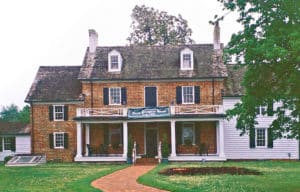
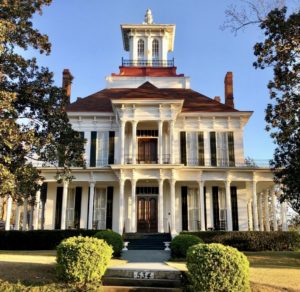
The house was constructed in 1840 by Dr. James Harvey Baker, a local physician. It is a two-story Greek Revival structure with a columned, two-story front porch, a porte-cochere on the east side for carriages, and a rear wing projecting from the southwest. The main body is brick; the rear wing was originally finished in wood siding. It was one of several antebellum plantation homes strung along Kingston Pike, a road that carried traffic, and later armies, straight into Knoxville.
Baker owned the house until his death during the Civil War. He was a Confederate supporter in a region whose loyalties were genuinely divided, and his son Abner served as a Confederate soldier. That division is not background color here. It is the whole engine of the story.
The Raid of June 1863 and the Barricaded Door
In June 1863, Union troops moving along Kingston Pike during a raid of Knoxville came to the Baker house and found a door barricaded against them. They fired through it, and the shots hit Dr. Baker. Local tradition points visitors to the upstairs bedroom and the bullet holes as the place he died.
According to historian Joan Markel at the McClung Museum, Dr. Baker is likely one of the first people killed by Union forces in Knox County. That makes the house a marker of a grim first rather than a generic wartime casualty, and it is the single most defensible claim about the place.
What the Marker Out Front Gets Wrong
A marker in front of the home states that Baker was killed in 1864 while treating wounded Confederate soldiers inside the house. Both halves of that are wrong. The shooting took place in June 1863, and there is no evidence the home was ever used as a hospital for wounded troops. This matters for anyone reading the ghost stories: a good deal of what gets repeated about the Baker-Peters House traces back to a sign that is itself inaccurate, and the version of events told across the dinner table has been drifting from the record for a long time.
Abner Baker, William Hall, and the Mob at the Jail
Abner Baker was away at war when his father was killed. He returned in 1865 and shot and killed a man named William Hall in downtown Knoxville. Hall worked for the clerk of court and had fought for the Union.
The popular telling frames this as revenge, a son settling the score for his father. The contemporary record is messier. Early accounts of the shooting make no mention of vengeance at all. Newspapers described a fight between two men with an “old grudge” who had been on opposite sides of the war, and partisan papers mostly disagreed over whether the killing was self-defense. The revenge motive appears in a book published in 1976, which claims Abner believed Hall was somehow involved in his father’s death.
Whatever drove him, the aftermath is not in dispute. Abner was captured and jailed immediately. That night an angry mob of Unionists overran the jail, dragged him outside, and hanged him from a tree in downtown Knoxville. The house was sold to George Peters in the late 19th century, giving it the second half of its name.
The Green Room, the Railings, and What People Report
Everything in this section is reported experience, not documented event. Staff and diners over the years have described Abner looking out from the windows or standing near the railings, which is the house’s signature apparition claim and the one most often repeated. Others report lights flickering without cause, glassware shattering on its own, and sudden cold touches.
A second thread involves children. Laughter with no visible source has been reported in the room known as the Green Room, said to have been a nursery before it became dining space. Those who work in the building tend to describe the activity as harmless and even playful rather than threatening, which is unusual for a site with this much violence in its past and is worth noting as a feature of the local storytelling rather than as evidence of anything.
Local tellings also point out a staircase running from Dr. Baker’s bedroom down to the basement, identified as a space where enslaved people were held. The house was one of the Kingston Pike plantation properties, so the presence of enslaved labor on the site is historically consistent, but the specific basement claim circulates as tradition rather than as a documented finding.
Visiting the Baker-Peters House
This is not a museum and there are no ghost tours. The building is in active commercial use: the downstairs has housed a dental office since 1989, and the upper floor has cycled through tenants, including a jazz club and later restaurant and bar operations. A renovation of the upstairs was underway with plans to reopen as a restaurant and piano bar in early 2016, and the dining tenant has changed names more than once since, so check what is currently open before making the drive.
The surroundings are honest about what has happened to Kingston Pike. The land around the house is occupied by parking lots and businesses, and the site has been both compromised and saved by that commercial use. Mabry Hood House, once standing to the west, was demolished in the late 20th century to make way for Pellissippi Parkway. The Baker-Peters House avoided the same end only by becoming useful. Farther east along the same road, Crescent Bend (the Armstrong-Lockett House), Bleak House, and Knollwood remain in good condition and are worth pairing with a visit if the antebellum architecture is what draws you.
If you go, go as a customer, respect that people work and receive dental care inside, and treat the upstairs bedroom and its bullet holes as what they are: the place a man was shot through a door he had barricaded against soldiers.
See Baker-Peters House for Yourself
Sources
Frequently Asked Questions
Where is Baker Peters House located?
Baker Peters House is located at 9000 Peters Road.
Can you visit Baker Peters House?
Baker Peters House is open to the public. Always follow posted rules and respect private property.
Reader sightings
Nobody has reported anything here yet. If you have been, you would be the first.
Report your own visit to Bullet Holes and a Hanging Tree: Baker-Peters House
How haunted is this place?
Be the first to rate
Leave a Reply