Reviewed by Josh N · Updated September 18, 2026 · How we verify
Reported Phenomena
- Distant ghost lights
- Flaring horizon lights
- Glowing floating spheres
- Reported UFO encounters
Reported by visitors & local legend. Stories, not verified claims.
Almost every famous ghost light in America has a scientist somewhere in its past who was ignored. The Brown Mountain lights of North Carolina are unusual because that scientist did his work, published his answer, and the answer stuck for a while. In 1922 a United States Geological Survey researcher named George R. Mansfield brought a map and an alidade telescope to the ridge above Linville Gorge and demonstrated that the lights people were watching were trains, car headlights, and brush fires. That finding ended the widespread public concern of the day. The legend, obviously, did not end with it.
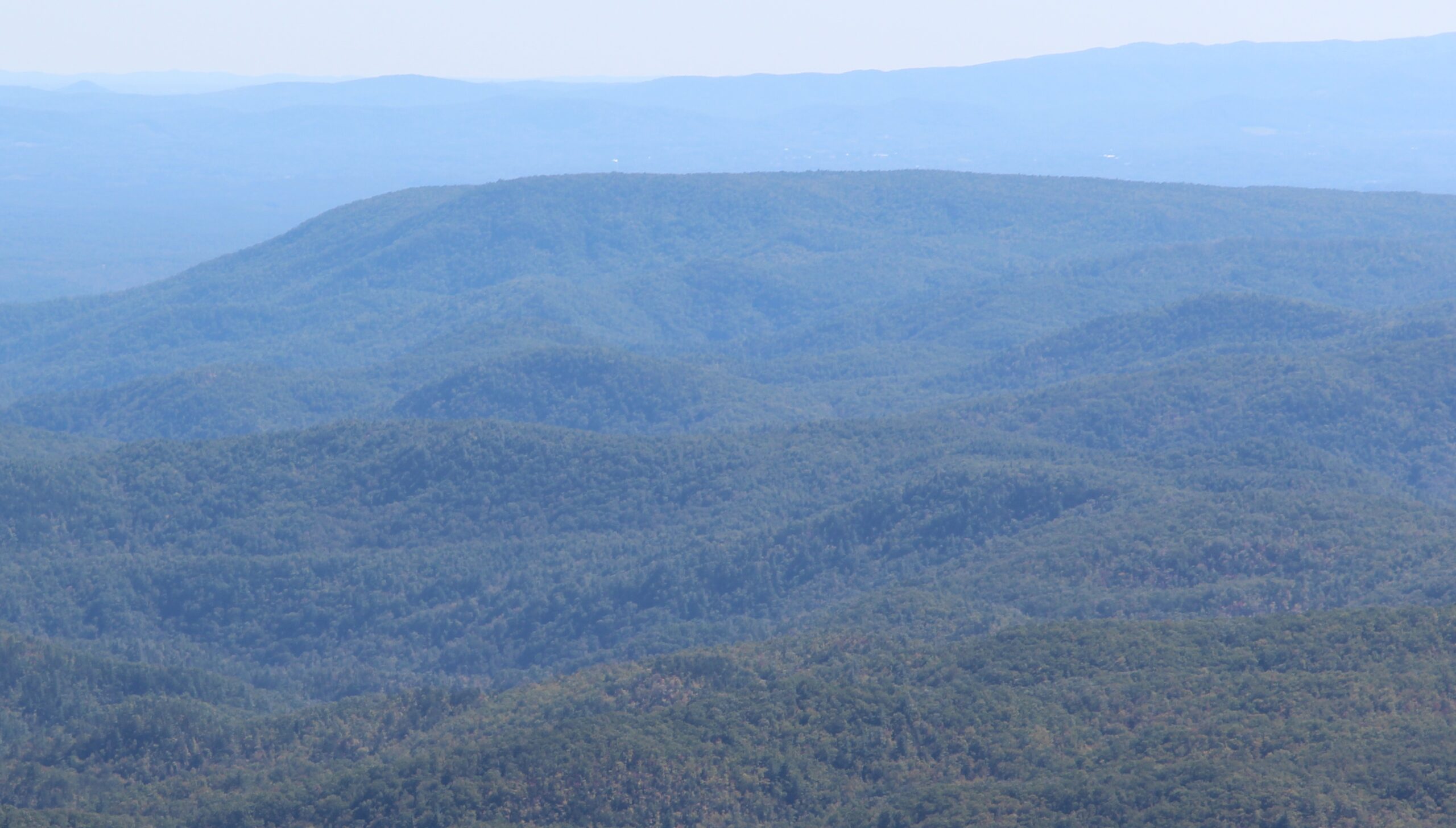
Quick orientation: the lights are seen, or looked for, from roadside overlooks on the Blue Ridge Parkway and North Carolina Highway 181 in the Burke and Avery county area, near Jonas Ridge and Morganton. The viewing spots are free and open. The mystery, as the documentary record has it, is largely a twentieth century invention.
Why the Story Starts Around 1910 and Not Before
The earliest published references to strange lights near Brown Mountain date from around 1910, at roughly the moment electric lighting spread through the area. Published mentions in print begin in 1912. That timing matters, because writers have spent a century insisting the lights are ancient. A number of travelogues covering the region before 1900 collected local mysteries and ghost stories, and none of them mention unexplained lights. When Mansfield questioned residents, he found many of them had been unaware of any strange lights until 1910 or later.
Two pieces of context sharpen the picture. Southern Railway began upgrading its locomotive headlamps to 600,000 candlepower systems in 1909, which made a passing train brighter than some working lighthouses. And Jules Verne’s 1906 novel Master of the World first appeared in English in 1911, with a plot that turns on a mad scientist whose secret lair inside Table Rock, near Morganton, produces strange lights on the summit. Neither fact proves anything on its own. Together they describe a landscape that had just acquired both very bright moving lights and a popular story about mysterious lights in exactly that spot.
One of the frequently cited early sightings comes from Joseph Loven, who lived next to Loven’s Hotel and said he first noticed the lights in 1897. He also said he took no interest in them and heard nobody else discussing them until his neighbor C. E. Gregory started trying to draw public attention to them around 1910.
The 1913 Newspaper Report and Sterrett’s Quick Answer
An early printed account appeared on September 24, 1913, in the Charlotte Daily Observer. It described “mysterious lights seen just above the horizon every night,” red in color, showing up “punctually” at 7:30 PM and again at 10 PM, on the authority of Anderson Loven, described as an old and reliable resident.
As in Verne’s novel, locals petitioned their congressmen for a federal investigation. USGS employee D. B. Sterrett was sent out in 1913 and found quickly that the headlights of westbound Southern Railway locomotives would have been visible from Loven’s Hotel, and that the published train schedules matched the reported sightings. Locals considered the work inadequate. In July 1916 a flood halted train activity around Brown Mountain for several weeks, which gave skeptics of Sterrett a fresh opening. George Anderson Loven, whose hotel was doing brisk business from visitors hoping to see the light, told the Lenoir News that September that it was still appearing nightly. It is not clear from his account whether he meant one particular light, several, or every nighttime light visible from his porch.
Mansfield, the Alidade, and the Curve in the Railroad Track
The USGS returned in 1922, this time with Mansfield. He set up an alidade telescope near Loven’s Hotel, at the former home of C. E. Gregory, and worked through an evening with members of the Loven family present. One light appeared to move and flare in brightness, prompting Joseph Loven to call it a true Brown Mountain light. Repeated azimuth readings through the telescope showed it had been stationary the entire evening. Another series of lights plotted on the map to a curve in a Southern Railway track, and the time of their appearance corresponded exactly to a scheduled train.
The family did not agree on what they had watched. Robert Loven said the lights that night were not bright enough to be the genuine article. Joseph Loven said the display had been about average. After the investigation, Joseph Loven, who had inherited the hotel and had been one of the main local authorities quoted in the press, essentially vanished from print commentary on the lights for the rest of his life.
Fate Wiseman’s Flash on the Horizon
The oldest report of a strange light near Brown Mountain belongs to Josiah Lafayette “Fate” Wiseman, great-uncle of the musician Scotty Wiseman, whose song The Legend of the Brown Mountain Lights, released in 1961, made these the most popular ghost story in North Carolina. Fate’s account played no part in founding the legend, because it was not published until 1971. According to Wiseman family tradition, some time “around 1854” the young Fate was camping at Wiseman’s View with his father when he noticed a flash of light in the distance, and found that the same momentary flash returned to the same spot on the horizon at about the same time every night, varying by no more than half an hour.
Treat the date carefully. It reached print through Scotty Wiseman recalling, fifty years later, what a 79 year old relative had told him when he was 13. The behavior described, a brief flash at a fixed bearing on a near clockwork schedule, is consistent with a distant train headlight swinging around a curve, and the first train in western North Carolina began nightly service between Morganton and Salisbury in 1858.
The de Brahm Passage That Says Nothing About Brown Mountain
You will see it claimed that a colonial surveyor documented the lights in 1771. In that year the military engineer and cartographer John William Gerard de Brahm presented a report to King George III on the general survey of the southern district of North America. The passage people quote is a dense stretch of alchemical language about nitrous and sulphureous vapors, thunder, and the purity of Appalachian air. It is speculation about weather and healthy mountain air, it sits in a chapter about South Carolina, and de Brahm never describes anything in North Carolina in the report at all. The first attempt to attach him to the Brown Mountain lights was an article in the Gastonia Daily Gazette in 1927.
Ghosts, Cherokee Claims, and Venus: Legends Added After the Fact
Once the 1922 explanation was on the record, the storytelling changed shape. A reworked version of an older ghost story about a woman and baby murdered in the Jonas Ridge community became the first published ghost tale to incorporate the lights, in 1936. The first published claim that a Native American culture had referenced the lights appeared in the Asheville Citizen in 1938, asserted with no sources; experts on historical Native American traditions describe it as a myth invented by white people to justify their own beliefs about the lights. A Revolutionary War soldier story was first published in 1982. A Civil War ghost version first surfaced online in 2012.
The UFO era left its own deposit. Ralph Lael, who displayed what he said was a mummified alien in his rock shop, self published a book in 1965 describing his encounters with extraterrestrials on Brown Mountain and a trip with them to their home planet, Venus. Scotty Wiseman’s song, later recorded by the Kingston Trio, the Country Gentlemen, Sonny James and others, has the light carried by “a faithful old slave/come back from the grave” searching for his lost master. The 1999 X-Files episode “Field Trip” put missing hikers in the vicinity and had Mulder blaming UFOs.
What People Report Seeing Today
Modern accounts differ from the old ones in a way worth knowing before you go. The early twentieth century reports describe distant lights low on the horizon, seen from a porch or an overlook. The now common stories of close encounters with glowing spheres floating in the air are notably absent from those early reports, even though thousands of loggers were working the Brown Mountain area at the time. Current visitors describe lights that appear, flare, move, and vanish, and the site has become a fixture of the ghost hunting hobby, offering a supposedly haunted location to investigate. All of this is reported experience, not established fact.
The most systematic attempt at capture came from Appalachian State University, which installed two low light cameras on rooftops overlooking Brown Mountain and Linville Gorge. By 2014 those cameras had accumulated 6,300 viewing hours of data without recording any unexplainable lights.
Where to Watch: Milepost 310, NC 181, and Wiseman’s View
There are roadside viewing locations on the Blue Ridge Parkway at milepost 310, the Brown Mountain overlook, and at milepost 301, the Green Mountain overlook, plus the Brown Mountain Overlook on North Carolina Highway 181 near Jonas Ridge. Lights have also been reported from the top of Table Rock and from Wiseman’s View, both inside the Linville Gorge Wilderness. The Parkway and NC 181 overlooks are the easy options; the Linville Gorge points require real hiking and backcountry judgment after dark.
If you go, go knowing what you are looking at. Much of what appears below the overlooks is the ordinary nighttime light of an inhabited valley seen through mountain air. That is what Mansfield proved with a map and a telescope, and it remains the most defensible reading of the phenomenon. If you would rather take the lights as culture than as physics, Morganton has leaned into that: the Brown Mountain Lights Festival, founded in 2022, is an annual event featuring local bands and artisans and built around the supernatural side of the story.
Address: Brown Mountain Overlook, NC Highway 181, near Jonas Ridge, North Carolina
See Brown Mountain lights for Yourself
Sources
- Origin of the Brown Mountain Light in North Carolina (Usgs (official))
- The Brown Mountain Lights: Solved! (Again!)
- The Brown Mountain Lights
- William Gerard De Brahm: Eccentric Genius of Southeastern Geography
- Reopening The X-Files: "Field Trip"
- Wikipedia: Brown Mountain lights
Frequently Asked Questions
Where is Brown Mountain Lights North Carolina located?
Brown Mountain Lights North Carolina is located at Brown Mountain Overlook, NC Highway 181, near Jonas Ridge, North Carolina.
Can you visit Brown Mountain Lights North Carolina?
Brown Mountain Lights North Carolina is open to the public. Always follow posted rules and respect private property.
Reader sightings
Nobody has reported anything here yet. If you have been, you would be the first.
Report your own visit to The 1922 Telescope That Explained the Brown Mountain Lights
How haunted is this place?
Be the first to rate
Leave a Reply