
Reviewed by Josh N · Updated August 27, 2026 · How we verify
Reported Phenomena
- Disembodied voices
- Waterfront EVP recordings
- Apparition photographs
- Faucets turning on
- Unexplained cold spots
Reported by visitors & local legend. Stories, not verified claims.
Charles Deering lived on this stretch of Biscayne Bay shoreline for only five years, and he died in a bedroom there. Deering Estate ghost stories have gathered around that fact ever since, along with a prehistoric burial mound, a lost wine cellar, a vanished pioneer town and a hurricane that lifted a three-story wooden hotel clean off its foundation. The 444-acre property sits in the Cutler neighborhood of Palmetto Bay, Florida, on the southern rim of metropolitan Miami, and it is one of the few haunted-reputation sites in the country that also doubles as a working ecological and archaeological research station.
Quick Facts About the Cutler Property
- What it is: A 444-acre estate with two museum buildings, the Richmond Cottage and the Stone House, both filled with paintings, artifacts, books and antique furnishings.
- Who built it: S. Howard Richmond raised the wooden house; industrialist Charles Deering bought it in 1916 and added the Stone House in 1922.
- Ownership: Owned by the State of Florida, managed by the Miami-Dade County Parks, Recreation and Open Spaces Department.
- Listed: Added to the National Register of Historic Places in 1986.
- On the grounds: What is thought to be the largest virgin coastal tropical hardwood hammock in the continental United States, a prehistoric burial mound and a fossil sinkhole.
Richmond’s Hotel, the Most Southerly on the Mainland
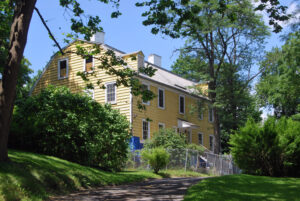
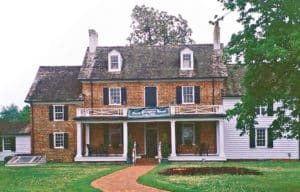
Before Deering, there was Cutler, a pioneer town on the bay. S. Howard Richmond, agent for the Perrine Land Grant Company, built a family home here at the end of the 19th century. An addition finished in 1900 turned it into a 22-room hotel run by his wife, Edith M. Richmond, and it was described at the time as the most southerly hotel on the mainland of the United States. Travelers coming down the coast ran out of road and out of beds at roughly this point.
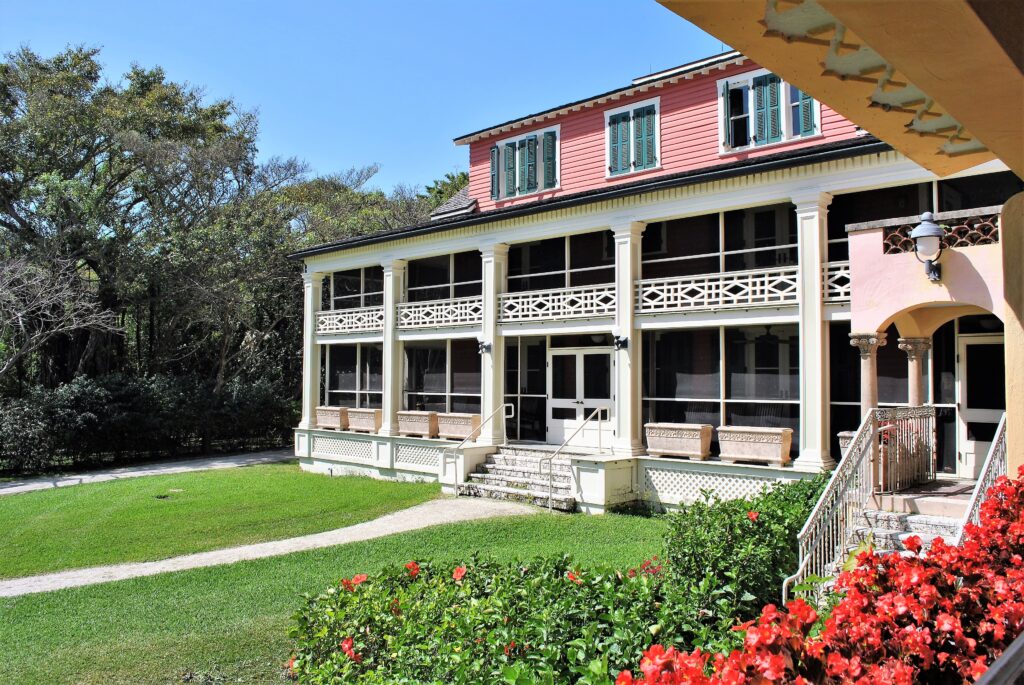
Charles Deering bought the Richmond Cottage in 1916 and spent the next several years turning a modest hotel plot into a magnate’s compound. He added a carriage house, a pump house and a power house, ringed the property with a limestone and concrete wall, and cut a boat turning basin into Biscayne Bay. In 1922 his new stone mansion was finished and he moved down to Cutler for good.
The House Charles Deering Built Without a Stove
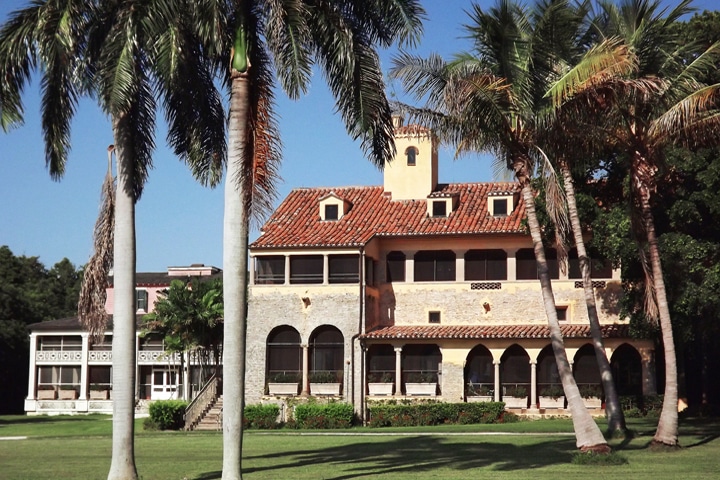
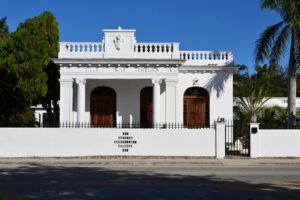
The Stone House was designed by Phineas Paist and completed in 1922. Its details read as the work of a man with a specific fear: 18-inch poured concrete walls, oolitic limestone, coffered ceilings, and copper clad and brass doors. Deering had watched what fire did in the Great Chicago Fire of 1871 and never got over it. He built the Stone House without a stove. The kitchen held refrigeration cabinets and storage, but the actual cooking was done over in the wooden Richmond Cottage, at a safe remove from the art collection and library the stone building was designed to showcase. He also installed an elevator, a forward-thinking touch for 1922.
One feature was so well concealed that nobody found it for seventy years. A large wine cellar on the first floor sat hidden behind built-in cabinetry and was only discovered during the cleanup after Hurricane Andrew flooded and damaged that floor.
Deering himself was born on July 31, 1852, in Paris, Maine, son of William Deering of the Deering Harvester Company and brother of the industrialist James Deering. He graduated from the United States Naval Academy in 1873, served as a naval officer until 1881, then joined his father’s firm, which merged into International Harvester in 1902 with Charles as chairman of the board. He died at the estate at the age of 75, at 11:30 P.M. on February 5, 1927, and the property passed to his wife and children.
The Cutler Burial Mound and the Bones in the Sinkhole
The oldest thing on the property has nothing to do with the Deerings. The Cutler Burial Mound is a prehistoric mound roughly 38 feet by 20 feet at the base and about five feet high, one of the few surviving prehistoric mounds in Miami-Dade County, with artifacts dating to the Glades II and III periods. It is believed to contain 12 to 18 Native American burials.
It has also been dug into repeatedly. Henry Perrine, Jr, removed several skulls in the 1860s while hunting for Black Caesar’s treasure. Ralph Munroe dug there in the 1890s. In the 20th century neighborhood children pulled out bones and artifacts, and some of those bones have since been returned and reburied. Anyone inclined to look for a reason a place feels uneasy will find plenty in that record. The mound today is reached by boardwalk.
A second deep-time site sits nearby. In 1979 a sinkhole on the estate was found to contain bones of Pleistocene animals alongside bones and artifacts of early humans. The Cutler Fossil Site was eventually acquired by Miami-Dade County and is now part of the park.
What Hurricane Andrew Did to the Waterfront
By 1982, when Deering’s daughter died, the family property was on the market. Finley Matheson bought it in 1984 and campaigned to have it turned into a state park; in 1985 the State of Florida purchased the land for $22.5 million.
Seven years later, on August 24, 1992, Hurricane Andrew came ashore in South Florida as a Category 5 storm with winds of 165 mph. The waterfront estate took the full force of it. Waves reached as high as the second floor of the buildings, water rose more than 16 feet above sea level, and the Richmond Cottage was torn off its foundation and splintered. Restoration took seven years and $7.2 million. The estate reopened to the public in 1999 and officially opened in 2000.
What Visitors Say They Experience at the Deering Estate
None of what follows is verified fact. It is what people report, and the estate itself leans into it by including ghost tours in its regular event calendar alongside night hikes, bird watching and historic kayaking trips.
Investigators working the grounds have claimed to log dozens of distinct voices in a single night, with the waterfront singled out as the most active area. Photographs said to show figures on the property circulate among enthusiasts, including one described as a headless woman in Victorian dress. Staff and visitors have reported faucets running on their own and cold spots with no obvious source. The spirits are variously attributed to the Native people buried in the mound, to the pioneer-era residents of old Cutler, and to Charles Deering himself, who died in the house.
Worth keeping in mind: the recordings and photographs offered as evidence here are the same categories of material that turn up at every location with a ghost tour, and a 444-acre coastal hammock full of wildlife, plumbing over a century old and shifting sea air offers a lot of ordinary explanations. What the estate genuinely has is a documented history of disturbed graves, a violent hurricane and a death on site, which is usually all a reputation needs.
Visiting the Deering Estate in Palmetto Bay
The estate operates as a public park and historic house museum under Miami-Dade County Parks, with the two Deering-era buildings interpreted as museums of the family. The burial mound is accessible by boardwalk. Evening ghost tours run as part of the wider events program, so check the current schedule rather than turning up hoping for one.
There is more here than the paranormal angle. Researchers have studied the property’s ecology, geology and archaeology for more than 30 years, it belongs to the Organization of Biological Field Stations through a collaboration with Florida International University, and it sits in the only portion of the Everglades Restoration Project inside an urban setting with easy public access. An artist residency program has been running since 2006 and has hosted more than 90 residencies. Film buffs may recognize the house and grounds from the 1980s series Miami Vice, and it served as the starting location for The Amazing Race All-Stars in 2007.
See The Deering Estate for Yourself
Sources
- History
- National Register of Historic Places (National Park Service)
- Organization of Biological Field Stations
- State of Florida granted $200,000
- Historical Documentation The Charles Deering Estate at Cutler (Ufl (official site))
- Wikipedia: Charles Deering Estate
Address: 16701 SW 72nd Avenue
Frequently Asked Questions
Where is Deering Estate located?
Deering Estate is located at 16701 SW 72nd Avenue.
Can you visit Deering Estate?
Deering Estate is open to the public. Always follow posted rules and respect private property.
Reader sightings
Nobody has reported anything here yet. If you have been, you would be the first.
Report your own visit to Deering Estate: A Stone House With No Stove, and Its Ghosts
How haunted is this place?
Be the first to rate
Ghost Tours Nearby
 Menace, Murder & Malice: Miami Hauntsfrom $26
 Haunted Miami Self-Guided Audio Driving Tourfrom $11
 Miami Boos and Booze Haunted Pub Crawlfrom $29
Affiliate links: BeyondHaunted may earn a commission, at no extra cost to you.
Leave a Reply