Reviewed by Josh N · Updated August 25, 2026 · How we verify
Reported Phenomena
- Spectral figures
Reported by visitors & local legend. Stories, not verified claims.
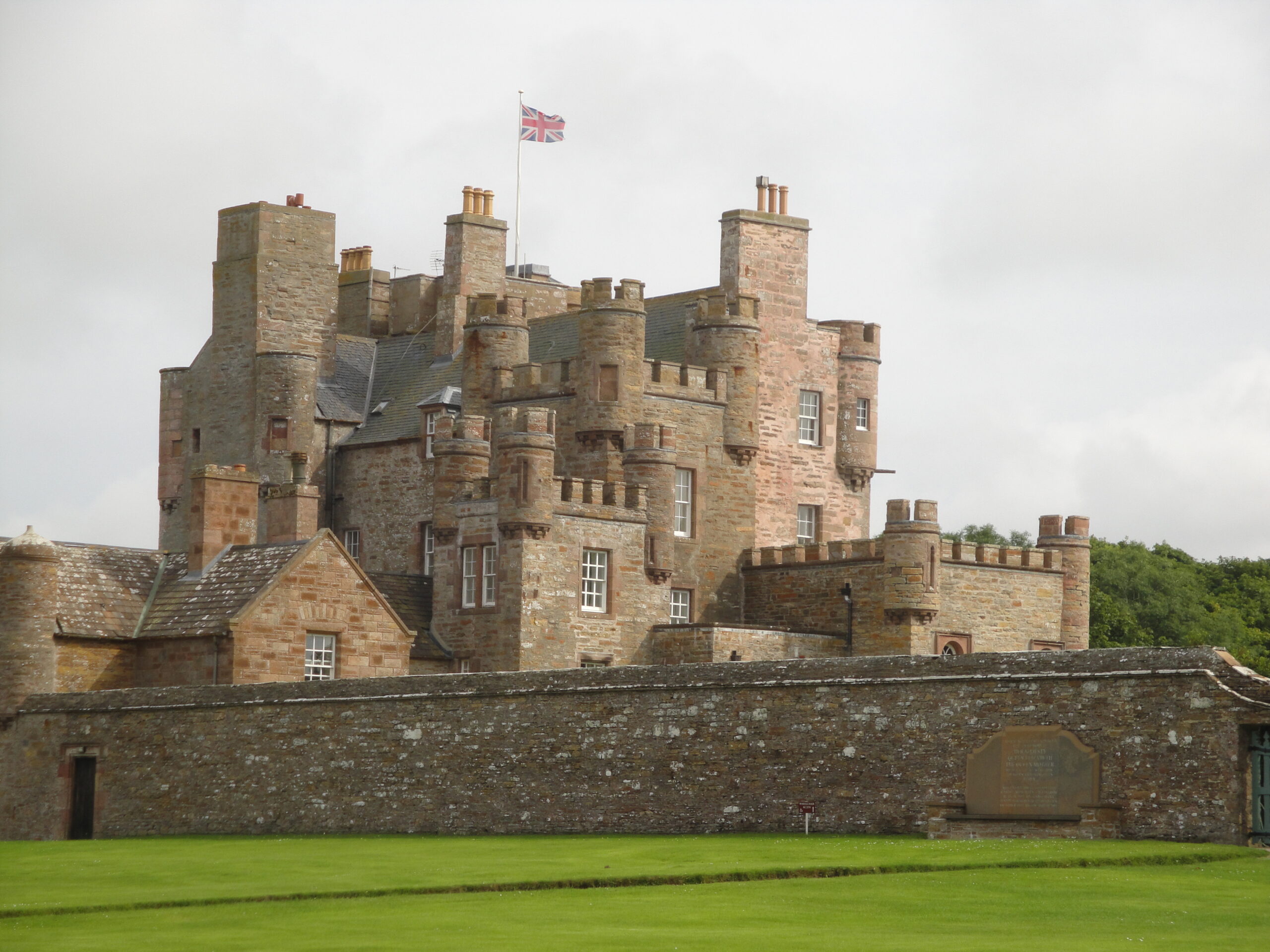
Six miles west of John o’ Groats, on the far north coast of Scotland, a squat grey tower looks out across the water towards Orkney. Anyone hunting for the haunted Castle of Mey should be told plainly what the record holds: no apparition, no named spirit, no witness account, nothing that a paranormal group has ever published from inside the walls. What the record does hold is four centuries of Sinclair ownership, a castle left semi-derelict and rescued by a widowed queen, and one lurid piece of 1960s pulp fiction that staged a black mass in the ruins. That last item is almost certainly where the building’s dark reputation comes from.
Quick Facts for the Caithness Coast
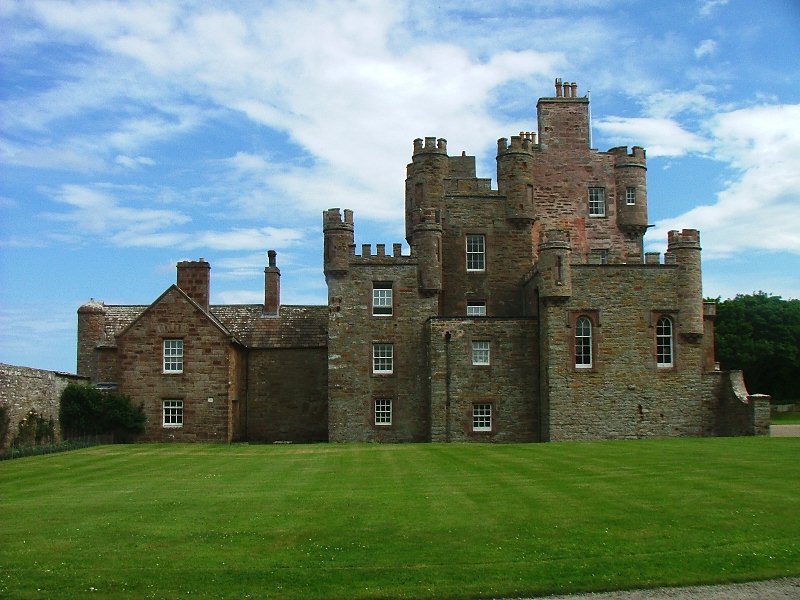
The Castle of Mey, known for a long stretch of its life as Barrogill Castle, sits in Caithness about 6 miles west of John o’ Groats. In fine weather there are views north from the castle to Orkney. It was built between 1566 and 1572, restored from near ruin after 1952, and is now open to the public seven days a week from 1 May until 30 September, with a ten day closure at the end of July and the beginning of August when King Charles III and Queen Camilla usually stay. There is a visitor centre, a tearoom and a ten bedroom bed and breakfast on the grounds.
Why There Is No Ghost Story on File at Mey
Plenty of Scottish tower houses carry a resident spectre, usually one attached to a violent episode in the family history. Mey does not, at least not in anything documented. The castle spent the second half of the twentieth century as a private royal holiday home rather than an abandoned shell, which tends to discourage the growth of legend, and since it opened to visitors it has been presented as a house and garden rather than a haunted attraction. If staff or guests have reported anything unusual, it has not made it into the published account of the place. Treat any confident online description of the ghosts of Mey with suspicion until someone produces a source for it.
George Sinclair’s Z-Plan Tower, 1566 to 1572
The lands of Mey belonged to the Bishops of Caithness before the castle existed. According to a February 2019 report, the castle was probably built between 1566 and 1572 by George Sinclair, 4th Earl of Caithness, and includes a dominating tower with a series of tall ranges to the side and rear creating a three sided courtyard open to the north and the sea. It may stand on the site of an earlier fortification. Originally it was a Z-plan tower house of three storeys, with a projecting wing at the south east and a square tower at the north west. The castle passed to Lord Caithness’s younger son William, founder of the Sinclairs of Mey, although it later became the seat of the earls.
The Barrogill Years and William Burn’s Tudor Gothic
At some point the name changed to Barrogill, and the building was extended repeatedly through the seventeenth and eighteenth centuries, then altered again in 1821 in Tudor Gothic style to designs by William Burn. The Sinclair connection finally broke in 1889, on the death of the 15th Earl of Caithness, when Barrogill passed to F. G. Heathcote, later Sinclair. Captain Frederic Bouhier Imbert-Terry bought it in 1929. During the Second World War it served as an officers’ rest home, the estate farms were sold off in 1950, and by then only the tower itself was habitable.
The Queen Mother Buys a Semi-Derelict Castle, 1952
Barrogill was in a semi-derelict state when, in 1952, the estate was bought by Queen Elizabeth the Queen Mother, widow of King George VI, who had died earlier that year. She stripped out some of the nineteenth century additions, reinstated the original name and turned the place into a holiday home. The castle was supplied with electricity and water for the first time. Work in 1953 and 1954 made it weathertight and habitable, with painting and plastering, and the interior was refurbished over the following years; the west wing was not finished until 1960. She hung portraits of the previous owners, the Earls of Caithness, around the rooms, and visited every August and October from 1955 until her death in March 2002. Her last stay was in October 2001.
Spy Castle and the Black Mass at Barrogill
The one genuinely sinister thing ever written about this building is fiction, and it is worth naming so readers can see it for what it is. The ruins of Barrogill Castle are the scene of a black mass in the Nick Carter-Killmaster novel Spy Castle, published in 1966. That is a pulp thriller, not a folk tradition, and it was written when the castle was in fact a well kept royal holiday home rather than a ruin. The castle’s other screen appearance is a good deal tamer: the Queen Mother’s purchase features in episode eight of the first season of the Netflix series The Crown.
Visiting the Castle and Gardens of Mey
In July 1996 the Queen Mother made the property, the policies and the farm over to the Queen Elizabeth Castle of Mey Trust, which has opened the castle and garden to the public regularly since her death. The Trust was established by a Deed of Trust executed on 11 June 1996, with a mandate to secure the future of the building, advance historical and architectural education, develop the native breeds of Aberdeen Angus and Cheviot sheep, and undertake projects for the benefit of the local community. A new visitor centre opened in early 2007, when the castle recorded 29,000 visitors, and nearly 30,000 visits were logged in 2018. Maintenance completed that year included roof repairs, rewiring of the interior and lime harling of the exterior. On 1 January 2019 stewardship of the Trust passed to the then Prince’s Foundation, later the King’s Foundation. In January 2023 it was reported that the castle tearoom would open every Tuesday until March as a warming centre, an initiative by the King’s Foundation.
Staying on the Estate at Granary Lodge
If you want a night on the grounds, Granary Lodge is the option. The then Prince of Wales formally opened it in early May 2019 as a ten bedroom bed and breakfast, created by combining the former stables and granary, with eco-heating and local materials and craftsmen used where possible. It is owned and operated by the Trust, took its first guests from 15 May 2019, and its profits go towards maintaining and operating the estate. No ghost is included in the tariff.
Address: Castle of Mey, Caithness, Scotland, about 6 miles west of John o' Groats
See Castle of Mey for Yourself
Sources
- The Castle and Gardens of Mey
- Scothighlands, A panoramic view of the Castle of Mey
- The Castle of Mey: Inside the Queen Mother's beloved home in Scotland
- Queen Mother at new home. Mey Castle visit
- The remote castle that the Queen Mother used as a hideaway
- Wikipedia: Castle of Mey
Frequently Asked Questions
Can you visit Castle Of Mey Caithness?
Castle Of Mey Caithness is open to the public. Always follow posted rules and respect private property.
Reader sightings
Nobody has reported anything here yet. If you have been, you would be the first.
Report your own visit to A Black Mass in a Spy Novel: the Haunted Castle of Mey
How haunted is this place?
Be the first to rate
Leave a Reply