
Reviewed by Josh N · Updated August 1, 2026 · How we verify
Reported Phenomena
- Spectral figures
- Mists & orbs
Reported by visitors & local legend. Stories, not verified claims.
Website: https://www.bachelorsgrove.com
Address: 5900 W Midlothian Turnpike, Midlothian, IL 60445
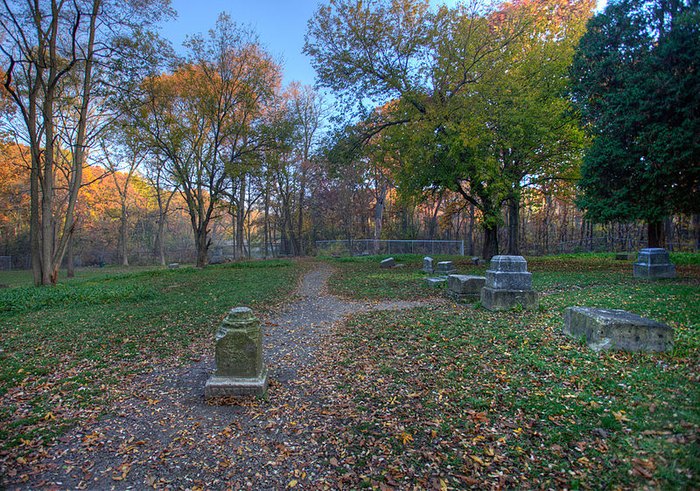
Bachelor’s Grove Cemetery has a reputation that few Midwestern haunted sites can match. Hidden in the woods of southwest Cook County, this small, long inactive burial ground in Illinois is part real frontier history, part vandalized relic, and part paranormal legend. What makes it so compelling is that all three layers are true in different ways. It really was an early settler cemetery. It really did fall into decline as the surrounding settlement faded. And it really has produced decades of reported encounters that pushed it into national haunted-lore status.
At the official preserve level, visitor access is tied to Bachelor’s Grove Woods, with the entrance listed at W 143rd St, west of Oak Park Ave, Cook County, IL 60463, near Palos Heights. The Forest Preserves of Cook County lists hours as sunrise to sunset and gives a main number of 800-870-3666. Historical descriptions place the cemetery itself off the old Midlothian Turnpike on 143rd Street near Rubio Woods, which helps explain why many people describe the site a little differently depending on which trailhead or roadside landmark they use.
Why Bachelor’s Grove Cemetery became so famous
A lot of haunted places are famous because of one dramatic story. Bachelor’s Grove is different. Its reputation built over decades. Local rumors were already circulating by the mid 20th century, then repeated visits by teenagers, ghost hunters, photographers, and curiosity seekers turned those stories into one of Illinois’ best known paranormal legends. WBEZ noted that by the 1960s rumors of hauntings were running wild, while historian Brad Bettenhausen has argued that the cemetery’s isolated setting helped both the folklore and the vandalism grow.
That mix matters. Bachelor’s Grove is not just a spooky stop in the woods. It is also a damaged historic cemetery that became more vulnerable precisely because its ghost story reputation drew so many people to it. That tension between folklore and preservation is one of the main reasons the place still feels so charged today.
The real history behind Bachelor’s Grove Cemetery
The broader Batchelor’s Grove settlement dates to the early 1830s, and some sources place meaningful activity in the area even before that. Brad Bettenhausen’s historical work notes that the settlement grew through the 1830s and 1840s with early American settlers, followed later by immigrants of largely Germanic origin. A Gazetteer of Illinois in the 1830s already referred to Bachelder’s Grove as a substantial settlement southwest of Chicago.
The name itself is one of the cemetery’s first mysteries. One long repeated story says the grove got its name from a group of unmarried men who settled there and kept a kind of bachelor hall. Bettenhausen, however, believes the stronger explanation is that the name came from the Batchelder family, one of the early settler families in the area. WBEZ reported the same split in local interpretation, noting that the romantic bachelor story survives, but the Batchelder explanation is considered more likely by local historians.
The burial history is also more complicated than many quick summaries suggest. WBEZ says the first burial on record was in 1838. Bettenhausen’s historical page notes that a 1917 manuscript gave the first burial as Eliza Scott in November 1844, while an earlier death date for William B. Nobles in 1838 appeared in a 1935 newspaper account. The important point is that the cemetery is genuinely old, among the oldest in the south Cook County area, even if the precise first interment depends on which historical document you trust most.
The decline of the settlement helps explain why the cemetery became so isolated. WBEZ reports that when the railroad came through Blue Island and Tinley Park in the 1850s, but not Bachelor’s Grove, families and businesses gradually shifted elsewhere. Some relatives even moved the remains of loved ones to more active or prestigious cemeteries. Over time the small pioneer burial ground became less central to community life and more vulnerable to neglect.
Cook County took over maintenance in 1975, and the last burial is generally placed in the 1980s. Bettenhausen’s research specifically identifies Robert E. Shields as being cremated and buried on a family plot in 1989. That means Bachelor’s Grove is not some ancient cemetery lost completely to time. It remained meaningful to certain families far later than many people assume.
How vandalism changed the cemetery
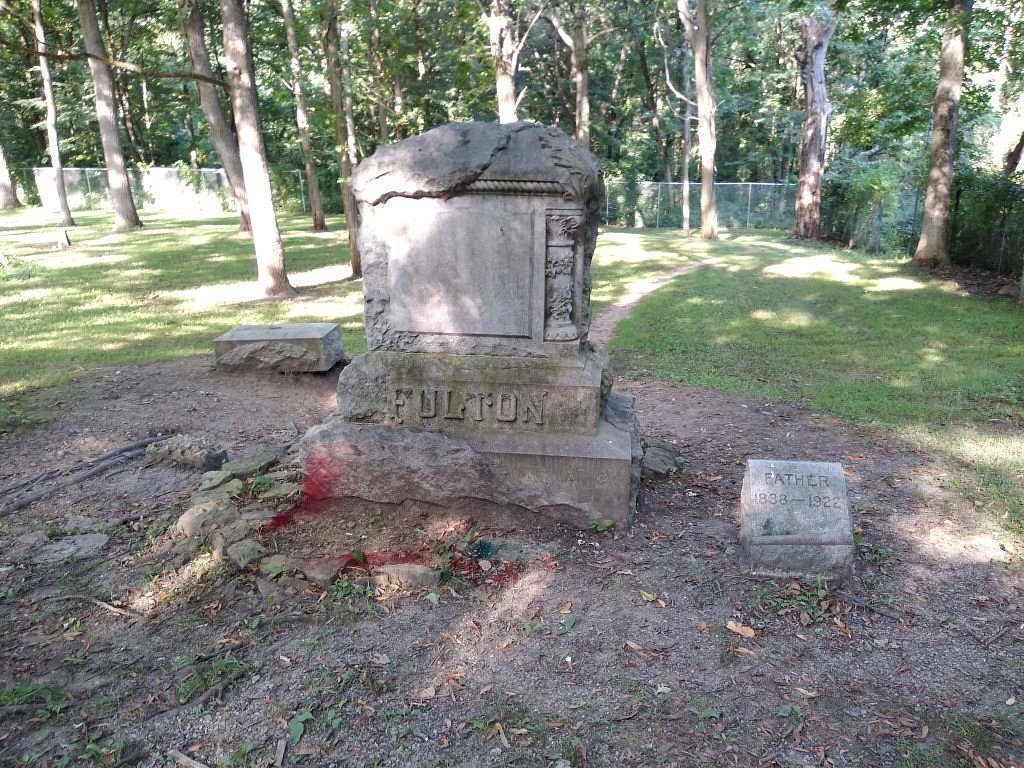
One reason Bachelor’s Grove looks the way it does today is the long history of vandalism. Bettenhausen writes that after the old road alignment was closed to vehicle traffic in the 1960s, the cemetery became more isolated and desecration accelerated, especially in the 1960s and 1970s. WBEZ likewise reported that rowdy visitors damaged historic stones, and that some headstones were reportedly stolen and thrown into the adjacent lagoon or pond area.
That is a huge part of the site’s atmosphere. Visitors often describe Bachelor’s Grove as abandoned, eerie, or swallowed by the woods, but some of that feeling comes from real loss. Missing markers, broken stones, and a scarred landscape are not just aesthetics. They are evidence that the cemetery was repeatedly mistreated.
The most famous reported ghost encounters
The best known Bachelor’s Grove encounter is the 1991 infrared photograph often called the “Madonna of Bachelor’s Grove.” WBEZ reported that Dale Kaczmarek of the Ghost Research Society said one of his group’s members captured an image of what appeared to be a woman in a long Victorian style gown with long hair, sitting or positioned near a grave marker. WBEZ also noted that parts of the figure looked translucent and that the image later appeared in major Chicago newspapers and on television, helping put Bachelor’s Grove on the national paranormal map.
That photo became the centerpiece of the cemetery’s haunting mythology, but it was never the only report. WBEZ says Kaczmarek’s group had other images that appeared to show floating orbs, white smoke, and even a figure that seemed to be holding a baby. The same report notes that some ghost hunters connect those stories to the small “Infant Daughter” marker at the cemetery, which has become one of the best known graves on the site.
The Ghost Research Society’s Bachelor’s Grove material also points to a lady in white holding an infant as one of the core recurring legends attached to the cemetery. This is important because it shows the woman in white story was not just invented after the famous photograph. The lore was already circulating in broader form as part of the site’s paranormal identity.
Another long running part of the lore involves strange lights and disappearing vehicles along the old Midlothian Turnpike. The Ghost Research Society describes repeated stories of cars that are seen one moment and gone the next. That kind of road haunting fits the geography of Bachelor’s Grove especially well because the cemetery is tied so closely to the abandoned alignment of the old road and the feeling of crossing into a pocket of land cut off from ordinary traffic.
WBEZ also mentions sightings of a woman in white and even an apparition of a house, which connects to one of the cemetery’s most persistent legends: the phantom farmhouse. That story usually describes a structure appearing in the distance and then vanishing before anyone can approach it. Whether you see it as a classic haunted-place narrative or something stranger, it adds to the sense that Bachelor’s Grove is haunted not by one ghost but by an entire vanished landscape.
What is probably history, and what is probably folklore
This is where Bachelor’s Grove gets especially interesting. The cemetery’s age, the early settlement, the decline after the railroad, the Cook County takeover, and the vandalism are all grounded in documented history. The hauntings belong to a different category. They are reported experiences, local legends, and paranormal interpretations, not settled historical facts.
That does not make the stories meaningless. In a place like Bachelor’s Grove, folklore has shaped the site’s identity almost as much as official records have. The stories influenced how generations of Chicago area residents thought about the cemetery, why they visited, what they expected to see, and unfortunately how some of them treated the grounds. In that sense, the hauntings are part of the real history of Bachelor’s Grove even when they cannot be proven in the ordinary historical sense.
Visiting Bachelor’s Grove Cemetery today
If you go, the most important thing to understand is that Bachelor’s Grove is not a haunted attraction in the theme park sense. It is a historic burial ground within the Cook County forest preserve system. The official preserve hours are sunrise to sunset. Respect for the site matters, especially because so much damage has already been done over the years.
What visitors usually notice first is not necessarily a ghostly sensation. It is the isolation. Even though the cemetery is in the orbit of greater Chicago, it feels tucked away and strangely detached from the surrounding suburbs. That physical separation is one reason the stories have lasted. A place can become more haunted in the imagination when it feels like the modern world stops just outside the tree line. That feeling is subjective, but the geography behind it is very real.
For paranormal fans, Bachelor’s Grove remains one of Illinois’ essential stops because it offers both a famous legend and a historically rich setting. For history lovers, it is a rare surviving fragment of an early Cook County settlement. And for everyone else, it is a reminder that abandoned cemeteries often become vessels for local memory, rumor, fear, and fascination all at once.
Never trespass on property that is not yours without permission, and remember that ghost hunting can be dangerous, so always use caution.
Sources
- Forest Preserves of Cook County, “Bachelor’s Grove Woods”
- WBEZ Chicago
- Bachelors Grove Cemetery & Settlement Research Center
Frequently Asked Questions
Where is Bachelors Grove Cemetery located?
Bachelors Grove Cemetery is located at 5900 W Midlothian Turnpike, Midlothian, IL 60445.
Can you visit Bachelors Grove Cemetery?
Bachelors Grove Cemetery is open to the public. Always follow posted rules and respect private property.
Reader sightings
Nobody has reported anything here yet. If you have been, you would be the first.
Report your own visit to Bachelor’s Grove Cemetery in Illinois: History, Ghost Stories, and How to Visit
How haunted is this place?
Be the first to rate
Ghost Tours Nearby
 Chicago River Ghost & Dark History Night Cruisefrom $46
 Chicago Gangsters and Ghosts Walking Tourfrom $38
 Chicago Architecture and True Crime: Halloween Editionfrom $35
Affiliate links: BeyondHaunted may earn a commission, at no extra cost to you.
Leave a Reply