Reviewed by Josh N · Updated March 9, 2026 · How we verify
The Scole Experiment remains one of the most debated paranormal case studies of the modern era. Conducted in the village of Scole in Norfolk, England, during the 1990s, the sessions were presented by supporters as unusually important because they were witnessed by experienced psychical researchers, documented over multiple years, and later discussed in a substantial report connected to members of the Society for Psychical Research. At the same time, the case has remained controversial for one central reason: the phenomena were reported under conditions that critics argued were too weakly controlled to justify extraordinary conclusions.
For believers in survival after death, Scole is often described as a landmark in physical mediumship. For skeptics, it is almost the perfect example of why extraordinary paranormal claims can appear persuasive while still falling short of scientific proof. That tension is exactly why the Scole Experiment still fascinates paranormal readers today. It sits at the crossroads of séance tradition, afterlife research, spiritualism, eyewitness testimony, and the larger question of what counts as evidence when people claim to have encountered the impossible.
What was the Scole Experiment?
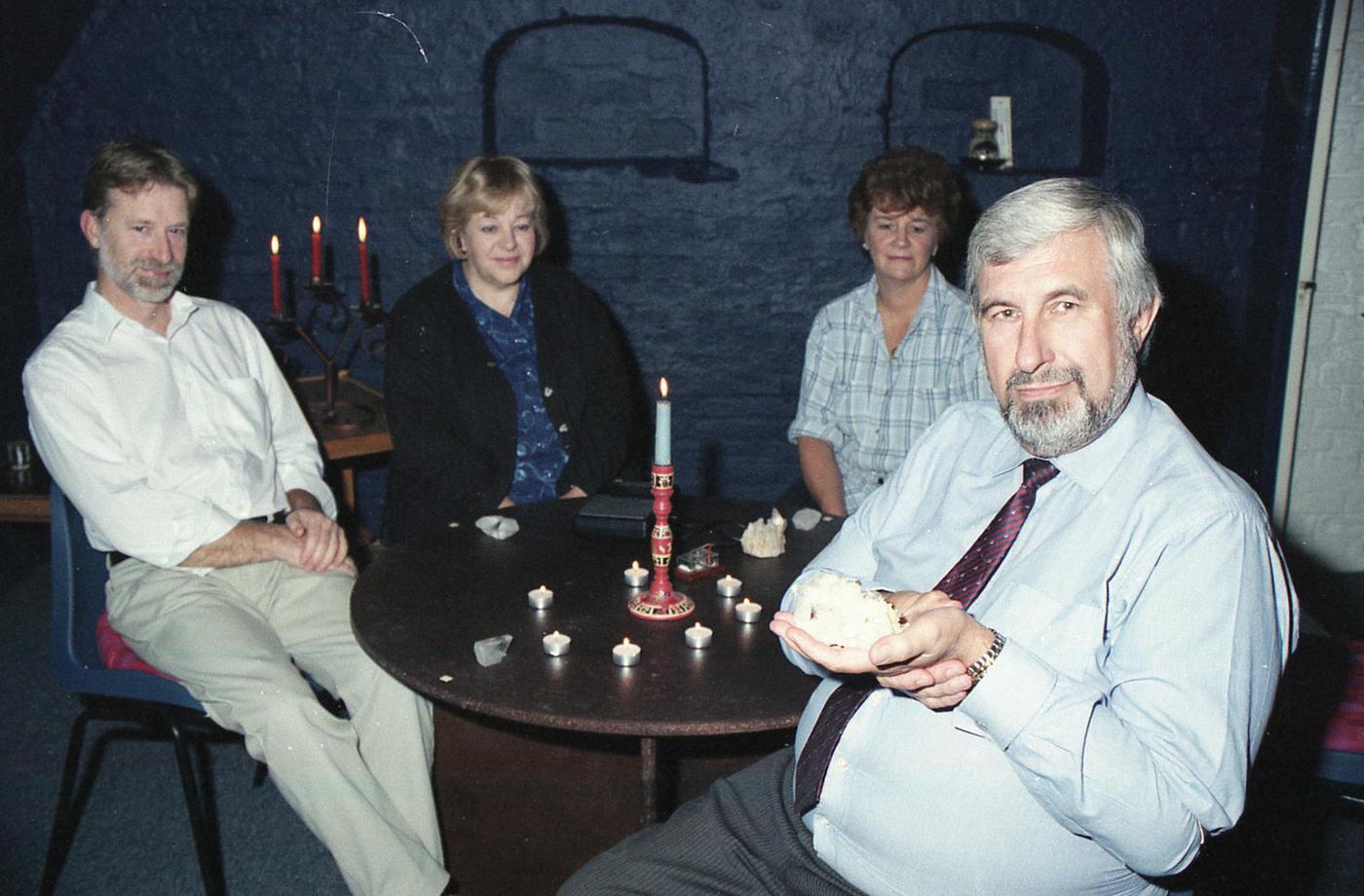
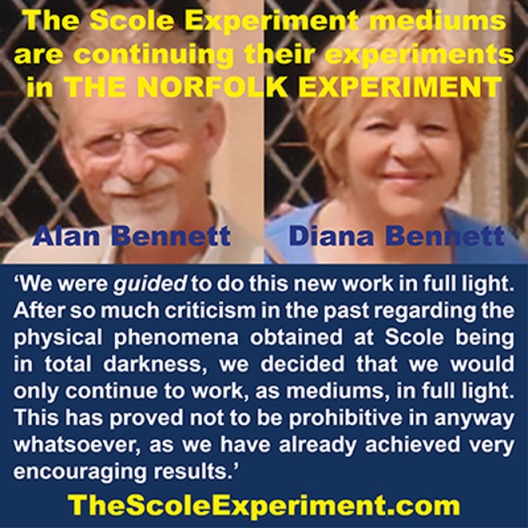
The Scole Experiment was a long-running series of séances held by a Norfolk-based mediumistic circle in the 1990s. The group was centered around Robin and Sandra Foy and later involved Alan and Diana Bennett as the key trance mediums. A more active circle began operating in early 1993, and the core group continued until the sittings ended in November 1998. From 1996 onward, members of the public were also invited to attend some sessions for a fee.
The séances took place in the cellar of the Foys’ farmhouse. According to accounts summarized by the Psi Encyclopedia, the room was kept in complete darkness and contained tables, chairs, luminous markers, bells, microphones, and other objects used during sittings. That setting matters because the darkness became one of the defining features of the case. Supporters argued that it was necessary for the phenomena to occur. Critics argued that darkness made fraud, suggestion, error, and misinterpretation far harder to rule out.
In simple terms, the Scole group claimed that spirits or non-physical intelligences were producing physical effects in the room. These were not limited to messages through a medium. The case became famous because the circle claimed a wide range of observable phenomena: moving lights, touches from unseen hands, materialized forms, strange sounds, spirit voices, objects that appeared from nowhere, and photographs said to have been imprinted paranormally on unopened film.
Why the Scole Experiment became so famous
Many séances and spirit circles have come and gone with little attention outside spiritualist circles. Scole became different for three reasons.
First, the range of reported phenomena was unusually broad. The group did not claim just one type of paranormal event. They claimed many. Second, the sittings drew the interest of prominent psychical researchers, including Montague Keen, Arthur Ellison, and David Fontana, who attended repeatedly. Third, the investigation resulted in a very large written report, often referred to simply as The Scole Report, published in 1999 in the Proceedings of the Society for Psychical Research.
That report gave the case a level of visibility many paranormal claims never receive. It also helped create an aura of seriousness around the experiment. To supporters, Scole was not just ghost-story material. It looked like a sustained investigation involving educated witnesses and methodical observation. But the same report also included dissenting views and criticism, which is part of why the story did not settle the debate so much as intensify it.
Who was involved in the Scole Experiment?
Robin Foy was one of the central figures behind the group and had earlier founded the Noah’s Ark Society for Physical Mediumship. After he and Sandra Foy moved to Scole, a more successful circle emerged. Alan and Diana Bennett became especially important because they served as trance mediums, and accounts from supporters say the reported phenomena increased significantly once that structure was in place.
On the investigative side, the names most closely associated with the case are Montague Keen, Arthur Ellison, and David Fontana. According to the Psi Encyclopedia, there were thirty-six sittings involving the main investigators between October 1995 and August 1997. These investigators reported witnessing the full range of claimed phenomena and concluded that at least some of what they saw pointed toward genuine paranormal effects or survival after death.
At the same time, not every visitor came away persuaded. Other attendees associated with the Society for Psychical Research, including Tony Cornell, Donald West, Alan Gauld, and others, raised objections about the methods, the controls, and the interpretation of the evidence. That split within the wider psychical-research community is one of the most important facts about Scole. It was not a case where all informed observers agreed they had seen proof of the afterlife.
The paranormal phenomena reported at Scole
1. Spirit lights
One of the best-known features of the Scole sittings was the appearance of small lights moving around the dark room. These were described as white most often, though other colors were also reported. Witnesses said the lights could move rapidly, hover, respond intelligently, and even interact with people in the circle. In séance literature, mobile lights have a long history, but at Scole they were treated as one of the signature manifestations.
For supporters, these lights were among the most memorable and convincing aspects of the sittings. For critics, they were also among the easiest to question, because Tony Cornell argued that comparable effects could be reproduced with simple means such as LEDs mounted on rods or threads. That disagreement captures the wider Scole debate in miniature: were witnesses encountering something genuinely paranormal, or something impressive but explainable?
2. Touches, movements, and physical contact
Participants reported being touched, stroked, patted, or otherwise handled by unseen agencies. They also described physical sensations linked to the lights. Some accounts acknowledged that certain feelings might be explained by suggestion or accidental contact with other people in the dark, but supporters believed some incidents went beyond those possibilities.
This class of phenomenon is common in the history of physical mediumship. It is also notoriously difficult to verify. In a pitch-dark room, even sincere witnesses can misread direction, distance, and timing. That does not prove the experiences were false, but it does explain why claims of physical contact in séances are often treated cautiously by investigators who want strong, independent confirmation.
3. Materializations
The circle also reported visible forms or beings appearing during séances. These were described in various ways over time, including spirit figures, angels, and entities from other dimensions. Some descriptions were surprisingly elaborate, including small figurines that seemed to grow and float, as well as human-like and more unusual faces.
In paranormal history, claims of materialization are among the most dramatic and the most controversial. They recall older nineteenth and early twentieth-century séance traditions in which mediums were said to produce ectoplasmic forms or spirit bodies. The Scole accounts clearly belong to that tradition, which is one reason the case drew so much interest from people already familiar with the history of mediumship.
4. Photographic anomalies on unopened film
Perhaps no part of the Scole Experiment has been discussed more than the photographic claims. The group said that blank, unopened film taken into sessions later developed images containing symbols, text, light effects, diagrams, foreign-language material, and even faces or pictures said to have paranormal origin. The group placed major emphasis on this material, and Robin Foy even developed a relationship with Polaroid, which supplied films and equipment.
To believers, the film evidence looked potentially stronger than stories about lights or touches because it seemed to leave behind a physical trace. If unopened film really acquired meaningful images in darkness without normal exposure, that would be difficult to dismiss. But critics argued that the photographic case was not as secure as advertised. The Psi Encyclopedia notes that some images said to have been obtained paranormally appeared traceable to public-source material, including a supposed image of Arthur Conan Doyle that may have derived from a known portrait.
This photographic controversy is one of the main reasons Scole has never moved from “controversial” to “conclusive.” The strongest-looking evidence was also among the most disputed.
5. Apports
The group also reported apports, a term used in spiritualist literature for objects said to appear paranormally in a séance room. Among the items listed in summaries of the case were coins, jewelry, small keepsakes, and a copy of the Daily Mail dated April 1, 1944. The newspaper was especially notable because it was linked in the narrative to Helen Duncan, a deceased medium whom the group said was in contact with them.
Apports are inherently sensational because they involve the claim that matter has been moved into a sealed or controlled environment by non-normal means. But they are also vulnerable to obvious skeptical objections. If objects can be brought in secretly, planted in darkness, or misremembered, then the extraordinary explanation quickly becomes unnecessary. This is one reason critics repeatedly came back to the issue of controls.
6. Sounds, voices, and communication from spirits
The auditory side of Scole was also extensive. Reports included bells ringing, crackling sounds, thumps, footsteps, musical sounds, and what were interpreted as disembodied voices. Some of these voices were treated as distinct spirit communicators with names, personalities, and backstories. The circle described a roster of entities said to help orchestrate the séances and communicate with sitters.
These communications were central to the meaning of the experiment. Scole was not presented merely as a sequence of odd physical events. It was framed as an organized relationship between living participants and a structured “spirit team.” Yet even here, the case was mixed. The same sources note that many of the utterances were not verifiable, and some responses appeared vague, mistaken, or unconvincing when tested by knowledgeable visitors.

The role of the Society for Psychical Research
The Society for Psychical Research, founded in 1882, is one of the best-known organizations associated with the systematic study of paranormal claims. Scole gained much of its prestige because several senior SPR figures attended and wrote about it. A joint investigative framework called PRISM helped bring the Scole group to the attention of researchers.
Still, one important nuance often gets lost in retellings. An SPR review later emphasized that Montague Keen, David Fontana, and Arthur Ellison were acting in a private capacity rather than as official representatives mounting a formal SPR investigation. That distinction matters because casual summaries sometimes imply that the Society itself officially endorsed the phenomena. The historical reality is more complicated. Senior members were impressed, but criticism also came from other informed observers tied to the same wider psychical-research world.
This is part of what makes Scole such a durable case. It cannot be dismissed as a fringe rumor, because serious psychical researchers engaged with it at length. But it also cannot be honestly presented as a universally accepted scientific demonstration, because its methods and evidence were strongly challenged by people who had direct knowledge of the sittings and the report.
Why believers find the Scole Experiment compelling
To understand why Scole still has devoted defenders, it is important to see the case through their eyes rather than only through skeptical summaries.
From that perspective, Scole was compelling because it was not a one-night event. It unfolded over years. The phenomena were said to be varied, repeatable, and observed by many visitors. Supporters also point to the emotional and intellectual detail of the communications, the claimed physical traces on film, and the fact that seasoned investigators came away convinced that some events could not be explained conventionally. The Scole Report itself was written by investigators who believed at least part of what they observed pointed to genuine paranormality or postmortem survival.
For people already open to the possibility of mediumship, this cumulative effect matters. One light in a dark room could be dismissed. One strange voice could be dismissed. One odd photograph could be dismissed. But dozens of sittings, multiple classes of phenomena, and repeated witness testimony can feel persuasive, especially when the witnesses include educated adults with experience in psychical research. That cumulative quality is arguably the strongest rhetorical advantage of the Scole case.
Why skeptics remain unconvinced
The skeptical case against Scole does not depend on proving exactly how every effect was produced. It mainly depends on a simpler point: the conditions did not rule out normal explanations strongly enough to justify extraordinary conclusions.
According to the Psi Encyclopedia summary and later SPR commentary, the mediums were not searched before or after sittings, were not restrained, and operated in complete darkness. Much of the technical equipment was supplied by the Scole group itself rather than being fully controlled by investigators. When efforts were made to introduce tighter controls, such as infrared photography or more visible conditions, those efforts were resisted. From a skeptical or scientific standpoint, those are not minor flaws. They are foundational weaknesses.
Critics also challenged specific evidence. Tony Cornell argued that the moving-light effects could be replicated by normal means. Other critics raised doubts about the photographic images and about whether supposedly secure containers or methods were truly tamper-proof. SPR commentary later described the case as dogged by poor controls and better placed in the category of interesting but inconclusive than in the category of proof.
This is why Scole continues to divide opinion. Supporters see a pattern too rich to dismiss. Skeptics see a setting too permissive to trust. Both sides think the other is missing the point.
Did the Scole Experiment prove life after death?
The most careful answer is no, not in any broadly accepted scientific sense.
It certainly became one of the most famous modern cases used by survival researchers and spiritualists to argue for life after death. It also generated a substantial documentary record and persuaded some investigators who took the sittings seriously. But proof requires more than testimony, atmosphere, and intriguing anomalies. Proof requires methods strong enough that normal explanations are excluded to a very high degree. The continuing criticisms of darkness, control, handling of evidence, and resistance to tighter monitoring mean Scole never crossed that threshold for the scientific mainstream, or even for all psychical researchers.
That does not mean the case is worthless. It means the case remains unresolved in the way many famous paranormal episodes remain unresolved. People can read the same material and come away with very different judgments depending on what standards of evidence they require.
The Scole Experiment in the wider history of paranormal research
One reason Scole still matters is that it arrived late enough to feel modern but old enough to sit within a much longer spiritualist tradition. It has séances, trance mediums, mysterious lights, spirit communicators, apports, and materializations, all classic themes from older physical mediumship. But it also includes film experiments, technical language, crossovers with research culture, and attempts to frame the work as something more systematic than a traditional séance circle.
In that sense, Scole is a bridge case. It links Victorian-style mediumship to contemporary paranormal investigation. It also reveals a persistent pattern in afterlife research: the more spectacular the reported effects, the more fiercely the dispute over controls. That larger lesson may be even more important than the individual phenomena themselves.
Why the Scole Experiment still fascinates paranormal readers
The case endures because it offers exactly what paranormal audiences are drawn to: a hidden cellar, darkness, experienced investigators, alleged spirit voices, physical traces, internal conflict, and a question no one has settled. It is part haunted-history story, part séance chronicle, part evidential mystery, and part cautionary tale about belief and method.
It also speaks to a deeper human concern. Most ghost stories can be enjoyed at a distance. Scole was different because it was framed not merely as haunting entertainment but as a direct challenge to death itself. The claim, at its boldest, was not just that strange things happened in a cellar in Norfolk. It was that consciousness survives bodily death and can interact with the living world in measurable ways. That is an enormous claim, which is exactly why the standards for accepting it remain so high.
Final thoughts
The Scole Experiment is one of the most intriguing and controversial paranormal case studies of the last several decades. Its supporters see a rare accumulation of mediumistic evidence witnessed over many years by serious observers. Its critics see a vivid example of how compelling stories and sincere testimony can still fall far short of reliable proof when controls are weak. Both readings are essential if you want to understand why Scole still generates debate.
Sources
The Apports — The Scole Experiment
Beyond the Scole Experiment to the Norfolk Experiment — The Scole Blog
Paranormal Photographic Evidence
Paranormal Photographic Evidence 1
The Book — The Scole Experiment
The Scole Experiment home page
Reader sightings
Nobody has reported anything here yet. If you have been, you would be the first.

Leave a Reply