
Reviewed by Josh N · Updated August 19, 2026 · How we verify
Reported Phenomena
- Crying infant voices
- Lake monster sightings
- Ghostly apparitions
- Unexplained voices
Reported by visitors & local legend. Stories, not verified claims.
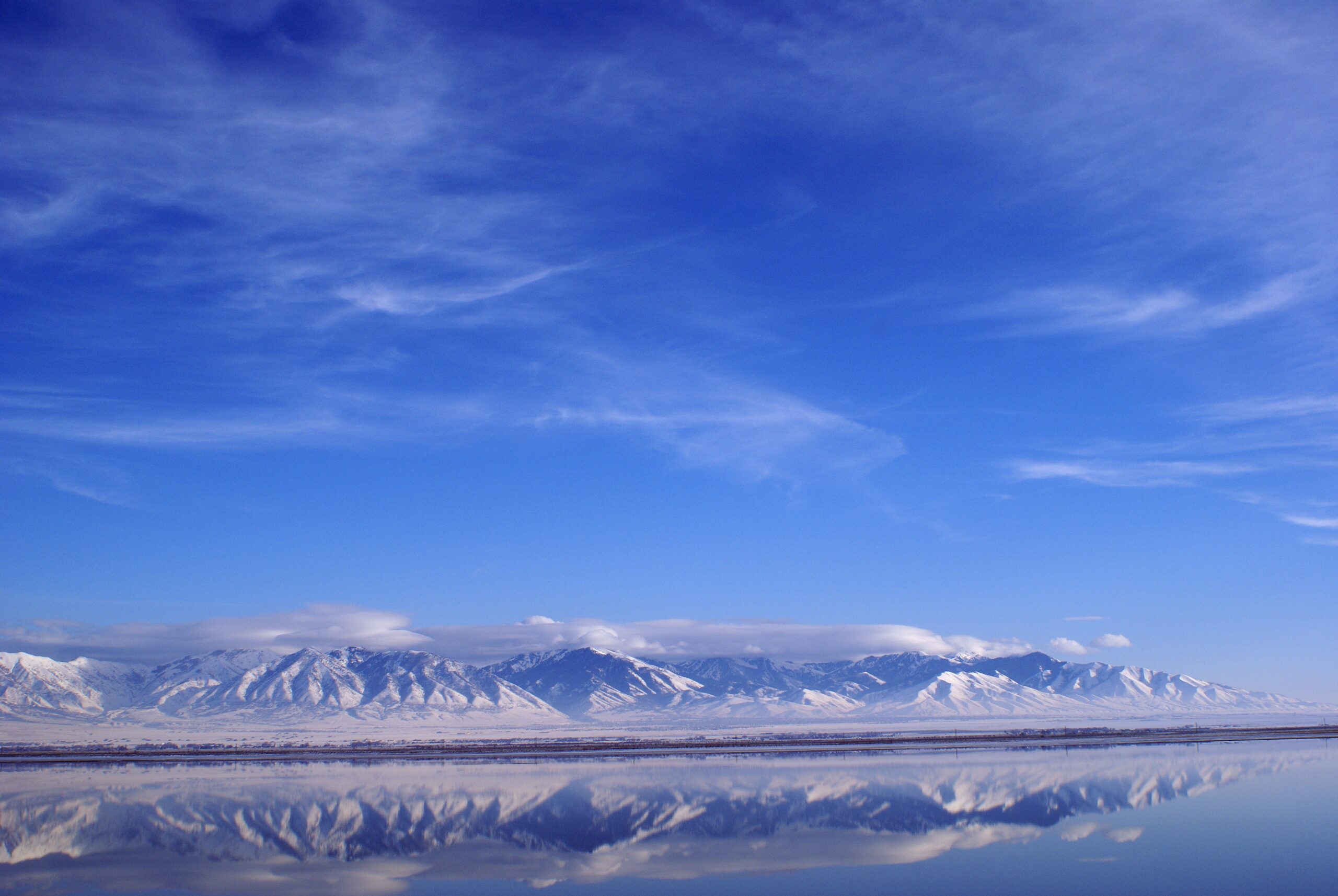
Most reputedly haunted places have a fixed footprint. The haunted Great Salt Lake does not: the shoreline in northern Utah moves by miles between wet years and dry ones, which means the ground where the stories are set is sometimes water and sometimes cracked salt flat. It is the largest saltwater lake in the Western Hemisphere and the eighth-largest terminal lake in the world, a shallow remnant of prehistoric Lake Bonneville, and its folklore is a mix of Native American warning tales, a 19th century monster report, an outright hoax, and one genuinely unsolved homicide.
For orientation: the lake sits in parts of five counties, Box Elder, Davis, Tooele, Weber and Salt Lake. Its average depth is only about 16 feet, so small changes in water level swallow or expose enormous areas of shore. Because there is no outlet except evaporation, the water is far saltier than seawater and dense enough that swimming in it feels closer to floating. Early writers called it “America’s Dead Sea.”
The Lake That Will Not Hold Still
The Great Salt Lake entered written history through Silvestre Velez de Escalante, who learned of its existence from the Timpanogos Utes in 1776. It was comprehensively surveyed for the first time in 1850 under Howard Stansbury. Brigham Young led a group of Mormon pioneers into the Salt Lake Valley southeast of the lake on 24 July 1847, and the settlement that became Salt Lake City took its name from the water.
The modern record is one of extremes. The highest recorded surface elevation, 4,211.2 feet, came on 15 April 1987. The lowest, 4,188.5 feet, came on 17 December 2022, and in 2021 the lake fell to its smallest recorded area of about 950 square miles, below the previous low set in 1963. In 2023 scientists at Brigham Young University estimated that without policy changes the lake could dry up by 2028, with salt-sensitive species dying off somewhat before that. Anyone chasing the lake’s ghost stories is chasing them across a landscape that is actively disappearing.
Water Babies and the Crying at the Waterline
The oldest supernatural tradition attached to the lake is the “Water Babies,” part of Native American folklore associated with the Great Salt Lake. In these stories the cries of infants can be heard near the water, drawing listeners toward the shore. Anyone who approaches is said to be dragged into the depths and never returns.
This is folklore, not incident report. No verified event sits underneath it. What it does do, like most water-warning tales, is encode something true about the place: a shallow, featureless, hypersaline shoreline with sudden storms is a genuinely dangerous margin, and a story that keeps children away from it earns its keep.
J. H. McNeil’s Monster on the North Shore, 1877
In mid-1877, J. H. McNeil and a number of other Barnes and Co. Salt Works employees were on the lake’s north shore in the evening. They claimed to have seen a large monster in the lake with a body like a crocodile and a horse’s head, and said the creature attacked them. The men ran and hid until morning.
The deflating explanation offered since is that the animal was a buffalo swimming in the lake, which is regarded by some as the whole of it. Thirty years earlier, a man recorded as “Brother Bainbridge” claimed to have sighted something resembling a dolphin in the water near Antelope Island. Neither report was corroborated by anything beyond testimony.
The lake’s other famous aquatic story is easier to settle. The myth of whales in the Great Salt Lake was reported in 1888 and claimed that a British scientist named James Wickham had introduced whales to the lake in 1875. It has been debunked as a hoax, and it belongs in the history of Utah tall tales rather than in any list of unexplained events.
Saltair Sally: The Remains Found by Duck Hunters
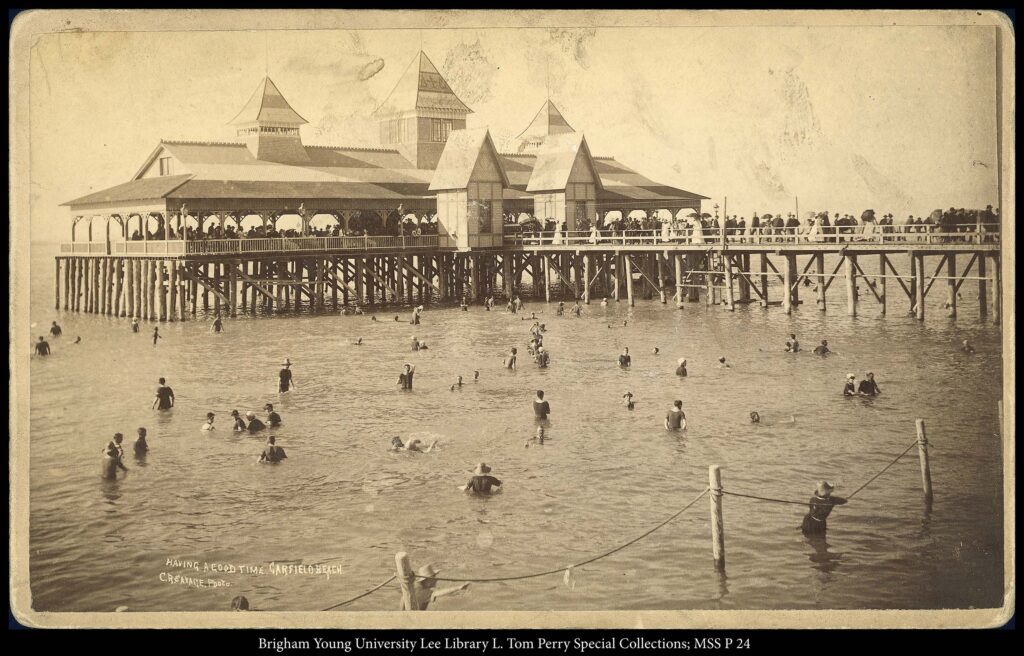
The one story here with a documented body is not a legend at all. Three resorts have carried the name Saltair on the lake’s southern shore since 1893. The first pavilion was destroyed by fire on 22 April 1925; a rebuilt and expanded version was destroyed by arson in 1970; the current Saltair, a concert venue, was completed in 1981 about a mile west of the original site.
In the autumn of 2000, duck hunters found the partially decomposed remains of a woman near the Saltair area. She went unidentified for years and locals called her “Saltair Sally.” In 2012, DNA testing identified her as Nikole Bakoles, a 20-year-old mother and a homicide victim. The unresolved circumstances of her death have fed local legends that her spirit lingers around the site, with reports of ghostly sightings and unexplained voices near the venue and the shore.
Worth stating plainly: the crime is real and remains unresolved. The haunting is a folk response to that, reported by visitors and repeated locally, and no part of it is established fact.
Jean Baptiste, Exiled to Fremont Island
In 1862, Jean Baptiste, a grave robber operating in Salt Lake City, was discovered to have robbed nearly 300 graves. Public outrage led to his exile on Fremont Island, out in the lake. He then vanished. Some accounts place him later in Montana, but nothing confirms his whereabouts and his fate remains a mystery. It is an unresolved disappearance rather than a ghost story, though the two tend to merge in the retelling: a man banished to an island in a salt lake, never seen again, leaves an obvious space for one.
Visiting Antelope Island and the Great Salt Lake Marinas
The lake is one of Utah’s largest tourist attractions and access is straightforward. Antelope Island State Park offers panoramic views, hiking and biking trails, wildlife viewing and beach access. The State of Utah operates a marina on the south shore at Great Salt Lake State Park and another at Antelope Island State Park. When water levels are low, Antelope Island connects to the mainland as a peninsula.
Two practical warnings come from the record rather than the folklore. Sudden storms and inexperience are the two most dangerous elements in boating and sailing here, so the lake’s wide-open water is not a casual first outing. And there is a natural “lake stink” caused by decaying insects and other wildlife, strongest when the shallow water is disturbed. Bird nesting is protected: access to Hat, Gunnison and Cub islands is strictly limited by the State of Utah.
Two other features draw people out to the remote northern arm. Robert Smithson’s land art work Spiral Jetty, made in 1970 near Rozel Point, is only visible when the lake drops below 4,197.8 feet above sea level. And Gunnison Island is where the artist and author Alfred Lambourne began living in November 1895, alone from that November until March 1896, writing the musings and poetry that became Our Inland Sea. Both are reminders that solitude on this lake has always attracted a particular kind of visitor.
Address: Great Salt Lake, northern Utah
See Great Salt Lake for Yourself
Sources
- Great Salt Lake
- Great Salt Lake, Utah (Usgs (official))
- Great Salt Lake Reaches New Historic Low (Usgs (official))
- Great Salt Lake: A Lively Recreational Jewel
- Only two species can survive in Great Salt Lake? Scientist says, hold my Nalgene
- Wikipedia: Great Salt Lake
Frequently Asked Questions
Where is Haunted Great Salt Lake Legends located?
Haunted Great Salt Lake Legends is located at Great Salt Lake, northern Utah.
Can you visit Haunted Great Salt Lake Legends?
Haunted Great Salt Lake Legends is open to the public. Always follow posted rules and respect private property.
Reader sightings
Nobody has reported anything here yet. If you have been, you would be the first.
Report your own visit to Water Babies and Saltair Sally: The Haunted Great Salt Lake
How haunted is this place?
Be the first to rate
Leave a Reply