

Reviewed by Josh N · Updated September 8, 2026 · How we verify
Reported Phenomena
- Storm warning apparition
- Woman in white
- Unexplained footsteps
- Disembodied voices
- Feeling of being watched
Reported by visitors & local legend. Stories, not verified claims.
Ask anyone along the Waccamaw Neck about the Gray Man of Pawleys Island and you will get a version of the same story: a figure appears on the beach, warns of a coming storm, and the houses of the people who listened are still standing afterward. That legend has attached itself to a barrier island in South Carolina that is barely three miles long, holds fewer than 150 year round residents, and has spent three centuries resisting almost every change the coast has thrown at it.
Pawleys Island is a town in Georgetown County and also the island the town sits on, one of the oldest resort areas on the United States East Coast. It lies off the Waccamaw Neck, the long narrow peninsula between the Atlantic and the Waccamaw River, and is reached by two bridges, the North Causeway and the South Causeway. The island itself measures a little over three miles long and about a quarter mile wide, with dunes on the northern end rising to roughly fifteen feet and a southern end that sits very low to the water. Behind it is tidal creek and marsh. The 2020 census counted 130 people living in the town.
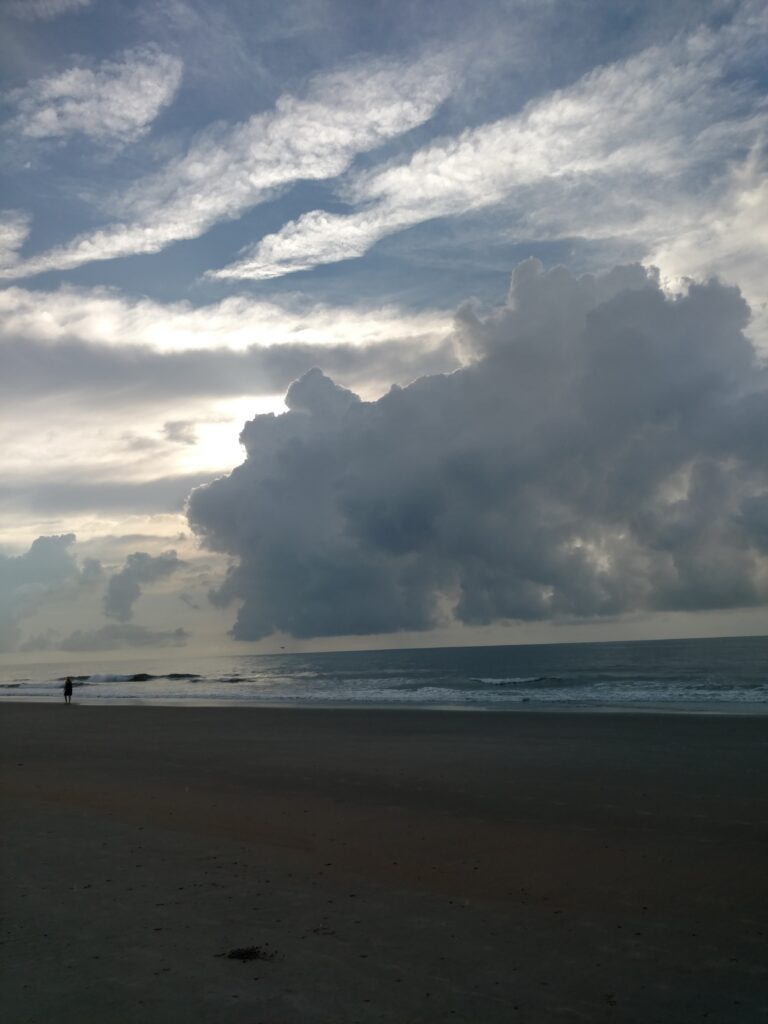
Waccamaw Ground Before It Was a Beach Resort
The earliest known inhabitants of the Pawleys Island area were the Waccamaw and Winyah peoples, whose history in the region goes back more than 10,000 years. The Waccamaw lived in communities along the Waccamaw River, from Lake Waccamaw in North Carolina down to Winyah Bay at Georgetown. Archaeological shell middens left behind show that clams and oysters were staples. They farmed a range of crops and domesticated deer, chickens, ducks, geese, and other fowl.
The first Europeans arrived from Spain in 1521, and colonization was catastrophic for both tribes. Many people were captured and enslaved, others starved when farms and hunting grounds were seized, and disease killed still more. The Winyah had disappeared by 1720. The Waccamaw did not: they survive today as the Waccamaw Indian People of Conway, South Carolina, a founding member of the South Carolina Indian Affairs Commission that has worked with state governors for decades on behalf of South Carolina’s first inhabitants. Any honest account of who has walked this shoreline starts there, well before the ghost stories.
George Pawley, the Rice Planters, and the Malaria Season
The island’s life as a resort began in the early 1700s. George Pawley, the town’s namesake, inherited the island through a land grant made to his father and sold parcels to wealthy rice planters looking for a coastal summer refuge from the malaria-carrying mosquitoes of the inland marshes. That single economic fact shaped everything that followed, including the ghost stories, which are almost all stories about planter families and the people who worked for them.
In 1791 President George Washington toured the Grand Strand along The King’s Highway and stopped at an unincorporated portion of Pawleys Island to visit the Alstons, who held several plantations in the area. All Saints Church, Cedar Grove Plantation Chapel, and the Pawleys Island Historic District are all listed on the National Register of Historic Places. The Pawleys Island Chapel, built in 1946, remains a gathering place for the community and a popular spot for local celebrations.
The town government itself was not incorporated until 1985. Four years later, Hurricane Hugo swept some of the island’s cottages away entirely; they were later replaced. The island bans commercial and industrial building, with the exception of a 1970s condominium complex and a handful of grandfathered inns, among them the SeaView Inn and the PCJ Weston House, now known as the Pelican Inn. That prohibition is why the place still earns its affectionate local description as “arrogantly shabby,” and why it looks so little like the rest of the Grand Strand.
The 1822 Origin of the Gray Man
The Gray Man is said to have walked this coastline for close to 200 years, and his appearance is understood locally as a warning of hurricanes and other danger. This is folklore rather than documented history, and the story is told in several forms, but the most common version is set in 1822.
In that telling, a young woman was staying on the island with her family when word arrived that her fiance was traveling to join her. She spent the day preparing all of his favorite dishes. On the way, he challenged his servants to a horse race, spotted what looked like a shortcut through the marsh, and took it. The horse stumbled and threw him. His servants could not free him, and he sank into the mud.
News of his death nearly unhinged her. She had distressing visions of him, waking and sleeping, and her family took her to Charleston to see a doctor. Within hours of their departure a hurricane struck the coast. Almost all of the island’s inhabitants died. The family’s house was untouched.
That last detail is the engine of the whole legend, and it is why the Gray Man is not treated locally as a threat. People who say they have seen him describe him as a warning delivered in time, and the folklore holds that homes belonging to those who heeded him were spared. No record verifies any of this. It is a story the island has kept telling because it keeps proving useful, and because hurricanes keep coming.
Alice Flagg and the Ring She Cannot Find
The other name you will hear repeatedly is Alice Flagg, said to be the ghost of a young woman from a wealthy local family whose love for a man beneath her station was forbidden. In the legend she died heartbroken, and her spirit is reported at the Hermitage and in All Saints Cemetery, searching for an engagement ring taken from her. Visitors leave offerings at the grave marker associated with her, and some walk backward around it as part of a ritual meant to summon her. Like the Gray Man, Alice belongs to oral tradition rather than to the documented record.
The Pelican Inn, the old PCJ Weston House, carries its own reputation. Guests and staff have reported unexplained noises and fleeting figures, generally attributed to the building’s original owner. These are reported experiences, not established fact, and an eighteenth and nineteenth century wooden house on a windy barrier island produces a great deal of noise on its own.
What Visitors Say They Encounter
- A gray-clad male figure on the beach, most often reported in the days before a hurricane makes landfall
- A woman in white in and around All Saints Cemetery and the Hermitage grounds
- Footsteps, creaking, and voices inside the older inns when rooms are empty
- A sense of being watched on the beach at dusk, when the low southern end of the island empties out
None of it has been demonstrated. What can be said is that the reports are consistent, long running, and tied to specific places rather than floating free of the landscape.
Planning a Trip to Pawleys Island
The town sits just off U.S. Route 17, roughly ten miles east of Georgetown, and is reached by the North and South Causeways. Because there is essentially no commercial development on the island, plan on eating and shopping on the mainland side along the Ocean Highway. The water is comfortable from May through October, and fishing, crabbing, shrimping, and birdwatching are good in most months of the year. There is a branch of the Georgetown County Library on Pawleys Island if you want to dig into local history while you are there.
Most of the island is private residential property, and the historic cottages are people’s homes. Stay on public beach access and public rights of way, do not walk onto private lots or porches for a photograph, and treat All Saints Cemetery as the active burial ground it is. If you are visiting during hurricane season, follow official evacuation guidance rather than waiting for a figure on the beach to tell you.
Sources
- ArcGIS REST Services Directory (Census (official))
- U.S. Census website (US Census Bureau)
- 2020 Decennial Census Redistricting Data (Public Law 94-171) (Census (official))
- A Brief Timeline of Pre-History, History, and the Present of the Waccamaw Indian People
- The History of the Waccamaw
- Wikipedia: Pawleys Island, South Carolina
Frequently Asked Questions
Can you visit Pawleys Island?
Pawleys Island is open to the public. Always follow posted rules and respect private property.
Reader sightings
Nobody has reported anything here yet. If you have been, you would be the first.
Report your own visit to The Gray Man of Pawleys Island Walks Before the Storm
How haunted is this place?
Be the first to rate
Ghost Tours Nearby

Affiliate links: BeyondHaunted may earn a commission, at no extra cost to you.
Leave a Reply