
Reviewed by Josh N · Updated August 27, 2026 · How we verify
Reported Phenomena
- Dancing woman in blue
- Nineteenth century apparition
- Unexplained touches
- Sense of unseen presence
- Atmosphere change at dusk
Reported by visitors & local legend. Stories, not verified claims.
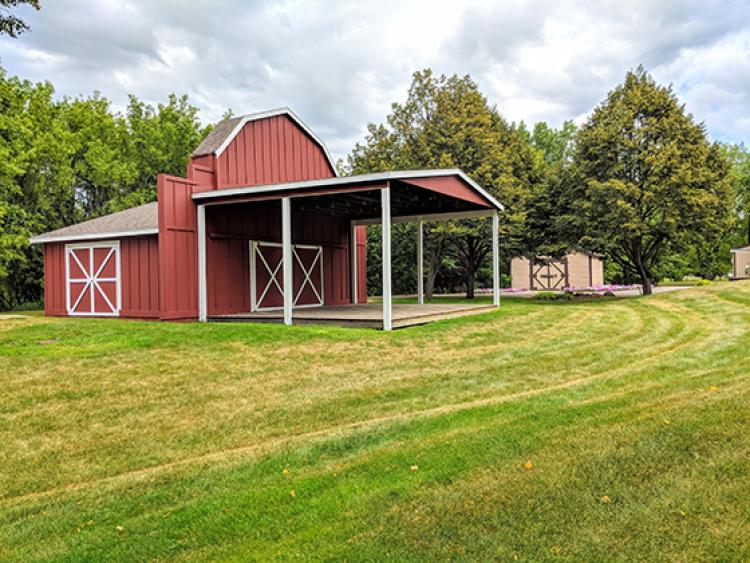
Trollwood Park in north Fargo reads, at first glance, as unremarkable: twenty-eight acres of mown grass, swings, slides, gazebos and picnic tables on the northern edge of one of North Dakota’s largest cities. What separates it from every other municipal park in the state is what lies beneath the turf. The land was a county burial ground for the poor and the unclaimed, and although hundreds of graves were removed, local storytellers insist not everything left with them.
Quick orientation
- Where: north Fargo, North Dakota
- Size: roughly 28 acres of public parkland
- On site: swings, slides, gazebos, a frisbee course, picnic areas
- Earlier uses: potter’s field for the Cass County Hospital, then a nursing home, then a performing arts school campus
- Still visible: a stone marker reading “County Cemetery #2” near a willow tree
Cass County Hospital and the Field for the Unclaimed
The documented history starts with an institution rather than a park. The Cass County Hospital was established in 1895 to care for the elderly, the disabled and the mentally ill who could not afford treatment anywhere else. Institutions of that kind needed somewhere to bury people whose families either could not pay or never came, and from the early 1900s the ground that is now Trollwood Park served that purpose: a burial place for the indigent and for unclaimed bodies, many of them patients at the hospital itself.
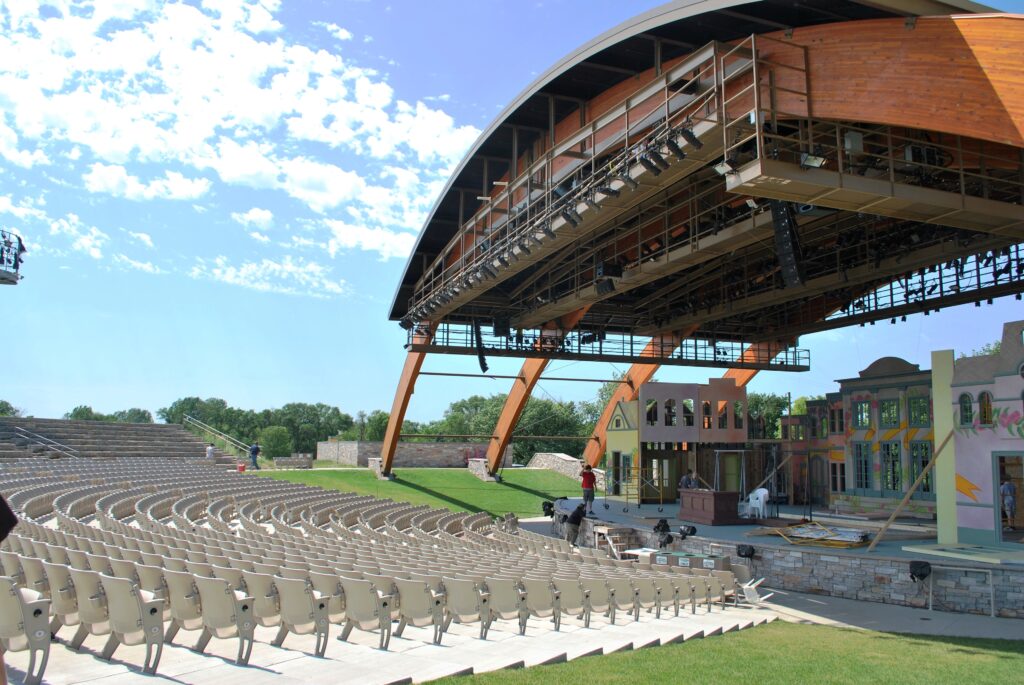
The hospital closed in 1947. The buildings did not sit empty for long. The facility became a nursing home known as Golden Acres Haven, operating until 1973, and the site later housed the Trollwood Performing Arts School, which used the grounds as its campus and outdoor stage. The school eventually moved on after persistent flooding made the location unworkable, relocating to a purpose built amphitheater that opened in 2009.
Three Hundred Unmarked Graves
The most consequential detail in the park’s record is also the least advertised. During the site’s conversion into public parkland, workers uncovered roughly 300 unmarked graves, which were disinterred and reburied elsewhere. That is the sort of number that changes how a place feels once you know it.
The removal was not tidy in the way a modern relocation would be. Reminders have surfaced since, including a reported instance of a human bone protruding from the ground. And the cemetery still identifies itself: a stone marker inscribed “County Cemetery #2” stands near a willow tree, the only formal acknowledgement most visitors will encounter that they are standing in a graveyard. If you go looking for one thing at Trollwood, look for that stone. It is history rather than legend, and it costs nothing to find.
The Woman in Blue by the Willow
Everything in this section is reported experience. None of it is documented, and no verified event underlies it.
The park’s best known figure is a woman in a long dark blue dress of nineteenth century cut, described as dancing silently near the willow tree and the grave marker. What gives the account its staying power is the detail that recurs in the retellings: witnesses take her for a living performer, which is plausible enough on a site that spent years hosting a performing arts school, and only reconsider when she disappears. Local lore attaches her to the vanished cemetery rather than to any named patient or burial, and there is no record linking the figure to a specific person.
Other reports are quieter and harder to pin down. Visitors describe an abrupt change in atmosphere as the light goes, a sense of being accompanied when nobody else is on the paths, and occasional unexplained touches. These are the kinds of accounts that thrive in a place where the ground is known to have been a graveyard, and readers should weigh them accordingly. Expectation does a great deal of work after dark.
Walking Trollwood Park Today
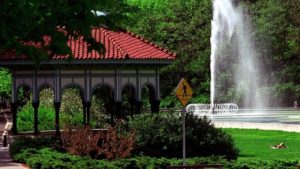
Trollwood Park is public open space and there is no admission, no gate and no guided tour. In daylight it functions exactly as its designers intended: a neighbourhood park with playground equipment, shaded gazebos, picnic space and a frisbee course, used by families who mostly are not thinking about potter’s fields. That contrast is the honest reason to visit. The historical interest here is not a ruin or a preserved building but an absence, a burial ground erased and paved over with recreation, marked by a single stone that most people walk past.
If you come for the ghost stories, come at dusk rather than the middle of the night, respect the fact that this is a residential city park with neighbours nearby, and treat the marker and the willow as what they are: the last standing evidence of a cemetery that held the county’s poorest dead. Whether anyone still dances there is a matter of report, not record.
See Trollwood Park for Yourself
Sources
- Bluestem still losing money, but concerts help narrow Fargo school…
- Moorhead's Bluestem lives up to billing
- Events, Bluestem Amphitheater
- Trollwood Performing Arts School
- Wikipedia: Bluestem Amphitheater
Address: 3664 Elm Street N
Frequently Asked Questions
Where is Trollwood Park located?
Trollwood Park is located at 3664 Elm Street N.
Can you visit Trollwood Park?
Trollwood Park is open to the public. Always follow posted rules and respect private property.
Reader sightings
Nobody has reported anything here yet. If you have been, you would be the first.
Report your own visit to The Woman in Blue and Trollwood Park’s Buried Cemetery
How haunted is this place?
Be the first to rate
Nearby Haunted Locations
- 1Phelps MillMinnesota59mi
- 2Palmer House Hotel – Minnesota Haunted History and Ghost StoriesMinnesota120mi
- 3Totten Trail Historic InnNorth Dakota127mi
- 4White Lady Lane North DakotaNorth Dakota148mi
- 5Sophia Eberlen and the Ghosts of Harvey Public LibraryNorth Dakota159mi
- 6The Town That VanishedMinnesota177mi

Leave a Reply