
Reviewed by Josh N · Updated August 27, 2026 · How we verify
Reported Phenomena
- Apparition of founder
- Sightings in gardens
- Presence in exhibit halls
- Activity near historic house
- Security staff reports
Reported by visitors & local legend. Stories, not verified claims.
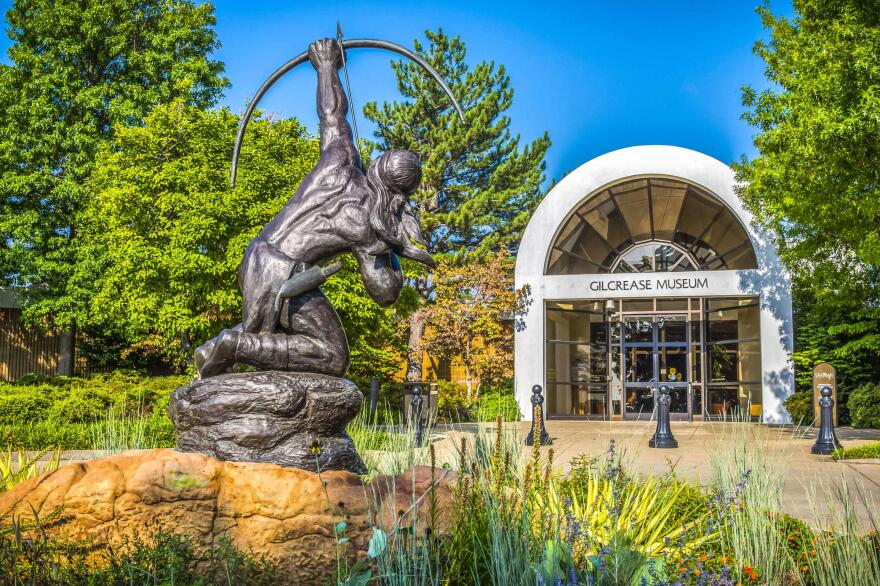
Almost everything about the place has changed since the stories started, which makes the ghost of Thomas Gilcrease an unusual case: the building he filled with art has been knocked down, and his grave is still on the property. The Gilcrease Museum sits northwest of downtown Tulsa, Oklahoma, holding what the institution describes as the world’s largest and most comprehensive collection of art of the American West, plus a growing body of material from Central and South America. The founder was buried in a mausoleum on the grounds in 1962, and the claim that has followed the museum ever since is that he never left.
An Allotment, an Oil Field, and a Collector Nobody Was Competing With
Thomas Gilcrease grew up in the Muscogee (Creek) Nation in what is now eastern Oklahoma. When the federal government broke up collectively held tribal lands and allotted them to individual citizens, his tribal membership entitled him to 160 acres just south of Tulsa. That parcel turned out to sit in the Glenn Pool Oil Reserve, one of Oklahoma’s first major oil fields, and the town of Glenpool grew up around it.
He was a capable businessman as well as a lucky one. Gilcrease founded the Gilcrease Oil Company in 1922 and in less than a decade had greatly expanded his holdings. He bought his first oil painting, Rural Courtship by Daniel Ridgway Knight, in 1912 for $1,500, but the serious collecting came later, after travels through Europe in the 1920s and 1930s where visits to museums there gave him the idea of building one of his own. Pride in his Native American heritage and an interest in the history of the American West gave the collection its focus. Most of it was assembled after 1939.
The first version of the museum opened in 1943 at his oil company headquarters, which was then in San Antonio, Texas. Within a few years he brought both the company and the collection back to Tulsa, and in 1949 he opened a gallery for public viewing on his Tulsa estate. He was buying at a time when very few people cared about western art, which is part of why he was able to acquire so much so quickly. He also patronised Native American artists directly, purchasing more than 500 paintings by twentieth-century Native artists alone.
The 1954 Bond Election That Kept the Collection in Tulsa
The collecting outran the cash. Declining oil prices left Gilcrease facing a debt he could not service, and rather than break up what he had built he offered to sell the entire collection intact. In 1954, with the real prospect that the collection would leave town, a small group of Tulsa citizens organised a bond election. Voters approved it by a three to one margin, and the $2.25 million bond issue cleared his outstanding debts.
Gilcrease deeded the collection to the City of Tulsa in 1955. In 1958 the Gilcrease Foundation conveyed the museum buildings and grounds as well, and he committed oil property revenue toward the museum’s upkeep until the bond was repaid. He kept working after the handover, funding archaeological excavations and buying more material, and on his death in 1962 he left the museum everything he had gathered in his final years.
What he left behind is enormous by any measure: roughly 10,000 works of art, including 18 of the 22 different bronzes cast by Frederic Remington; anthropology collections numbering some 300,000 artifacts; and an archive of more than 100,000 books, manuscripts, documents and maps dating from 1494 to the present. Among the archival holdings are a letter dictated and signed by Diego Columbus in 1512, the Cortez Decree of 1521, and a letter written by Thomas Jefferson dated 1 July 1776. Since 2008 the museum has been run through a public-private partnership between the City of Tulsa and the University of Tulsa.
Cornmeal, Arrows, and the Mausoleum on the Grounds
Gilcrease was interred in a mausoleum on the museum property, a short walk from the collection he spent his life assembling. The retelling that circulates locally holds that traditional rites were performed at his burial to see his spirit safely on: cornmeal scattered to sustain him, arrows loosed into the air to turn away anything that might trouble him. That detail belongs to the storytelling around the museum rather than to its institutional record, and it should be read that way.
The mausoleum is not folklore. It stands on the grounds, and it is one of the few elements of the site the city has committed to preserving through the museum’s total reconstruction, along with the Thomas Gilcrease house.
What People Say They See in the Galleries and Gardens
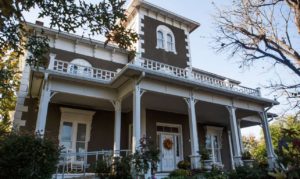
The haunting attached to Gilcrease is a single-figure story, and the figure is always the founder. Visitors and staff have reported seeing a man in the gardens and around the former residence beside the museum. More often the reports come from the exhibit hallways, where the presence is described as watchful rather than hostile, as though he were still checking on what he bought. Local versions of the story claim the experiences were frequent enough to churn through the museum’s security staff.
Nothing in that paragraph is documented. There is no incident log in the public record, no named witness, no verified departure attributed to a ghost. The museum’s own published history covers the oil money, the bond election, the repatriation work and the rebuild, and says nothing whatsoever about apparitions. What survives is an oral tradition around a man who was unusually, obsessively attached to a collection, buried within sight of it. Reported phenomena include:
- A male figure seen in the museum gardens
- Sightings around the Gilcrease house next to the museum
- A sensed presence in the exhibit hallways
- Claims of unexplained activity reported by security personnel
The Museum Was Demolished, and the Grave Stayed
Anyone arriving with the old floor plan in mind should know it no longer exists. Tulsa voters approved a 0.6 percent sales tax in April 2016 that earmarked $65 million for expanding and improving the museum. Once planners established that bringing the existing building up to modern standards would cost more than starting over, the scheme grew into an $83.6 million plan for an entirely new museum. Demolition of the old building and construction of the new one began in 2022, and the project is now projected to be a $140 million facility, with an opening anticipated in early 2027.
The replacement, designed by SmithGroup, subtly reflects Osage culture and the natural world, aligning with the cardinal directions and linking earth, sky, day and night. Materials and colours nod to Art Deco design and to the Thomas Gilcrease home, with local sandstone tying the building to the Oklahoma landscape. There will be 14 core galleries across two floors plus three changing galleries at ground level. The lower floor takes up questions of place and land, with Thomas Moran’s Shoshone Falls as a highlight; the upper floor deals with interactions, including the myth of the vanishing race in visual art and the tangled history connecting the forced removal of the Five Tribes to Indian Territory with Black communities in Tulsa.
The museum is also doing serious repatriation work. Gilcrease is actively consulting with more than 75 Native Nations on the return of ancestral human remains, funerary items, sacred objects and objects of cultural patrimony, and since 2016 has taken a proactive rather than reactive approach to NAGPRA compliance.
Visiting the Gilcrease Grounds While the New Museum Rises
During the rebuild there is no gallery visit to be had, so plan around the grounds. The Helmerich Center for American Research, completed in 2014 at a cost of about $14 million, remains open on site and is where researchers reach the rare documents. Materials can only be handled in the Reading Room, an environmentally controlled and secured space, and the documents themselves are kept in a hardened concrete structure built to survive tornadoes. The passage connecting the Reading Room to storage was inspired by the Vasari Corridor in Florence. The same building holds the Great Hall, used for conferences, fundraising and short-term displays.
The landscape is being reworked too, by landscape architect Michael Van Valkenburgh, with the stated aim of a more legible arrival sequence and pedestrian paths that feel intuitive. Ground was broken in April 2026 on a privately funded $3.5 million trail system of 13 miles for hiking and mountain biking across the museum grounds and adjoining city land, with completion expected in early 2027, timed to the museum’s own reopening.
For anyone chasing the ghost story specifically, the two structures the accounts centre on are the ones that survived the wrecking crews: the Gilcrease house and the mausoleum. Both are staying put. The exhibit hallways where the founder was said to keep watch are gone, and whether the story transfers to a new building with 14 galleries in it is a question the next few years will answer.
See Gilcrease Museum for Yourself
Sources
- Homepage
- SmithGroup’s design for a brand new Gilcrease Museum in Tulsa is revealed
- Thomas Gilcrease and His Western Museum (Feb 90,Vol:41 Issue:1)
- Home – Gilcrease Museum (Utulsa (official site))
- Loc (official)
- Wikipedia: Gilcrease Museum
Address: 1400 N Gilcrease Museum Road
Frequently Asked Questions
Where is Gilcrease Museum located?
Gilcrease Museum is located at 1400 N Gilcrease Museum Road.
Can you visit Gilcrease Museum?
Gilcrease Museum is open to the public. Always follow posted rules and respect private property.
Reader sightings
Nobody has reported anything here yet. If you have been, you would be the first.
Report your own visit to Cornmeal and Arrows: The Ghost of Thomas Gilcrease
How haunted is this place?
Be the first to rate

Leave a Reply