Reviewed by Josh N · Updated March 23, 2026 · How we verify
Reported Phenomena
- Spectral figures
- Phantom footsteps
- Unexplained sounds
Reported by visitors & local legend. Stories, not verified claims.
Address: 111 West 44th Street, New York, NY 10036
Phone: (212) 239-6200
Hours: Sunday 12:00 PM to 6:00 PM, Monday through Saturday 10:00 AM to 8:30 PM
Official website: Belasco Theatre page
The haunted history of the Belasco Theatre
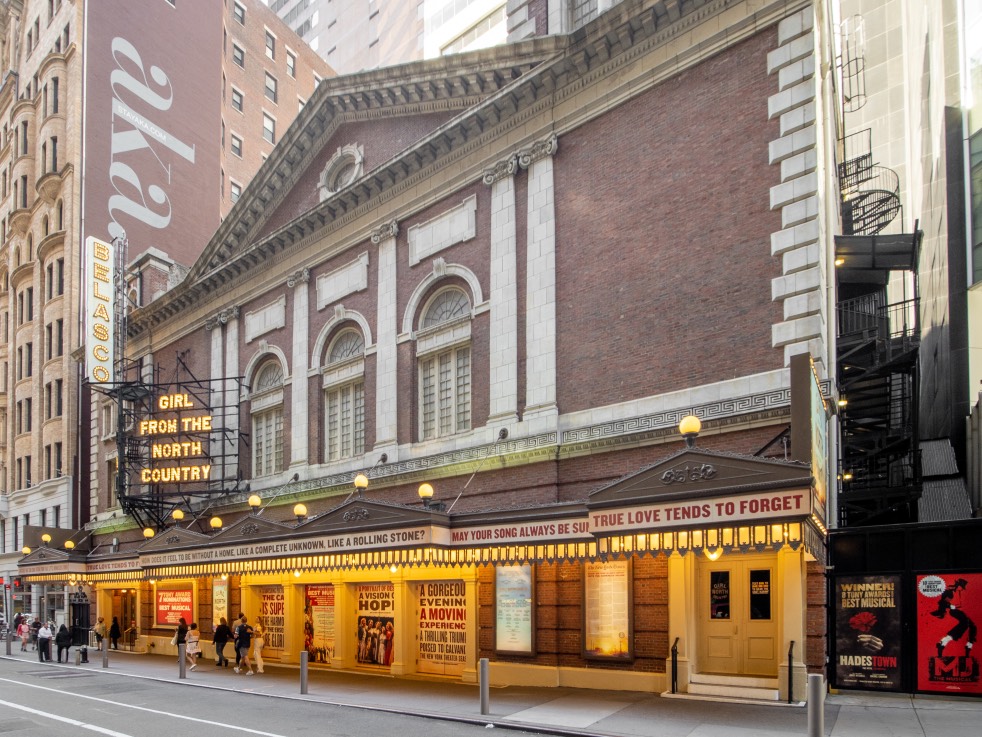
The Belasco Theatre is one of those Broadway houses that already looks like it should have a ghost story. Tucked on West 44th Street in Manhattan’s Theater District, the venue opened in October 1907 as the Stuyvesant Theatre before being renamed the Belasco in 1910 by producer David Belasco. Today it is operated by The Shubert Organization, but the building still carries the personality of its original owner more than a century later.
That personality is a huge part of why the theatre’s haunted reputation never really faded. David Belasco was not just another producer. He was one of Broadway’s giants, a writer, director, impresario, and showman so theatrical in his personal style that he was nicknamed the “Bishop of Broadway.” He famously wore clerical-style clothing, lived above the theatre in a private duplex apartment, and shaped the venue to fit his own tastes. That apartment, with décor reportedly styled like a Gothic church and filled with theatrical memorabilia, became central to the legends that followed after his death in 1931.
A Broadway theatre built to feel intimate
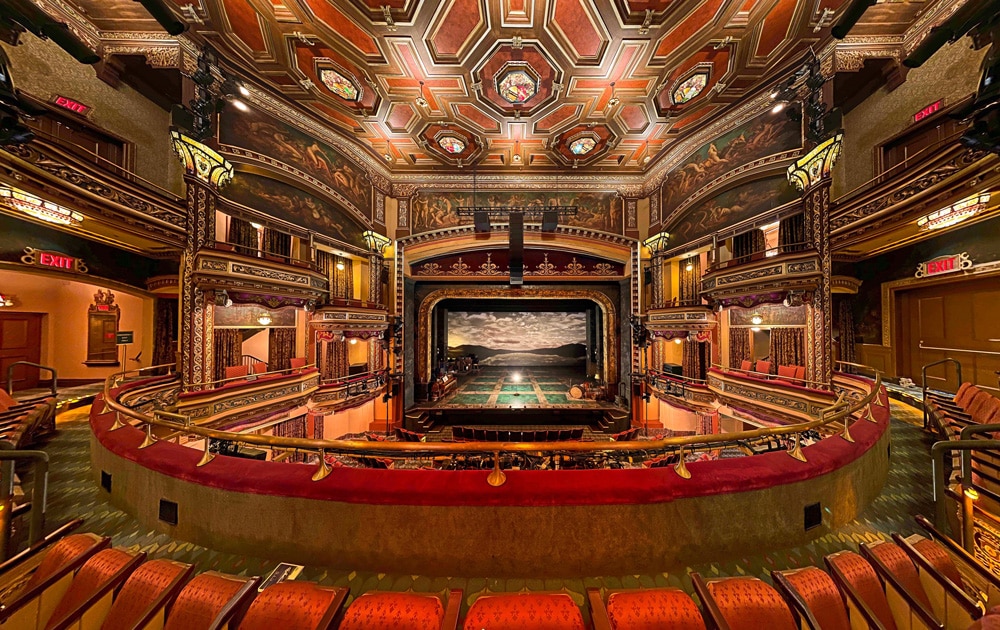
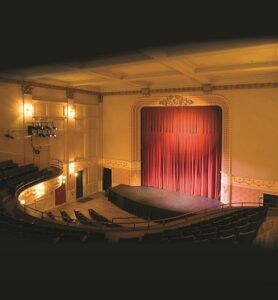
Part of what makes the Belasco memorable even without the ghost lore is the way it was conceived. Shubert notes that Belasco wanted the auditorium to feel like a living room, reflecting the “Little Theater” idea that intimacy between performers and audience matters. Architect George Keister designed the building, and artist Everett Shinn created murals for the interior. The theatre also featured advanced stage technology for its day, including impressive lighting and a freight elevator system connecting basement shops to the stage.
The building’s architectural importance is not just a matter of Broadway nostalgia. The Historic Districts Council notes that the theatre was designed in an elegant neo-Georgian style, and both the facade and interior were designated New York City landmarks in 1987. Shubert also states that the historic venue underwent a major restoration in 2010.
Why David Belasco is said to haunt the theatre
The main haunting story is straightforward. After Belasco died, actors and staff began reporting a male apparition dressed much like Belasco had dressed in life, a tall figure in dark clerical-style clothing seen sitting in the balcony, in a box, or watching rehearsals. Playbill describes him as one of Broadway’s most “alive-looking” ghosts, appearing not as a vague mist but as a recognizable man in the same distinctive style that earned him his nickname in life.
The reports go beyond a figure being seen at a distance. The Museum of the City of New York wrote that people connected to the theatre claimed Belasco’s ghost sometimes spoke to actors, shook their hands, and even made his approval or disapproval known. The same account also notes reports of unexplained footsteps, doors opening together, and activity around the supposedly non-functioning elevator that once led to Belasco’s apartment.
That mix of show-business superstition and repeated eyewitness stories is why the Belasco keeps turning up on lists of Broadway’s most haunted theatres. It is not just a generic “old building with strange noises” legend. The stories are unusually specific, tied to a single dominant personality who had deep control over the place in life and, according to believers, never fully left it in death.
The legend of the Blue Lady
Belasco is not the only alleged spirit linked to the theatre. A second recurring story involves a woman often described as the “Blue Lady.” The New Yorker reported in 2006 that one of the theatre’s long-running ghost legends involved a showgirl who died after falling into an elevator shaft backstage, and that she was said to wear blue. The Museum of the City of New York also wrote about sightings of a “Blue Lady” connected in legend to a fatal fall in an elevator shaft.
A New Victory Theatre feature on Broadway ghosts adds another version of that legend, saying many eyewitnesses described a woman in a large blue dress in the balcony and linking her story to a woman associated with Belasco who allegedly died in the building in 1925 when an elevator malfunctioned. That same source says disruptive noise from the elevator shaft was reportedly heard during the 2003 run of Enchanted April. Because these details come from ghost lore rather than a verified official death record presented in the source material, they are best treated as part of the theatre’s legend, not proven fact.
Reported encounters from performers
One reason the Belasco legend has survived is that well-known theatre people kept the stories alive. Playbill has published multiple accounts tied to the house, including actress Melissa Errico saying that during Dracula the Musical, her dresser believed she saw Belasco walk into a mirror, and Errico herself described a moment when a small lamp seemed to turn on for her in a dark dressing room.
Laura Linney has shared perhaps the most famous modern story. In remarks covered by Playbill after her appearance on The Late Late Show with James Corden, Linney said she had been skeptical about the theatre’s reputation until a final dress rehearsal, when she looked up to the locked upper balcony and saw a blonde woman in a blue dress standing there. When she mentioned it afterward, the house manager reportedly responded by asking if the figure had been female and wearing blue.
Stories like that do not prove the supernatural, but they do explain why the Belasco remains one of Broadway’s most talked-about haunted venues. The legends are reinforced by theatre culture itself, where ritual, superstition, and memory all blend together. At a place like this, even skeptics tend to admit the atmosphere is unusual.
The Oh! Calcutta! story and Broadway folklore
One of the strangest parts of the Belasco legend is the claim that David Belasco’s ghost was temporarily “banished” by the notorious nude revue Oh! Calcutta!, which played there in the 1970s. The Shubert Organization itself repeats that story on the theatre’s official history page, and the Museum of the City of New York also notes the rumor that Belasco stopped appearing after the show’s full-frontal nudity offended or shocked him. Whether anyone believes that literally or not, it is a very Broadway kind of haunting detail.
That detail matters because it shows how the Belasco’s ghost stories evolved alongside the theatre’s production history. This is not folklore frozen in the early 20th century. The legend adapted as new casts, crews, and audiences came through the building. In other words, the haunting is part of the theatre’s ongoing identity, not just a footnote from the past.
Is the Belasco Theatre really haunted?
There is no hard evidence that the Belasco Theatre is haunted in any scientific sense. What does exist is a remarkably persistent body of testimony, urban legend, and theatrical tradition centered on one of Broadway’s most distinctive buildings. Its original owner lived above it, shaped it in his own image, died decades ago, and yet remains the first name that comes up whenever the venue is discussed. That alone is why the Belasco stands apart from countless other old theatres with creaking floors and dramatic lighting.
For paranormal fans, the Belasco is compelling because the stories are specific, repeated, and tied to a real historical figure whose eccentric personality is well documented. For theatre lovers, it is compelling because the building is a preserved Broadway landmark with a rich production history and one of the strongest ghost reputations in New York. Either way, the Belasco Theatre has earned its place as one of America’s most famous allegedly haunted performance spaces.
Never trespass on property that is not yours without permission, and remember that ghost hunting can be dangerous, so always use caution.
Sources
- Shubert Organization, “Belasco Theatre”
- Times Square Alliance, “Belasco Theatre”
- Historic Districts Council, “Belasco’s Stuyvesant Theater”
- New Victory Theater, “The Ghosts of Broadway”
Frequently Asked Questions
Where is Belasco Theatre located?
Belasco Theatre is located at 111 West 44th Street, New York, NY 10036.
Can you visit Belasco Theatre?
Belasco Theatre is open to the public. Always follow posted rules and respect private property.
Reader sightings
Nobody has reported anything here yet. If you have been, you would be the first.
Report your own visit to Belasco Theatre Haunted History: David Belasco’s Ghost on Broadway
How haunted is this place?
Be the first to rate
Ghost Tours Nearby
 NYC Gangsters and Ghosts Walking Tourfrom $35
 New York City Ghost Tour of Greenwich Villagefrom $39
 Roosevelt Island Tramway and Self Guided History Tourfrom $10
Affiliate links: BeyondHaunted may earn a commission, at no extra cost to you.
Leave a Reply