

Reviewed by Josh N · Updated September 11, 2026 · How we verify
Reported Phenomena
- Apparitions in period clothing
- Disembodied whispers
- EVP recordings
- Photographic anomalies
- Suicide legend
Reported by visitors & local legend. Stories, not verified claims.
Few buildings in rural Wisconsin carry a reputation as lopsided as the Clark County Insane Asylum: a short, plainly documented institutional history on one side, and a much larger pile of campfire stories on the other. What is generally repeated about the place is that it was established in 1922 by M. H. Duncan, that it opened with just twelve patients, and that those twelve patients contributed labor to the construction of the building they would live in. Whatever else is said about the site, that detail is the one that sticks.
Twelve Patients and a Building They Helped Raise
The asylum grew quickly from that starting point. By 1936 the population is reported at 316, most of them people transferred in from other hospitals in the region, and specifically people judged to have slim prospects of ever returning to life outside an institution. That is worth pausing on. This was not primarily an intake facility for short-term crises. It functioned as a place where other hospitals sent patients they had stopped expecting to discharge.
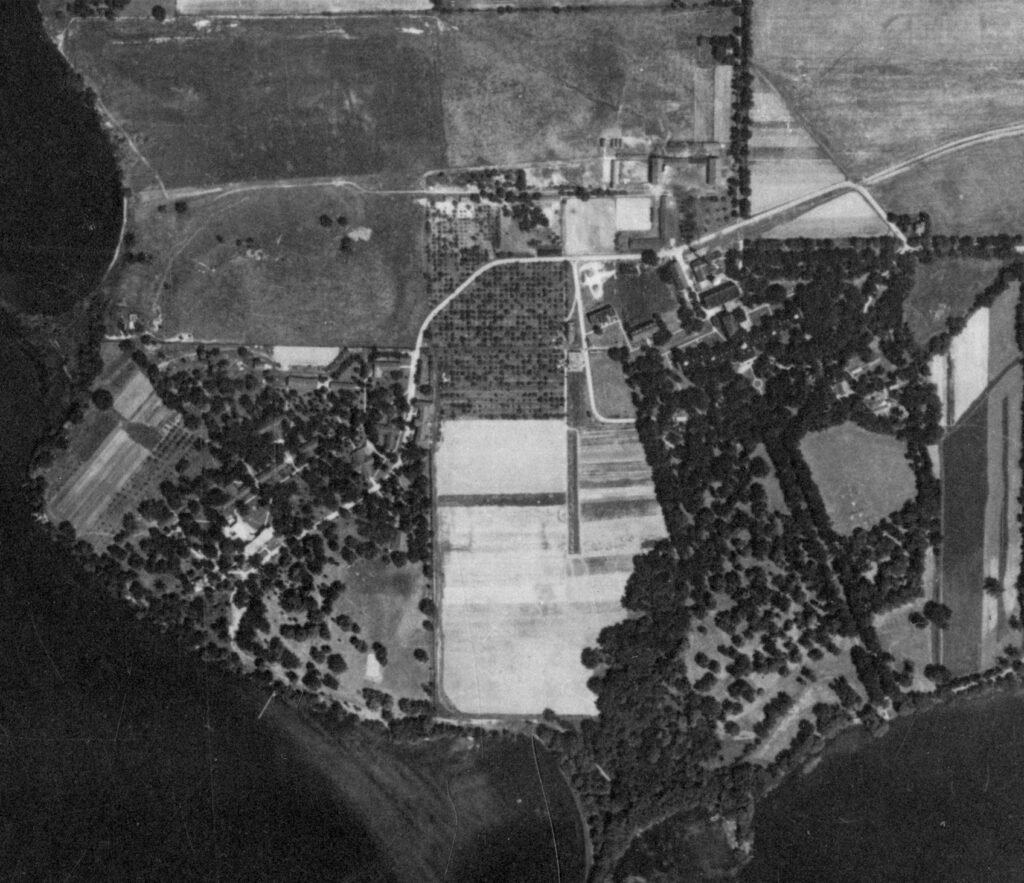
A jump from twelve residents to more than three hundred in roughly fourteen years tells you most of what you need to know about the conditions. Staffing and funding at county asylums did not scale at the same speed as admissions. The result, by every account that survives about this site, was an overwhelmed institution: too many patients, too few caretakers, and care that slid into neglect by default rather than by intent.
Treatments That Were Standard Then and Look Like Harm Now
The methods attributed to the asylum in its early decades belong to an era when psychiatry was still largely experimental. Electrotherapy was used to induce seizures. Submersion in ice water served as a form of shock treatment. Bloodletting, a practice already centuries out of date in general medicine, is also reported among the treatments used here.
None of this was unique to Clark County, and it is worth being clear about that rather than presenting the asylum as an outlier of cruelty. These were, at the time, treatments offered in earnest by people who believed they worked. They also frequently made patients worse, and in some cases the treatments themselves are said to have killed. The line between medicine and punishment in an underfunded 1920s and 1930s county asylum was thin enough that the people inside it would not always have been able to tell the difference.
That history, more than any single ghost story, is what gives the site its weight. The suffering documented here does not require a supernatural explanation to be real.
What Visitors Say Happens at the Clark County Asylum
The paranormal reputation of the Clark County Insane Asylum rests almost entirely on accounts from ghost hunters, urban explorers and thrill seekers rather than on anything in the institutional record. Taken as reported experiences rather than verified events, the recurring claims are these:
- Figures in period clothing. Witnesses describe seeing what they take to be former patients, dressed in worn garments from an earlier era, moving through the derelict interior.
- Whispers and murmuring. Low voices with no identifiable source are the single most commonly reported phenomenon here, usually described as conversation just below the threshold of comprehension.
- EVP recordings. At least one investigation by a paranormal group is reported to have produced electronic voice phenomena, including audio interpreted as a voice asking for help.
- Photographic anomalies. A photographer visiting the ruins is said to have come away with images containing shapes read as apparitions.
Standard cautions apply to all of it. EVP is notoriously vulnerable to pareidolia, the mind’s habit of finding words in noise, and long exposures in a collapsing building produce blurs and light artifacts routinely. None of the reported evidence has been independently verified.
The Story of the Worker Who Never Left
Local lore adds one figure to the roster of patient ghosts: an asylum worker who, according to the story, was driven to despair by the job and died by suicide on the grounds. The tale is repeated often enough locally that it has become part of the site’s standard telling.
It should be treated as legend. No name, no date and no record accompanies the account in any of the retellings. Stories of this shape attach themselves to nearly every abandoned asylum in the country, and they persist because they carry an emotional logic: if the patients suffered, the theory goes, so must the people who watched. That is a satisfying narrative. It is not evidence.
Looking for the Clark County Insane Asylum Today
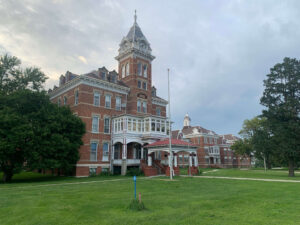
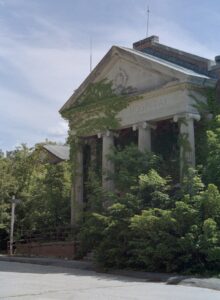
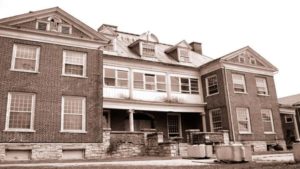
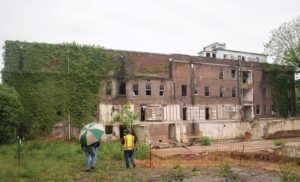
Anyone planning a visit should understand that accounts of the site’s current condition conflict. The asylum is described in some tellings as an abandoned ruin still standing and accessible to explorers, and in others as a structure that has largely succumbed to time. Verify what is actually there, and who owns it, before making the drive.
That ownership question is the practical one. Abandoned institutional property in Wisconsin is still property, usually county or private, and an unsecured door is not an invitation. Derelict asylum buildings also carry genuine physical hazards: rotted flooring, asbestos, lead paint, collapsed stairwells and open shafts. Seek permission from whoever holds the title before setting foot on the grounds, and do not treat a place where hundreds of people were confined against their will as a dare.
Whether anything lingers at the Clark County Insane Asylum is unresolved and probably unresolvable. What is not in question is that twelve people helped build a place that would hold them, that hundreds more arrived afterward with no expectation of leaving, and that the treatments offered to them caused real harm. That story stands on its own.
Sources
- The Institutional Care of the Insane in the United States and Canada, Volume 3
- Gold award: A community treatment program. Mendota Mental Health Institute, Madison, Wisconsin (1974)
- Mendota Mental Health Institute Loses Certification
- Mendota Hospital Mounds
- The Wisconsin Blue Book (Wisc (official site))
- Wikipedia: Mendota Mental Health Institute
Reader sightings
Nobody has reported anything here yet. If you have been, you would be the first.
Report your own visit to Twelve Patients Built It: Clark County Insane Asylum, Wisconsin
How haunted is this place?
Be the first to rate
Ghost Tours Nearby

Affiliate links: BeyondHaunted may earn a commission, at no extra cost to you.
Nearby Haunted Locations
- 1Kate Blood’s Grave at Riverside Cemetery in AppletonWisconsin3.9mi
- 2Chief Highknocker’s BoulderWisconsin39mi
- 3Grace Thorndike and Witch Road in Rosendale, WisconsinWisconsin50mi
- 4The Bride on Highway 66Wisconsin58mi
- 5The Camp That Was Never BuiltWisconsin58mi
- 6The Gold Room Ghost of Milwaukee’s Brumder MansionWisconsin89mi



Leave a Reply