
Reviewed by Josh N · Updated November 28, 2026 · How we verify
Reported Phenomena
- Spectral figures
Reported by visitors & local legend. Stories, not verified claims.
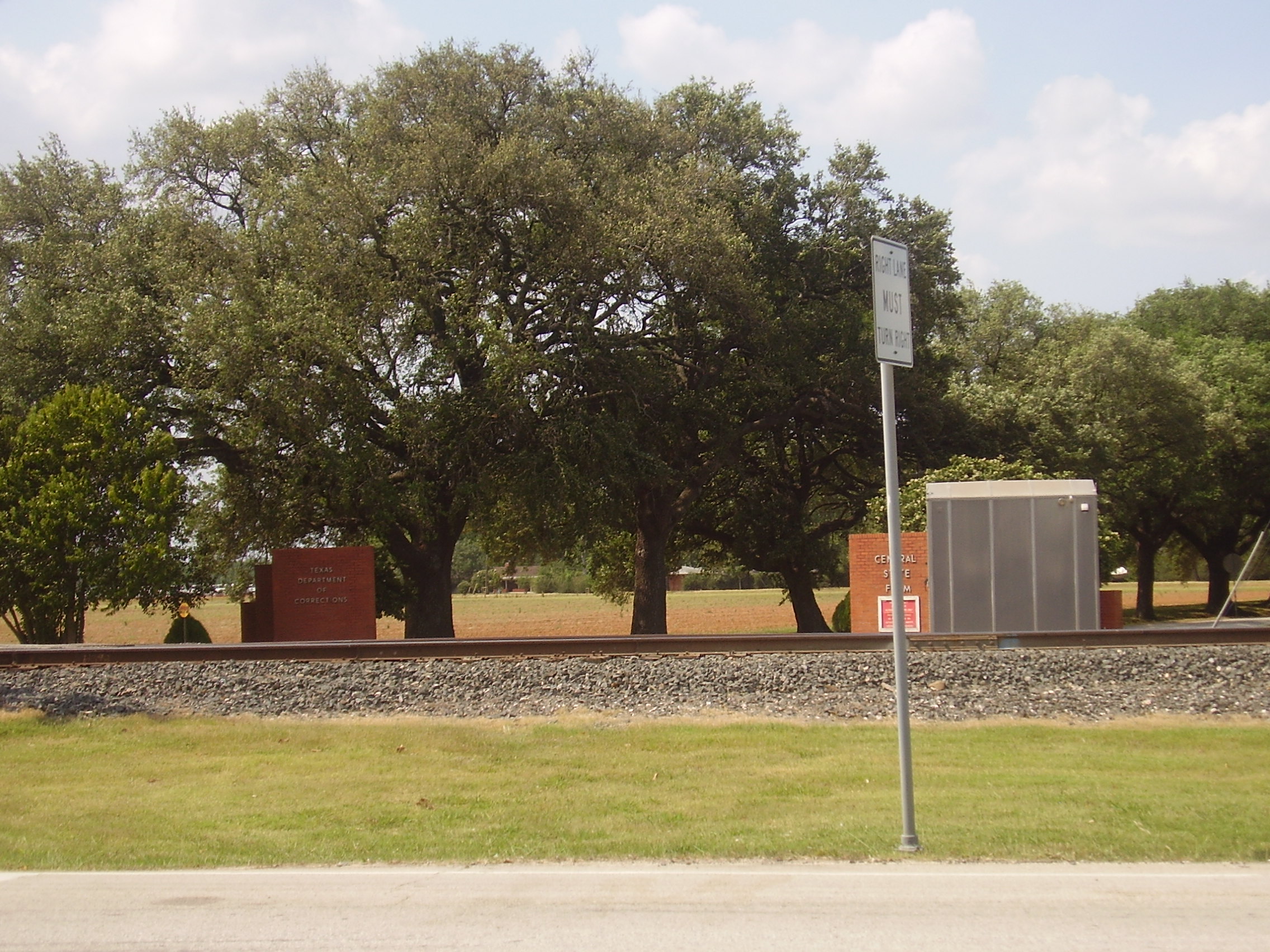
Ask after the haunted Central Unit prison today and you will be directed to a subdivision, an airport runway, and a natural history museum. The prison is gone as an institution, closed in 2011 after more than a century of work, but the ground it sat on in Sugar Land, Texas keeps producing history that the city did not expect, including a mass burial of ninety-five people found by accident in 2018. The ghost stories here are thin and recent. The documented record is heavier than any of them.
A few orienting facts. The Central Unit was a Texas Department of Criminal Justice men’s prison, previously known as the Imperial State Prison Farm and then the Central State Prison Farm. The roughly 325.8-acre facility sat about 2 miles from the central part of Sugar Land on U.S. Highway 90A. It first opened in April 1909 and was the only state prison inside the city limits of Sugar Land, a place that since 1960 has been developed into an upscale suburban and business city.
Convict Leasing on the Imperial Sugar Plantation
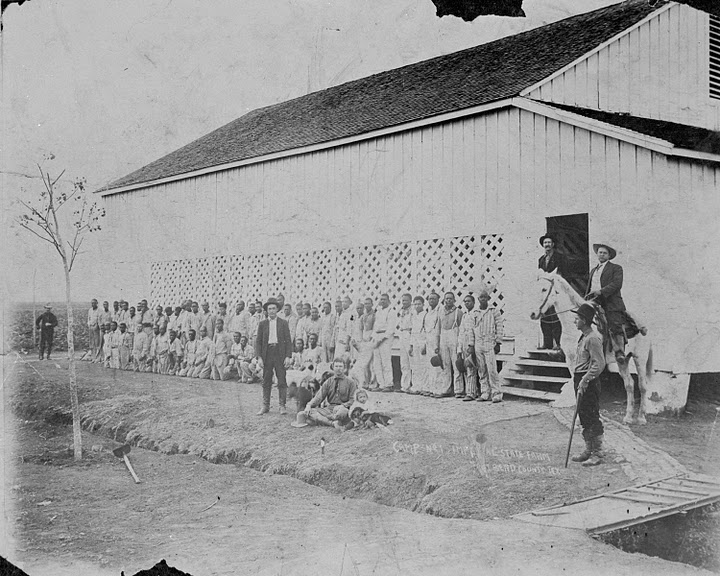
The prison did not arrive on empty land. In 1878 the state began leasing convicts as laborers to private companies operating on the Imperial Sugar property. That system was widespread across the South after Reconstruction, when few states had prisons of their own. States passed what were known as Black Codes, criminalizing behavior they associated with freedmen and charging fees for convictions, including for so-called vagrancy. Men who could not pay worked the debt off as convict laborers, and the states made enough money from the arrangement to have an incentive to keep convicting.
The State of Texas bought the 5,200-acre area in 1908, and the Imperial State Prison Farm opened the following year on the Imperial Sugar plantation as one of the first penal institutions the state owned outright. In 1930 it was renamed the Central State Prison Farm, the name reflecting its role as the central farming and distribution point for agricultural goods across the Texas prison system. A new $350,000 unit was completed in late 1932, and that same year a concrete housing unit for 600 prisoners opened, replacing wooden barracks at three work camps. It included a cupola that prison guards once used as a lookout.
Segregation is part of the record here, not an inference. In 1935 Central housed both White and African American prisoners, kept separate. A Greek Revival brick building east of the Brazos River, called Two Camp, opened in 1939 and at one time housed 400 young African-American prisoners. Two Camp closed in 1969 and then stood empty for decades.
Soap, Freight, and Crops Beside the Runway
By 2004 Central served as a minimum security unit for roughly 1,000 prisoners, most of them first-time offenders. It was less a cellblock than a small industrial town: a detergent and soap factory, a mechanic shop, a freight transportation terminal, and farming operations, with a supply warehouse for men’s correctional facilities inside the unit. Many of the remaining buildings were Art Deco in style.
The oddest detail is the airport. Sugar Land Regional Airport was developed right up against the prison, with the runway running between two parts of the prison property, and prisoners grew crops several dozen yards from one of the runways. The prison barber shop sat in the tower structure, and the Austin American-Statesman reported the claim that a cohort of Bonnie and Clyde was said to have lived in a closet inside that tower. Even the escapes made local news: in March 2007 a 39-year-old prisoner, David Shane Roberts, got out of the Central Unit.
The unit also has a place in American music. “Ain’t No More Cane on the Brazos” was first recorded here, performed by prisoners, and Huddie Ledbetter, better known as Lead Belly, is listed among the notable inmates.
The Prison That Suburbia Swallowed
Development did what reform never managed. By 2007 houses were closing in on the fences, and the land was zoned for the airport’s expansion. Hal Croft of the Texas General Land Office put it bluntly in a press release, calling the property “like the center of a doughnut” because development had surrounded it. In mid-2011, facing a severe budget shortfall, the legislature voted to close the Central Unit by removing its funding on September 1 of that year. The regular session of the 82nd Texas Legislature concluded on May 30, 2011.
In August 2011 the Texas Department of Criminal Justice announced the closure, and spokesperson Michelle Lyons said it would be the first prison in Texas history to close and not be replaced. On August 2, 2011, 200 guards and 80 prisoners were still on site, moving the trucking hub and the soap factory out. The legislature estimated annual savings of $1.25 million. Herman Weston was the final warden. Central Unit had operated for 112 years.
The Old Imperial Farm Cemetery and the Ninety-Five
On the south side of U.S. Highway 90A, in the northwest part of the Telfair development, sits the Imperial State Farm Cemetery, also called the Old Imperial Farm Cemetery. It holds at least 33 graves, the earliest three dated to 1912, and most belong to African-American inmates. The earliest are men arrested on trumped-up charges under the Black Codes to supply labor for the convict lease system. At least one grave records that the inmate drowned while trying to escape. The cemetery was declared an Historic Texas Cemetery in 2007 and is now ringed by two fences, the inner one locked.
Then came the discovery that changed the conversation. In March 2018 a worker excavating for the Fort Bend Independent School District near the former prison site turned up a human bone that was not recent. A grave with 95 bodies was found. Reginald Moore, designated caretaker of the cemetery by the Texas Historical Commission and a former Texas Department of Corrections employee, had already criticized the city and the state for what he described as an attempt to erase the history of the Black Codes and convict leasing through their plans for the site.
What Is Actually Claimed About Ghosts Here
This is where the file goes quiet. The Central Unit’s paranormal reputation rests largely on television: an episode of Ghost Adventures was devoted to the prison and first aired on Friday, September 14, 2012, roughly a year after the last prisoners left. Beyond that broadcast, the documentary record available here describes no specific apparition, no named figure, no recurring sound reported by staff or visitors.
That gap is worth stating plainly rather than filling in. Places with this kind of history attract ghost stories the way the site attracted development, and the ones you will hear locally are secondhand and unattributed. What is verifiable is a century of forced labor, a segregated prison farm, a small locked cemetery of men buried under their convict numbers, and a mass grave nobody had recorded. Visitors who feel something standing at those fences are not short of reasons.
Seeing the Site Today: Telfair, Two Camp, and the Fences
There is no prison left to tour. Most of the former prison plantation land has been redeveloped by Newland Communities, which bought the land from the State of Texas in 2002, into the master-planned community of Telfair. Other parts of the site are zoned for light industrial use supporting the airport.
The one building you can walk into is Two Camp. Newland restored the long-vacant dormitory, and in 2009 the 43,000 square foot building and its nearby land opened as the Houston Museum of Natural Science, Sugar Land, with $3 million spent by the museum on renovation. The subdivision donated the building and land to the City of Sugar Land, which leases it to the museum.
The cemetery itself is a different proposition. It was once open to the public but is now enclosed by two fences with the inner one locked, and it should be treated as what it is: a protected burial ground, viewed from outside, quietly. Sugar Land announced plans in 2012 for a park incorporating the cemetery with an encircling walkway, but the bond proposal to fund it failed to pass in November 2013.
Address: U.S. Highway 90A, Sugar Land, Texas
See Central Unit for Yourself
Sources
- Activists at odds with city over cemetery, former site of Imperial State Prison Farm
- Newly Discovered Cemetery Vindicates Sugar Land Activist
- Archeologists unearth bodies of 95 Black forced-labour prisoners from Jim Crow era in Texas
- Wikipedia: Central Unit
Frequently Asked Questions
Where is Central Unit Prison Sugar Land located?
Central Unit Prison Sugar Land is located at U.S. Highway 90A, Sugar Land, Texas.
Can you visit Central Unit Prison Sugar Land?
Central Unit Prison Sugar Land is open to the public. Always follow posted rules and respect private property.
Reader sightings
Nobody has reported anything here yet. If you have been, you would be the first.
Report your own visit to 95 Bodies Beneath Sugar Land: The Haunted Central Unit Prison
How haunted is this place?
Be the first to rate
Ghost Tours Nearby
 Houston Hollow Heart Hauntings Ghost Tourfrom $26
 The Dead by Moonlight Ghost Tourfrom $35
 Houston Haunted Pub Crawlfrom $35
Affiliate links: BeyondHaunted may earn a commission, at no extra cost to you.
Leave a Reply