
Reviewed by Josh N · Updated March 14, 2026 · How we verify
Reported Phenomena
- Spectral figures
- Phantom children
Reported by visitors & local legend. Stories, not verified claims.
Location: Riverdale Road, the Thornton to Brighton corridor in Adams County, Colorado. Because this is a real public roadway and not a single attraction, the most useful public reference point tied to the legend today is Pelican Ponds Open Space, 9200 Riverdale Rd., Thornton, CO 80229.
Riverdale Road has become one of Colorado’s best-known haunted legends because it sits at the intersection of real frontier history, a documented mansion fire, and decades of local storytelling. The road’s paranormal reputation is famous, but the strongest part of the story is not the folklore. It is the fact that there really was an old house here, there really was a major fire in 1975, and the landscape along the South Platte still feels remote enough to let a legend breathe.
Where Riverdale Road Is and Why It Feels So Different
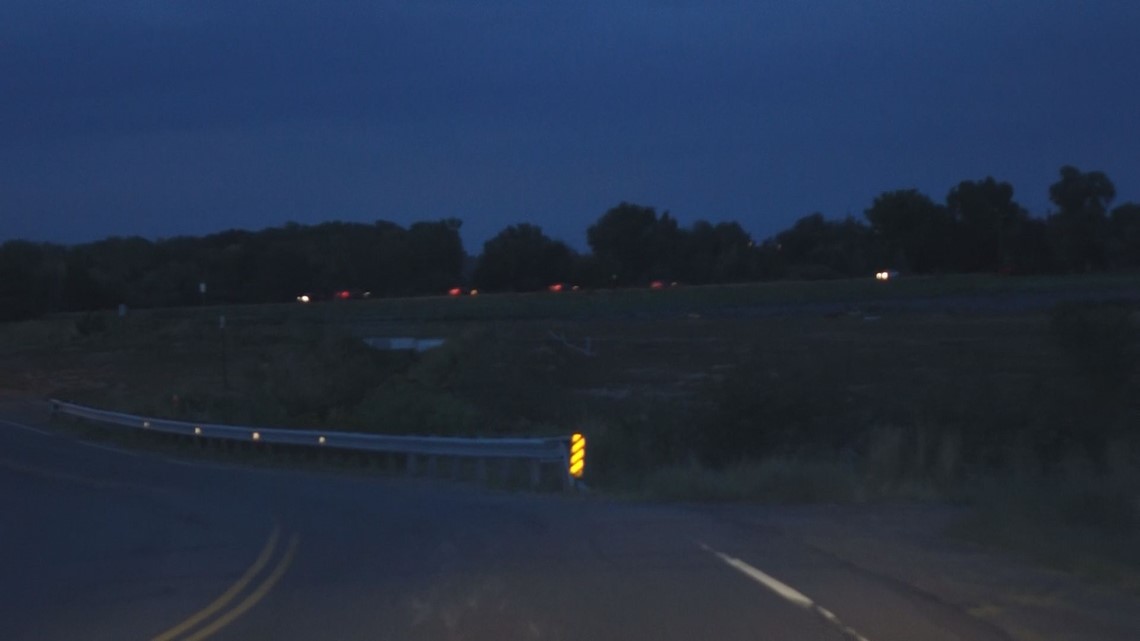
Official Adams County planning material describes the Riverdale Road corridor as running about ten miles along the west side of the South Platte River, from Colorado Boulevard at 90th Avenue north to State Highway 7. The same planning material emphasizes floodplain, farmland, wildlife habitat, bluffs, and open land, which helps explain why the drive still feels unusually dark and isolated compared with much of the surrounding metro area. County planning documents also reference the creation of a Riverdale Road scenic byway.
That setting matters. Haunted-road legends usually stick where the environment already feels uneasy, and Riverdale Road has the ingredients: river corridor, limited lighting, long stretches of open land, and a real historic site woven into the landscape. That is an inference based on the documented corridor description and the proven history of the Wolpert property.
The Real History Behind the Riverdale Road Legend
The most important historical figure tied to Riverdale Road is David Wolpert. Denver Public Library’s research says a National Register nomination in 1975 described the home at 9190 Riverdale Road as a two-story brick house built around 1864. The same research traces Wolpert to Ohio, notes that he came west in 1859, turned to farming near the Platte, married Catherine Henderson in 1864, and raised a family there.
The event that gave the road’s ghost story real traction came much later. At about 1 a.m. on November 28, 1975, the Wolpert house caught fire. Denver Public Library notes that the house was badly damaged, but no fatalities or injuries were reported because the home was not inhabited at the time. Just as important, the library’s research states that the cause of the fire remains unclear, and the available newspaper report did not point to arson.
That matters because the most repeated version of the legend says a crazed owner murdered his family and burned the mansion down. The documented record does not support that version. What the record does support is simpler and, in some ways, more interesting: a genuine 19th-century house stood there, it was historically significant enough for preservation efforts, it was seriously damaged by fire in 1975, and the old homesite is now associated with Pelican Ponds Open Space.
How the Haunting Stories Took Over
Denver Public Library sums up Riverdale Road’s reputation as a collection of stories passed down over time. The library specifically mentions the ghost jogger who taps on passing cars, the phantom Camaro with one headlight, and the hitchhiker in white. The library also makes a key point that often gets lost in paranormal retellings: while the Wolpert House fire is real, the origins of the road’s other chilling stories are much harder to pin down historically.
The Adams County Historical Society & Museum shows how deeply these tales have settled into local lore. Its Wolpert Mansion page describes Riverdale Road as infamous for stories involving hangings, burnings, ghost children, a ghost Camaro, the jogger of Jogger’s Hill, and a supposed “Hell’s Gate” somewhere along the road. That does not make every story true, but it does show how the road evolved from one old house and one real fire into a full folklore system with multiple legends layered onto the same stretch of pavement.
Reported Encounters and Modern Paranormal Reputation
Modern coverage helped keep Riverdale Road alive in Colorado’s ghost culture. 9News has repeatedly described it as an 11-mile stretch between Thornton and Brighton tied to urban legends of hauntings and phantom joggers, and one of its stories noted that a ghost hunter said she had experienced strange activity there.
Another good snapshot of how locals experience Riverdale Road comes from 5280, which published a first-person recollection from a staff member who drove the road with friends after a football game specifically to test the legend. Their “checklist” included hearing the jogger tapping on the vehicle, spotting the lady in white, and avoiding the supposed omen of seeing seven deer. That piece is not proof of the paranormal, but it is proof that the legend has been actively performed and retold by Colorado teens and locals for years.
So when people talk about “true life ghost encounters” on Riverdale Road, what they usually mean is a mix of local witness stories, media retellings, roadside folklore, and personal interpretation. The stories most commonly repeated today are the phantom jogger, the lady in white, the ghost Camaro, and the so-called Gates of Hell near the former Wolpert site.
What the “Gates of Hell” Probably Really Mean
The “Gates of Hell” nickname is the hook that made Riverdale Road famous far beyond Adams County, but it appears to be folklore built around the burned Wolpert property and the eerie idea of an old entrance gate tied to a tragic site. The documented history supports the existence of the Wolpert house and the 1975 fire. It does not support the most sensational version of the tale involving a family slaughter inside the mansion.
The most reasonable reading is that the road’s mythology grew because one verified event was dramatic enough to carry a much bigger legend. Add darkness, curves, open land, river fog, teenage dare culture, and decades of retelling, and Riverdale Road becomes exactly the kind of place where every headlight, shadow, and roadside figure starts to feel loaded with meaning. That is an inference, but it is grounded in the documented corridor setting and the real Wolpert fire.
Can You Visit Riverdale Road Today?
You can drive Riverdale Road because it is a public roadway, and nearby public land includes Pelican Ponds Open Space and Riverdale Regional Park. Adams County says Pelican Ponds includes trails, walking paths, fishing access, and connections to the South Platte River Trail. Riverdale Regional Park also connects to the trail system and includes recreation space, public art, and access to the Adams County Museum.
That said, Riverdale Road is still a real road, not a haunted-house attraction. The best way to approach it is as a place with a fascinating blend of documented Colorado history and persistent ghost lore. In daylight, it is a corridor of open space, trails, and river landscape. At night, it becomes the kind of place where history and imagination blur just enough to keep the legend alive.
Never trespass on property that is not yours without permission and ghost hunting is dangerous so always use caution.
Sources
- Denver Public Library Special Collections and Archives, “The David Wolpert House: Dissecting A Riverdale Road Ghost Story”
- Adams County, “Pelican Ponds”
- 9News coverage of Riverdale Road’s haunted reputation
Frequently Asked Questions
Where is Riverdale Road located?
Riverdale Road is located at 9200 Riverdale Rd., Thornton, CO 80229.
Can you visit Riverdale Road?
Riverdale Road is open to the public. Always follow posted rules and respect private property.
Reader sightings
Nobody has reported anything here yet. If you have been, you would be the first.
Report your own visit to Riverdale Road Colorado: Real History, Ghost Legends, and the Truth Behind the Gates of Hell
How haunted is this place?
Be the first to rate
Ghost Tours Nearby
 Twilight Ghost Tourfrom $26
 Cheesman Park Ghost Tourfrom $28
 Gaslights, Graves, & Gold: Terrors of Denver Ghost Tourfrom $26
Affiliate links: BeyondHaunted may earn a commission, at no extra cost to you.

Leave a Reply