
Reviewed by Josh N · Updated April 7, 2026 · How we verify
Reported Phenomena
- Spectral figures
- Phantom footsteps
- Flickering lights
- Objects moving
- Sense of being watched
- Phantom children
- Mists & orbs
Reported by visitors & local legend. Stories, not verified claims.
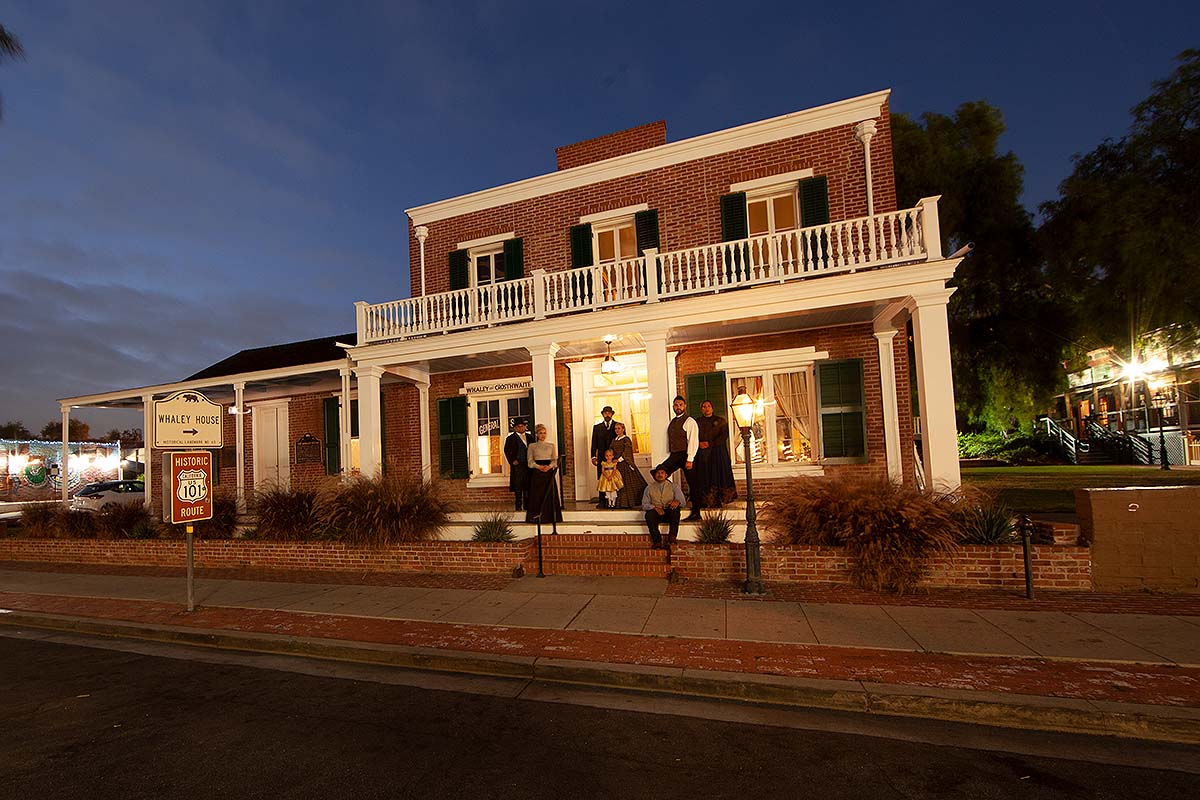
The Whaley House in Old Town San Diego is one of California’s most famous haunted locations, but it is also one of the city’s most important historic buildings.
– The house is at 2476 San Diego Ave., San Diego, CA 92110
– The official museum phone number is 619-273-5824
– The museum’s official site
Why the Whaley House Matters Beyond the Ghost Stories
Long before it became known for paranormal lore, the Whaley House was a major part of early San Diego history. Thomas Whaley began construction in 1856, and the house was completed in 1857 using bricks made in his own brickyard on Conde Street. California’s Office of Historic Preservation describes it as the first brick building erected in San Diego County, while county park materials describe it as the first two story brick edifice in San Diego.
The house was not just a family residence. It also served as San Diego’s first commercial theater, a general store, and the county courthouse. That unusual mix of domestic and civic life is one reason the Whaley House is so central to the story of Old Town San Diego. The official museum site describes it as a gathering place for the community from 1857 into the early 20th century.
The History of the Whaley Family
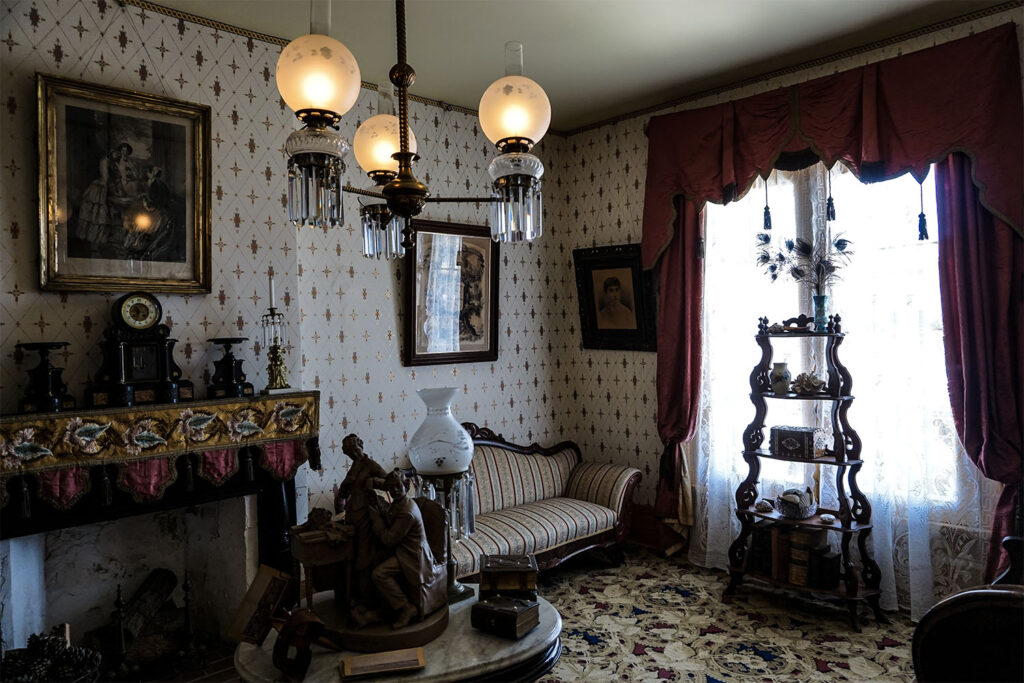
Thomas Whaley arrived in California around the Gold Rush era and built a successful business life before returning east to marry Anna Eloise DeLaunay. After the couple came back to San Diego, Thomas set out to build what he believed would be the finest house in the area. The museum notes that the completed home cost more than $10,000 and was furnished with mahogany and rosewood furniture, Brussels carpets, and other upscale details that made it stand out in Southern California at the time.
The family’s life in the house was marked by both prosperity and tragedy. Their young son Thomas Jr. died of scarlet fever at just 18 months old. Over the years, other family deaths and hardships became part of the house’s enduring legend. The official haunted-house materials tie much of the location’s paranormal reputation to those losses.
The Gallows Connection and Yankee Jim
A major part of the Whaley House legend predates the house itself. Historical accounts from the San Diego History Center state that James “Yankee Jim” Robinson was hanged at the present site of the Whaley House in September 1852 after being convicted in a boat theft case. That execution became one of the darkest episodes later associated with the property.
The official Whaley House site leans heavily into that history. Its haunted tour materials say the property was already infamous in the community because it had been the site of Yankee Jim’s public execution. Later, Thomas Whaley himself reportedly connected unexplained footsteps in the house to Yankee Jim. An official museum article says Whaley noted in his journal in 1860 that he heard eerie footsteps upstairs and believed they belonged to Robinson’s spirit.
Reported Hauntings at the Whaley House
This is where history ends and haunting claims begin. There is no scientific proof that the Whaley House is haunted, but it has one of the longest running ghost reputations in California, and the reports are specific enough that they have become part of the site’s public identity. The museum itself openly promotes the property’s haunted side and says it is widely regarded as “America’s Most Haunted House®.”
Some of the most commonly reported experiences include:
- Heavy footsteps on the stairs or upper floor, often linked in the legend to Yankee Jim.
- Sounds of a child crying, giggling, or running, usually associated with Thomas Whaley Jr.
- Apparitions or sensed presences connected to Thomas and Anna Whaley.
- Lights turning on and off, mists, and even crystals in a parlor lamp reportedly swinging on their own.
The important distinction is that these are reported experiences, not verified events. Still, the consistency of the stories is part of why the Whaley House remains so popular with ghost-tour visitors and paranormal investigators.
True Life Encounters Often Tied to the House
One of the better known modern claims came from Regis Philbin. Lifetime’s episode listing for The Haunting Of… says Philbin returned to the Whaley House to find out why a ghost had appeared to him and why it left so suddenly. That helped keep the house in the national paranormal spotlight decades after his original reported experience.
Another often-cited firsthand account comes from Thomas Whaley himself. According to the official museum article on San Diego’s famous ghosts, Whaley recorded unexplained footsteps in his journal in 1860. Whether a reader sees that as evidence of a haunting or simply part of the house’s folklore, it remains one of the most interesting claims because it comes from the family’s own era rather than from later tourism or television.
Why the Whaley House Still Draws Visitors
The Whaley House endures because it works on two levels at once. It is an important preserved landmark from early San Diego history, and it is also a place where tragedy, memory, and storytelling have blended into one of California’s best known ghost legends. Even people who do not believe in hauntings often leave with an appreciation for how much local history is packed into one building.
For paranormal fans, the appeal is obvious. The location has family tragedy, an execution site, generations of witness claims, and a museum that fully embraces its haunted reputation. For history lovers, the house offers something just as compelling: a rare surviving structure that helped shape Old Town San Diego’s civic and cultural life.
Final Thoughts
The Whaley House is one of those rare places where documented history and ghost lore are impossible to separate completely. Its historical importance is beyond dispute. Its hauntings are a matter of belief, witness testimony, and interpretation. That combination is exactly why the house continues to fascinate visitors, historians, and ghost hunters alike.
Never trespass on property that is not yours without permission, and remember that ghost hunting can be dangerous, so always use caution.
Sources
- Whaley House official site, history, tours, and contact details
- California Office of Historic Preservation listing for Whaley House
- San Diego History Center material on early San Diego and Yankee Jim Robinson
- Lifetime episode listing for Regis Philbin’s Whaley House experience
Frequently Asked Questions
Where is The Whaley House located?
The Whaley House is located at 2476 San Diego Ave., San Diego, CA 92110.
Can you visit The Whaley House?
The Whaley House is a place where you can stay overnight. Always follow posted rules and respect private property.
Reader sightings
Nobody has reported anything here yet. If you have been, you would be the first.
Report your own visit to The Whaley House in San Diego, California: History, Hauntings, and Reported Ghost Encounters
How haunted is this place?
Be the first to rate
Ghost Tours Nearby
 Haunted San Diego: The Only Ghost Tour with Exclusive Entryfrom $58
 San Diego Ghosts and Gravestones: A Haunted Trolley Tourfrom $49
 San Diego Gaslamp Ghosts and True Crime Walking Tourfrom $29
Affiliate links: BeyondHaunted may earn a commission, at no extra cost to you.
Nearby Haunted Locations
- 1Room 502California5.1mi
- 2A Jail Cell Wine Cellar and the El Adobe de Capistrano GhostCalifornia58mi
- 3Black Star Canyon in CaliforniaCalifornia76mi
- 4Katie Wheeler Library in Irvine, California History and Haunted ClaimsCalifornia76mi
- 5Haunted History of Yorba Cemetery in CaliforniaCalifornia84mi
- 6Door 13 and the Drained PoolCalifornia90mi

Leave a Reply