
Reviewed by Josh N · Updated October 24, 2025 · How we verify
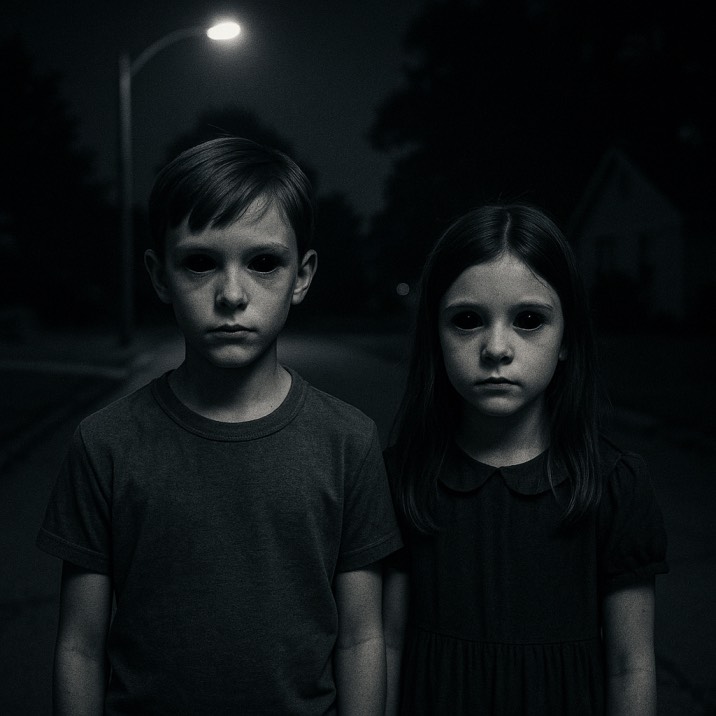
Among the many strange tales in paranormal folklore, few are as chilling as those of the Black-Eyed Children. Described as pale, expressionless youngsters with completely black eyes who appear at people’s doors or vehicles seeking help, these eerie figures sit at the crossroads of modern myth and genuine fear. For some, they’re nothing more than internet legend. For others, they represent a disturbing glimpse into something darker, be it supernatural, alien, or demonic.
Origins of the Legend
The story of the Black-Eyed Children first entered public awareness in 1996, when Texas journalist Brian Bethel published a chilling personal account online. Bethel described sitting in his car one night in Abilene, Texas, when two young boys approached asking for a ride to see a movie. Though polite at first, he soon felt overwhelming fear. Then he noticed their eyes—completely black, like ink. The boys became increasingly insistent, repeating phrases as if rehearsed. Bethel fled in terror.
His story spread rapidly through early internet forums and paranormal bulletin boards. The eeriness of the encounter—ordinary children exhibiting unnatural eyes and hypnotic behavior struck a chord. It was a legend seemingly made for the digital age: simple, shareable, and open to endless interpretation.
Within months, other reports surfaced. Witnesses from across the United States and even the United Kingdom claimed similar encounters. The children were always described as between 6 and 16 years old, pale-skinned, monotone in speech, and strangely emotionless. Their clothing was often outdated, their demeanor unnerving. Most reports followed a similar pattern: they asked to be “let in” to a house or car and reacted with anger or confusion when refused.
Common Traits and Theories
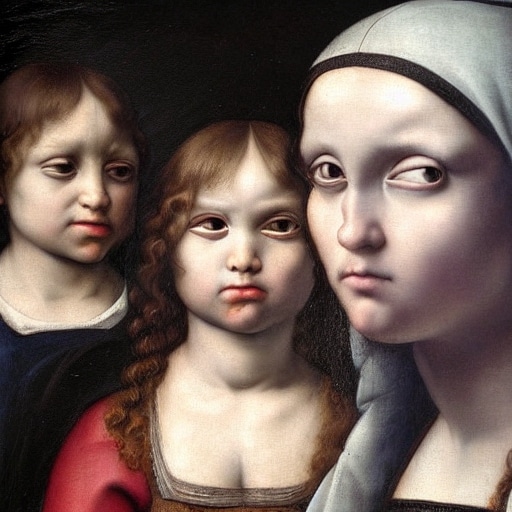
Black-Eyed Children stories share a few consistent details:
- They ask for permission to enter. This parallels folklore about vampires or demonic entities that require consent before crossing a threshold.
- They appear late at night, often during storms or quiet rural evenings, and knock repeatedly.
- Their voices are calm and deliberate, sometimes described as robotic or rehearsed.
- The witnesses experience sudden dread or nausea, even before noticing the eyes.
From these patterns, several theories have emerged:
- Paranormal or Demonic Entities – Some investigators view the Black-Eyed Children as malevolent spirits or energy parasites that mimic human appearance to gain entry into homes.
- Alien or Hybrid Beings – A number of UFO researchers connect them to so-called “men in black” encounters or alien hybrid programs, noting their emotionless speech and hypnotic effects.
- Psychological or Mass Suggestion – Skeptics argue the phenomenon is a blend of internet folklore, sleep deprivation, and pareidolia. Once the story became famous, others unconsciously reshaped nighttime fears to match the archetype.
Regardless of belief, the consistency across decades of reports—by people who claim no prior exposure to the legend—remains an unsettling element.
Notable Reported Encounters
1. Brian Bethel’s Abilene Account (1996)
The case that started it all. Bethel’s detailed written account circulated via early mailing lists and Usenet groups. He described the boys’ unnatural confidence, their insistence that he “let them in,” and the cold, creeping fear that made him drive away. To this day, Bethel stands by his story, though he acknowledges its influence on internet folklore.
2. The Vermont Home Invasion (Late 1990s)
An anonymous couple in rural Vermont reported letting two children into their home during a snowstorm after they appeared stranded. The couple claimed their cat hid immediately, and the husband began feeling dizzy. After the children left, they noticed the power flicker and later learned that both their pets had died under mysterious circumstances. The story first appeared in a paranormal anthology in 2013, though its veracity has never been proven.
3. The Cannock Chase Sightings (Staffordshire, England)
Beginning around 2014, multiple witnesses in the Cannock Chase area reported seeing a black-eyed girl appearing on isolated paths or near the old mining ruins. Local historian Lee Brickley collected several of these accounts, suggesting a pattern of sightings spanning back decades. Whether these were pranks or something unexplained remains debated, but the stories revitalized British interest in the phenomenon.
The Internet’s Role in Spreading the Legend
Unlike older hauntings or folklore passed down orally, the Black-Eyed Children became one of the first digitally born legends. The internet provided a perfect environment for their growth. Early websites such as CreepyPasta, paranormal subreddits, and YouTube documentaries helped standardize the imagery—pale children with solid black eyes, emotionless faces, and a cold sense of wrongness.
Each retelling added new layers. Some claimed the children disappeared if confronted. Others linked them to power outages, nosebleeds, or lingering illness. The variety of accounts, combined with a lack of photographic evidence, made the phenomenon difficult to debunk or confirm, which only deepened the intrigue.
Cultural Interpretations
Folklorists often see the Black-Eyed Children as a reflection of modern anxieties. In earlier eras, legends warned of fairies swapping infants or vampires entering homes; in the digital age, the intruder comes in the guise of innocence, carrying both nostalgia and fear. The legend plays on a primal unease—our instinct to help a child contrasted with the suspicion that something is terribly wrong.
Psychologists have noted that stories of the Black-Eyed Children often mirror real-world fears: stranger danger, loss of control, and the unknown consequences of technology. Meanwhile, filmmakers and writers have embraced the imagery in horror anthologies, podcasts, and movies, blending science fiction and ghost story elements into one chilling symbol.
Scientific and Rational Views
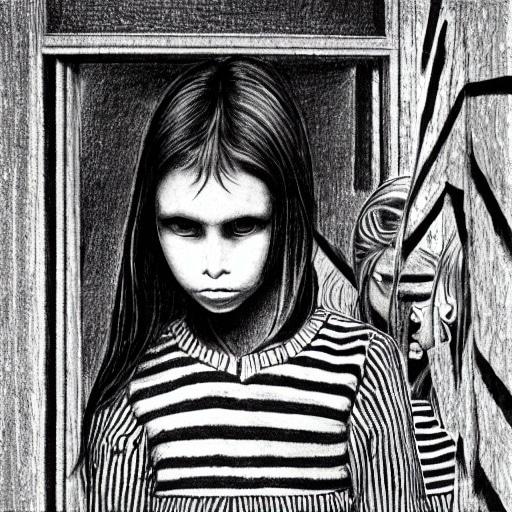
From a scientific perspective, no physical evidence supports the existence of Black-Eyed Children. Many explanations point toward optical illusions in low light or the amplification of normal childhood behavior through fear. Nighttime encounters, high stress, or suggestion can distort perception—especially when a person is already primed by stories or media.
Physiologically, human pupils can dilate significantly in the dark, occasionally appearing to fill most of the visible eye. Under certain lighting conditions, this can create the illusion of “all black” eyes. Combined with fear and expectation, it’s easy to see how the image could take hold in memory as supernatural.
Still, the power of the legend isn’t diminished by scientific reasoning. It persists because it resonates emotionally, not because it’s proven.
Why the Legend Endures
The Black-Eyed Children endure because they embody timeless fears—innocence corrupted, the familiar made strange, and the intrusion of the uncanny into safe spaces. Unlike traditional ghosts, they do not haunt locations; they come to us, knocking politely, asking to be invited inside. That detail—so simple and so human—is what makes them unforgettable.
The stories also thrive on uncertainty. They rarely include violence or closure. The children simply appear, unsettle, and vanish. It’s ambiguity that gives them power; the mind fills in what the story omits.
Conclusion: The Faces in the Dark
Whether the Black-Eyed Children are spirits, alien manifestations, or collective imagination, they have cemented their place in modern folklore. Each retelling adds to the mythos, blurring fact and fiction until the boundary disappears.
Perhaps their real mystery lies not in what they are, but in what they represent—our fear of the unknown and the ease with which the digital world can give life to legend.
So the next time you hear a knock at your door late at night and see two pale figures waiting in the dark, remember what every story has in common: they can only come in if you let them.
Reader sightings
Nobody has reported anything here yet. If you have been, you would be the first.





Leave a Reply