
Reviewed by Josh N · Updated September 1, 2026 · How we verify
Reported Phenomena
- Unexplained sounds
- Disembodied whispers
- Reported apparitions
- Knocking in rooms
Reported by visitors & local legend. Stories, not verified claims.
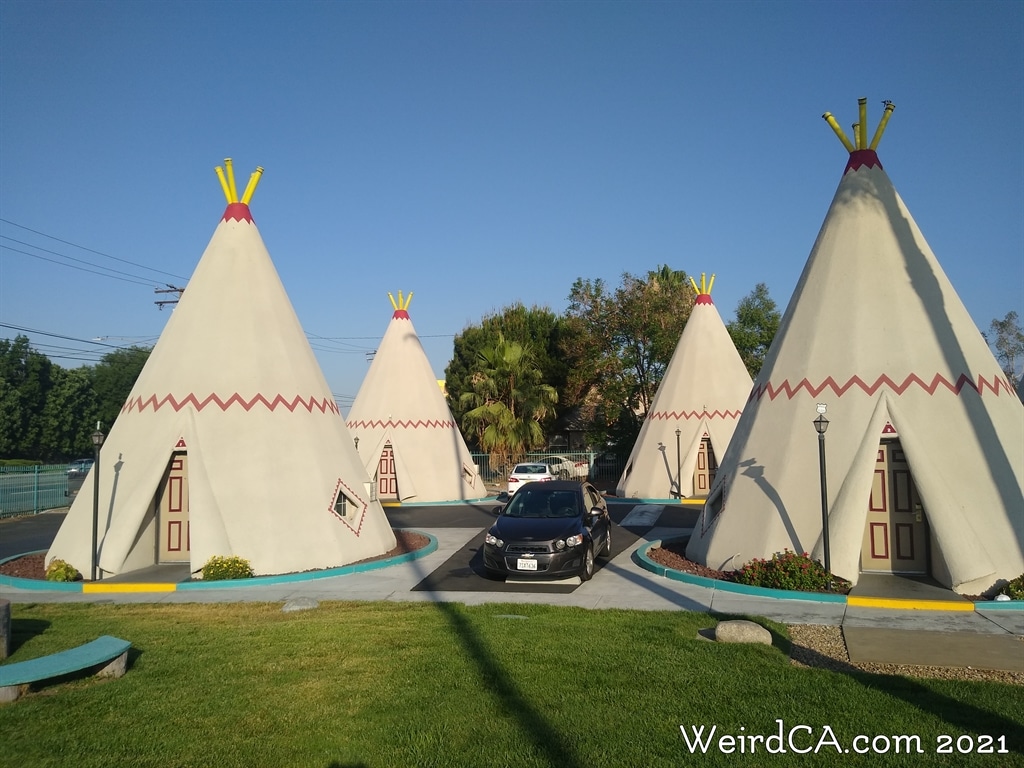
Fifteen concrete tepees stand in a row off old Route 66 in Holbrook, and each one is a room you can rent. The Wigwam Village Motel in northeastern Arizona, formally Wigwam Village #6, is one of the last survivors of a small chain built on a single novelty idea, and it has outlived almost everything around it: the chain itself, the highway that fed it, and the era of roadside architecture that produced it. It has also picked up a reputation, unverified and undocumented, for footsteps and voices that guests cannot account for.
Wigwam Village #6 at a Glance
- Concept: devised in 1933 by Frank A. Redford, who patented the tepee-shaped design in 1936
- This location: Wigwam Village #6, Holbrook, Arizona, opened in 1950
- Setting: West Hopi Drive, the old alignment of U.S. Route 66 through town
- Run by: the Lewis family, who keep vintage cars and Route 66 memorabilia on the grounds
- Status: still an operating motel, rooms bookable to the public
- Reported activity: unexplained sounds, whispers, occasional apparitions, none of it corroborated by any record
Frank Redford’s Patent and the Novelty That Stuck
Redford’s idea arrived at the right moment. Through the 1930s and 1940s, roadside lodging was still being invented: the word motel itself was coined at the Milestone Mo-Tel in San Luis Obispo, California, built in 1925, whose owner shortened “motor hotel” because the full name would not fit on the roof. What followed was a scramble of cabin camps, tourist courts and motor courts, most of them a single story with rooms opening straight onto the parking lot so a driver could unload a suitcase from the trunk without walking through a lobby.
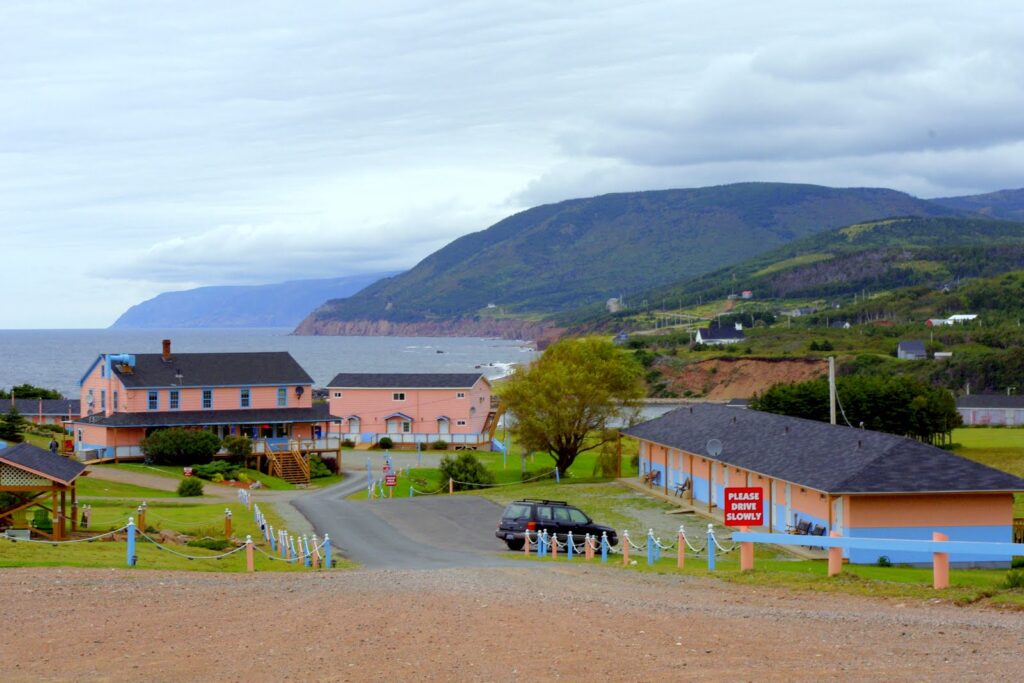
In that crowded field, operators competed on visibility. Postwar motels in particular reached for visual distinction, with colorful neon and themes lifted straight from popular culture, cowboys and Indians at one end and spaceships and atomic imagery at the other. U.S. Route 66 became the best known example of that neon era. A handful of owners went further and built the building itself as the advertisement, using novelty architecture such as wigwams or tepees. Redford’s patented cones were the most successful version of that gamble, and the Holbrook village, opened in 1950, arrived just as the industry crested. By that year there were roughly 50,000 motels in the United States serving half of the country’s 22 million vacationers.
The Lewis family has kept the Holbrook site close to its original character, which is a large part of why it still draws visitors. Vintage cars parked among the cones and a collection of Route 66 material give the place the feel of an accidental museum that happens to rent beds.
Surviving the Interstate
Almost nothing else from that boom lasted. The American motel industry peaked in 1964 with about 61,000 properties and had fallen to some 16,000 by 2012. The killer was the freeway. As interstates bypassed the two-lane highways that had been main street in every town along the way, chain properties went up at the new offramps and independents on the old road lost their traffic. Route 66 was the most conspicuous casualty: it was removed from the United States highway system entirely in 1985, having been bypassed mostly by Interstate 40. Owners of surviving businesses were doubly squeezed, because Highway Beautification Act restrictions left existing properties with no way to get signage on the new interstate. Some motels were demolished, some became private homes or storage, and many were simply left to fall apart.
Holbrook’s tepees came through that period and then benefited from the reversal. Route 66 associations, modeled on the first one founded by Angel Delgadillo in Seligman, Arizona, in 1987, pushed for preservation of the route’s motels, businesses and roadside infrastructure. The National Route 66 Preservation Bill of 1999 set aside $10 million in matching fund grants for private restoration along the route, and in 2007 the National Trust for Historic Preservation put the historic Route 66 motels from Illinois to California on its list of America’s Most Endangered Historic Places. Nostalgia turned into an economy: by 2012, travelers on the former highway were spending some $38 million a year at historic places and museums in the communities along it.
The Cozy Cone Effect
The motel’s silhouette is more widely recognized than its name. The Cozy Cone Motel in the 2006 Pixar film Cars takes its design from the Wigwam Motel on U.S. Route 66 in Arizona, paired with the neon “100% Refrigerated Air” slogan borrowed from the Blue Swallow Motel in Tucumcari, New Mexico. For a generation of visitors, that cartoon is the reason they pull off the highway in Holbrook at all.
What Guests Report at the Holbrook Tepees
This is the part of the story with no paperwork behind it. There is no documented death, disaster or crime at the property that has been tied to the accounts, and the motel’s own history offers nothing to explain them. What exists is guest testimony, repeated over the years and passed along by staff and travelers:
- Sounds inside the cones with no apparent source, including movement and knocking
- Whispering, sometimes described as conversation heard through the curved concrete walls
- Occasional reports of figures glimpsed on the grounds after dark
None of that is verified, and it is worth saying plainly that the acoustics of a small round concrete room beside a former transcontinental highway can do a great deal on their own. The claims are reported experience, not established fact, and the motel does not market itself as a haunted attraction.
Staying at the Wigwam Village Motel
You can book a cone. That is the whole appeal, and it is the only way to see the interiors. Rooms are the original tepee units, small by modern standards, and the collection of vintage cars and Route 66 memorabilia is visible from the lot without a reservation. The village sits on West Hopi Drive, the old road through Holbrook, and works best as an overnight stop on a Route 66 itinerary rather than a destination in itself. Ask at the desk if you want the ghost accounts firsthand; ask for documentation and you will not get any, which is exactly what an honest answer looks like.
Sources
- Motel
- The Motel in America
- The World's First Motel Rests Upon Its Memories
- Home Away From Home: Motels in America
- The Rise and Fall of the Great American Motel
- Wikipedia: Motel
Frequently Asked Questions
Where is Wigwam Village Motel located?
Wigwam Village Motel is located at 811 W Hopi Dr, Holbrook, AZ 86025.
Can you visit Wigwam Village Motel?
Wigwam Village Motel is a place where you can stay overnight. Always follow posted rules and respect private property.
Reader sightings
Nobody has reported anything here yet. If you have been, you would be the first.
Report your own visit to Concrete Tepees on Route 66: The Wigwam Village Motel
How haunted is this place?
Be the first to rate


Leave a Reply