
Reviewed by Josh N · Updated February 23, 2026 · How we verify
Reported Phenomena
- Disembodied voices
Reported by visitors & local legend. Stories, not verified claims.
- Boyington Oak Address: 107 S Bayou St, Mobile, AL 36602
- Nearby landmark: Church Street Graveyard (historic cemetery owned by the City of Mobile)
- Hours: The Boyington Oak tree is outdoors and visible from the street. The graveyard itself is gated; many visitor resources list cemetery access during daytime hours (commonly cited as 8:00 AM to 4:00 PM).
What is the Boyington Oak?
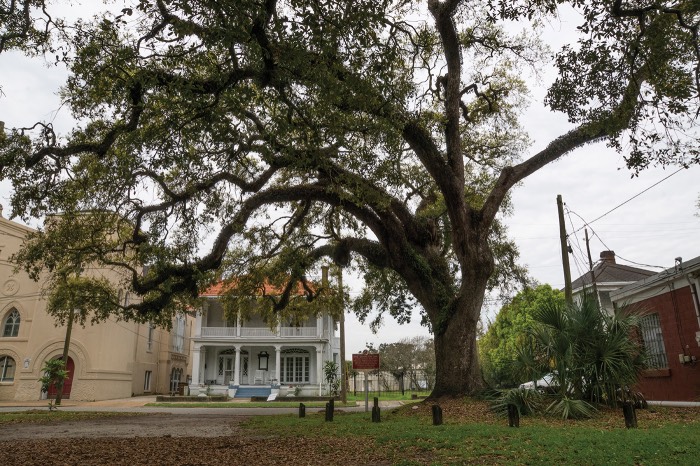
The Boyington Oak is a historic Southern live oak (Quercus virginiana) tied to one of Mobile Alabamas best-known legends of crime, punishment, and the paranormal. It sits right by the brick wall of Church Street Graveyard, a burial ground whose earliest burials date to 1819 and which the City of Mobile acquired in 1820.
Unlike many “famous tree” stories that are mostly romantic exaggeration, this one is anchored to a real 1830s murder case and a documented execution, then wrapped in folklore that locals have repeated for generations.
The true-crime story behind the legend
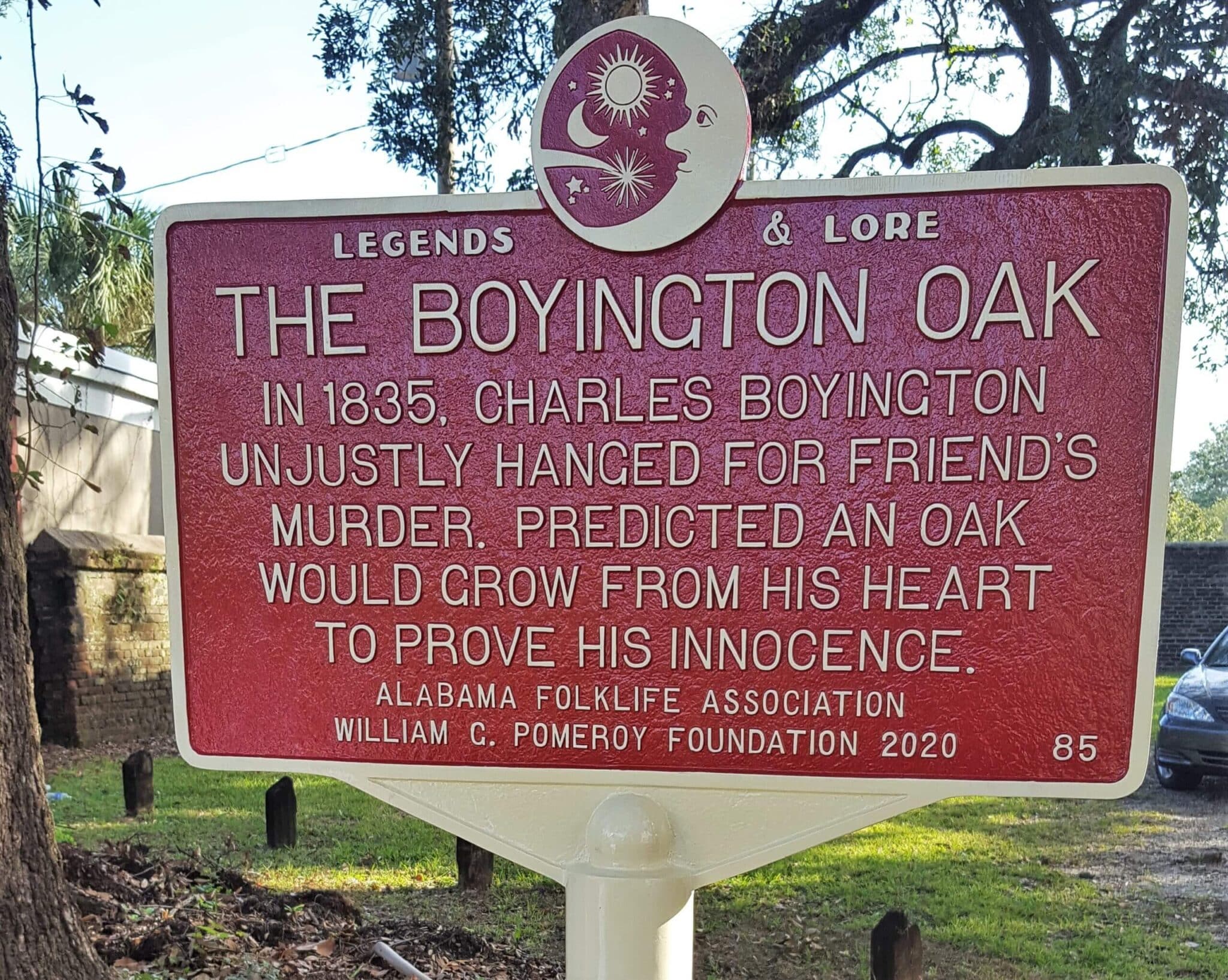
According to the marker documentation from the William G. Pomeroy Foundation, Charles R. S. Boyington, a young printer from Connecticut, arrived in Mobile in 1833 and lodged at a boarding house where he roomed with Nathaniel Frost.
Frost was later discovered stabbed to death near Church Street Graveyard, and Boyington was identified as the last person known to have been with him. The story circulated that Frost owed Boyington money, establishing a motive in the eyes of investigators at the time. Boyington maintained his innocence, but was convicted and sentenced to hang, with the account emphasizing that the evidence was circumstantial and that the process reflected the limitations of the era.
Boyington was executed on February 20, 1835. Legend says that before his death he declared an oak would grow from his heart or grave to prove he was innocent. An oak did grow at the burial site, and later changes to the cemetery wall left the tree standing just outside the graveyard boundary near Bayou Street.
Reported hauntings and why people still talk about the Boyington Oak
The haunting reputation of the Boyington Oak comes down to repeated, consistent folklore themes:
- Whispers and crying: The Pomeroy Foundation’s marker write-up notes claims of “crying and whispering noises” around the tree, a detail that shows up in multiple retellings.
- The “I’m innocent” legend: A 2019 This Is Alabama feature describes local tour storytelling that says the tree is known to whisper “I’m innocent! I’m innocent!” when it’s quiet and dark, tying the sound directly to Boyington’s final protestations.
- A place that feels heavy: Even visitors who do not report anything overt often describe the atmosphere as intense simply because you are standing at a spot tied to a real death, an execution, and a cemetery with deep 19th-century history.
It is important to treat these as reports and tradition, not proven phenomena. What’s verifiable is the location, the marker, the cemetery’s historic status, and the long-running public folklore that keeps the story alive.
A bit of context: Church Street Graveyard’s history
Church Street Graveyard matters to this story because it is one of Mobile’s key historic burial grounds. The City of Mobile notes early burials tied to yellow fever and highlights the site’s significance for architecture, monuments, and historic ironwork.
That mix of age, tragedy, and preserved Victorian-era cemetery features is exactly the sort of setting where ghost stories take root and persist.
If you go, what to look for
- The Boyington Oak itself near Bayou Street.
- The Legends & Lore historical marker summarizing the claim that the tree grew to prove innocence.
- The cemetery wall and gates that help you see how the tree sits just outside the graveyard boundary today.
Ghost hunting and exploring historic places should always be done legally and safely. Never trespass on property that isn’t yours without permission, and remember that ghost hunting can be dangerous, so always use caution.
Sources
Frequently Asked Questions
Where is Boyington Oak located?
Boyington Oak is located at 107 S Bayou St, Mobile, AL 36602.
Can you visit Boyington Oak?
Boyington Oak is open to the public. Always follow posted rules and respect private property.
Reader sightings
Nobody has reported anything here yet. If you have been, you would be the first.
Report your own visit to Boyington Oak (Mobile, Alabama): The Haunted Tree at Church Street Graveyard
How haunted is this place?
Be the first to rate
Ghost Tours Nearby

Affiliate links: BeyondHaunted may earn a commission, at no extra cost to you.

Leave a Reply