
Reviewed by Josh N · Updated August 25, 2026 · How we verify
Reported Phenomena
- Nightly gallows apparition
- Restless hanged man
Reported by visitors & local legend. Stories, not verified claims.
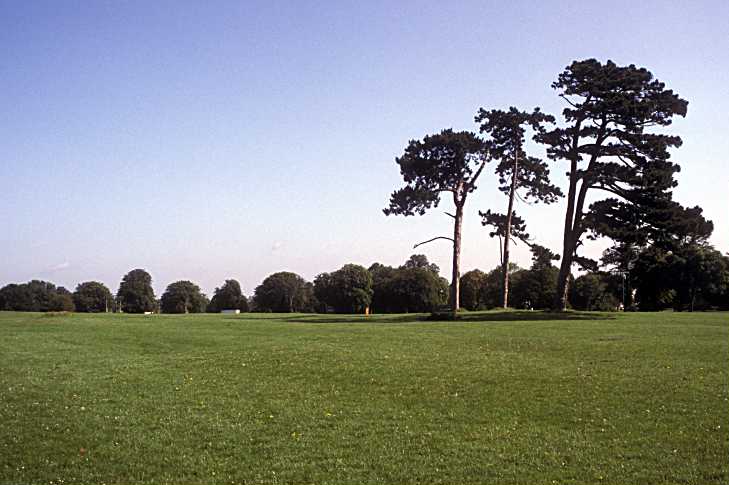
The Durdham Down ghost is not a house ghost or a hotel ghost. It belongs to open grass, wind and a road junction, and it starts with a corpse left hanging in a cage above a Bristol footpath. Today the Down is one of the great civic lungs of Bristol, in the west of England, 400 acres of it counting neighbouring Clifton Down, and the only thing most visitors are chasing is a kite. Two centuries ago the same turf carried gibbets, and one of those gibbets produced the only ghost story the place is known for.
Quick orientation: Durdham Down sits on the northern edge of Clifton, freely open at all hours, no gates and no admission. With Clifton Down to the southwest it forms the 400-acre expanse Bristolians simply call The Downs, used for walking, jogging and team sports. Its exposed position makes it particularly good for kite flying, which tells you most of what you need to know about the wind.
Grazing Rights, a Charter of 883 and the £15,000 Purchase
The Down was long used as grazing land, since its thin soils made it unsuitable for arable farming or woodland. An Anglo-Saxon charter of 883 grants grazing rights over part of it, and through the Middle Ages it served as the commons of pasture for the manor of Henbury. In 1643 and 1645, during the English Civil War, Royalist and Parliamentarian armies assembled on the down.
Its survival as open space was a deliberate act. In 1857, concerned by Victorian-built houses encroaching on the open space as the city expanded, the Bristol Corporation acquired commoners’ rights on the downs, and exercised them the following year by grazing sheep. In 1861 Durdham Down itself was bought by the city from the Lords of the Manor and Hundred of Henbury for £15,000, under the Clifton and Durdham Downs (Bristol) Act 1861. The Act’s preamble recorded that the Downs had “been used as a place of public resort and recreation since time immemorial”. Grazing declined through the 19th century and finally ceased in 1925. Since 1861 the land has been managed, along with Clifton Down, by the Downs Committee, a joint committee of the corporation and the Society of Merchant Venturers, which owns Clifton Down.
Joseph Abseny, Who Feared the Cage More Than the Rope
As many as two gibbetings took place on Durdham Down. The first recorded victim was Joseph Abseny, a Swedish Catholic convicted of the murder of a servant girl in Bristol. He was sentenced to execution and gibbeting on 5 August 1749, and what unsettled him was not the hanging but what came after it. Contemporary comment noted that “he did not care if they quarter’d his body so that it was not hung up in the air for Prey to the Birds”. He was executed on 25 August 1749 and then gibbeted on the Down.
Jenkin William Prothero, the Widow and the Lodgers Who Would Not Come
The second and better documented gibbeting was of a footpad named Jenkin William Prothero, on what was then Gallows Acre Lane. Prothero had murdered a pig drover. He was sentenced to death on 26 March 1783, with the judge specifying that he should be gibbeted on Durdham Down, and he was hanged on 31 March 1783. The gibbeting involved dipping his corpse in tar, a standard preservative that kept a body on display for years rather than weeks.
The cage went up close to the back of a residential house, which caused precisely the trouble you would expect. Complaints were made about the gibbet, particularly by those who came to the hot wells near the Down. Its placement was recorded as financially “injurious” to a widow living in the nearby house, since she could no longer let her apartment to “persons of decent repute” during the summer. Locals petitioned the Royal court to have the body moved, and they won: the Sheriff of Gloucester received an order to find a new site for the gibbet, or else to have the body dissected.
Where the Ghost Comes Into It
Here the record and the legend part company, and it is worth being precise about which is which. The petition, the complaints and the sheriff’s order are documented. The ghost is not. A far later account, from the early 20th century, suggested that Prothero’s corpse was cut down because of rumours circulating that his ghost left the gallows each night to haunt Clifton.
That is the whole of the supernatural claim attached to Durdham Down, and it arrives more than a century after the event, offering a supernatural motive for a removal that the documents explain in terms of property values and summer lettings. There is no body of modern sightings here, no catalogue of witnesses on the grass at night. What survives is a piece of folk memory about a tarred corpse that people did not want in view, and a story that grew up to explain why it came down.
Horse-Races, First-Class Cricket and the Bristol Boxkite
The Down’s history is far broader than its gibbets. On Monday, 31 August 1752 a cricket match was played on the Down between Bristol Cricket Club and London Cricket Club for a stake of 20 guineas. Gloucestershire County Cricket Club played its inaugural first-class match, against Surrey, at Durdham Down on 2, 3 and 4 June 1870. Through the 19th century the grass carried horse-races, especially at Easter, as well as wrestling and boxing contests, donkey rides, bands, flower shows, circuses, public meetings and prostitution. The sporting tradition continues with the Bristol Downs Football League playing on permanently laid out pitches.
Aviation history landed here too. In November 1910 a Bristol Boxkite, recently built at the British and Colonial Aeroplane Company’s factory at nearby Filton, came down on Durdham Down, and over the course of that afternoon the French pilot M. Maurice Tetard made several demonstration flights from the temporary airfield. Bristolians turned out in large numbers to see it.
Walking the Down: the White Tree, the Seven Sisters and a Blue Plaque
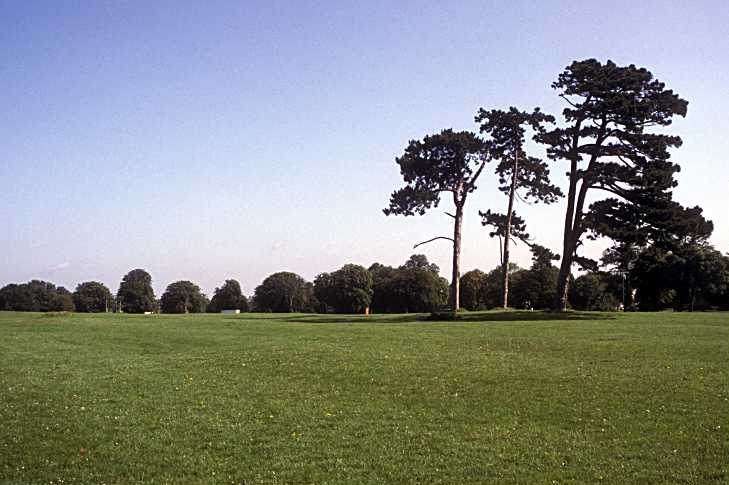
The Down today is clumps of scrubby hawthorn, avenues of massive horse-chestnuts, flat swathes of grass and an elegant border of Victorian houses. The White Tree roundabout, a junction on the Down, was built in the 1950s, though the name appears to date back to the 19th century, and for a short period in 1908 the White Tree was the tram terminus before the line was extended to Westbury. There have been several white trees at the junction, either a silver birch or a tree with a trunk painted white. One was demolished to make way for the roundabout; another was cut down during the 1970s outbreak of Dutch elm disease.
The “Seven Sisters”, a group of pine trees on the Down, have been thinned over the years, notably in the 1990 Burns’ Day storm, leaving three survivors. Replacement trees were vandalised, so an entirely new group of seven has been planted nearby. On the public toilets by the water tower on Stoke Road, a blue plaque commemorates Victoria Hughes, toilet attendant from 1929 to 1962, who also looked after sex workers in the area; in 1977, aged 80, she published her memoirs as Ladies’ Mile. It is a reminder that the Down’s real history of hardship is better documented than its hauntings.
There is no ticket, no tour and no guide to the gibbet sites. Anyone visiting for the Prothero story is visiting a landscape rather than a building, and should expect to find grass, dog walkers and the wind rather than a marked spot.
Address: Durdham Down, Bristol, England
See Durdham Down for Yourself
Sources
- 'To Keep Open and Unenclosed': The Management of Durdham Down since 1861
- Storming of Bristol
- Statue of celebrated 'loo lady' who shocked Bristol has mysteriously appeared
- Under the shroud: a brief ghostly history
- A Dangerously Empty Space: Crime and Punishment on English Wastelands
- Wikipedia: Durdham Down
Frequently Asked Questions
Where is Durdham Down Gibbet Ghost located?
Durdham Down Gibbet Ghost is located at Durdham Down, Bristol, England.
Can you visit Durdham Down Gibbet Ghost?
Durdham Down Gibbet Ghost is open to the public. Always follow posted rules and respect private property.
Reader sightings
Nobody has reported anything here yet. If you have been, you would be the first.
Report your own visit to The Gibbet on Gallows Acre Lane: the Durdham Down Ghost
How haunted is this place?
Be the first to rate
Ghost Tours Nearby
 Ghosts, Ghouls & Gallows :The Original Bristol Ghost Walkfrom $30
 Fully guided Bristol Ghost Toursfrom $23
Affiliate links: BeyondHaunted may earn a commission, at no extra cost to you.
Nearby Haunted Locations
- 1The Durdham Down Gibbet and the Ghost That Emptied a Widow’s RoomsEngland0.0mi
- 2Tarred, Caged and Rumoured to WalkEngland0.0mi
- 3Britain’s Oldest Stone CastleWales12mi
- 4Six Featherbeds and a Bell TowerEngland23mi
- 5Macbeth’s Tower, Roaring Meg and Goodrich Castle GhostsEngland28mi
- 6Priests’ Fortified PlaceEngland39mi
Leave a Reply