
Reviewed by Josh N · Updated August 24, 2026 · How we verify
Reported Phenomena
- Weeping graveside figure
- Mourning bride apparition
- Governess haunting
Reported by visitors & local legend. Stories, not verified claims.
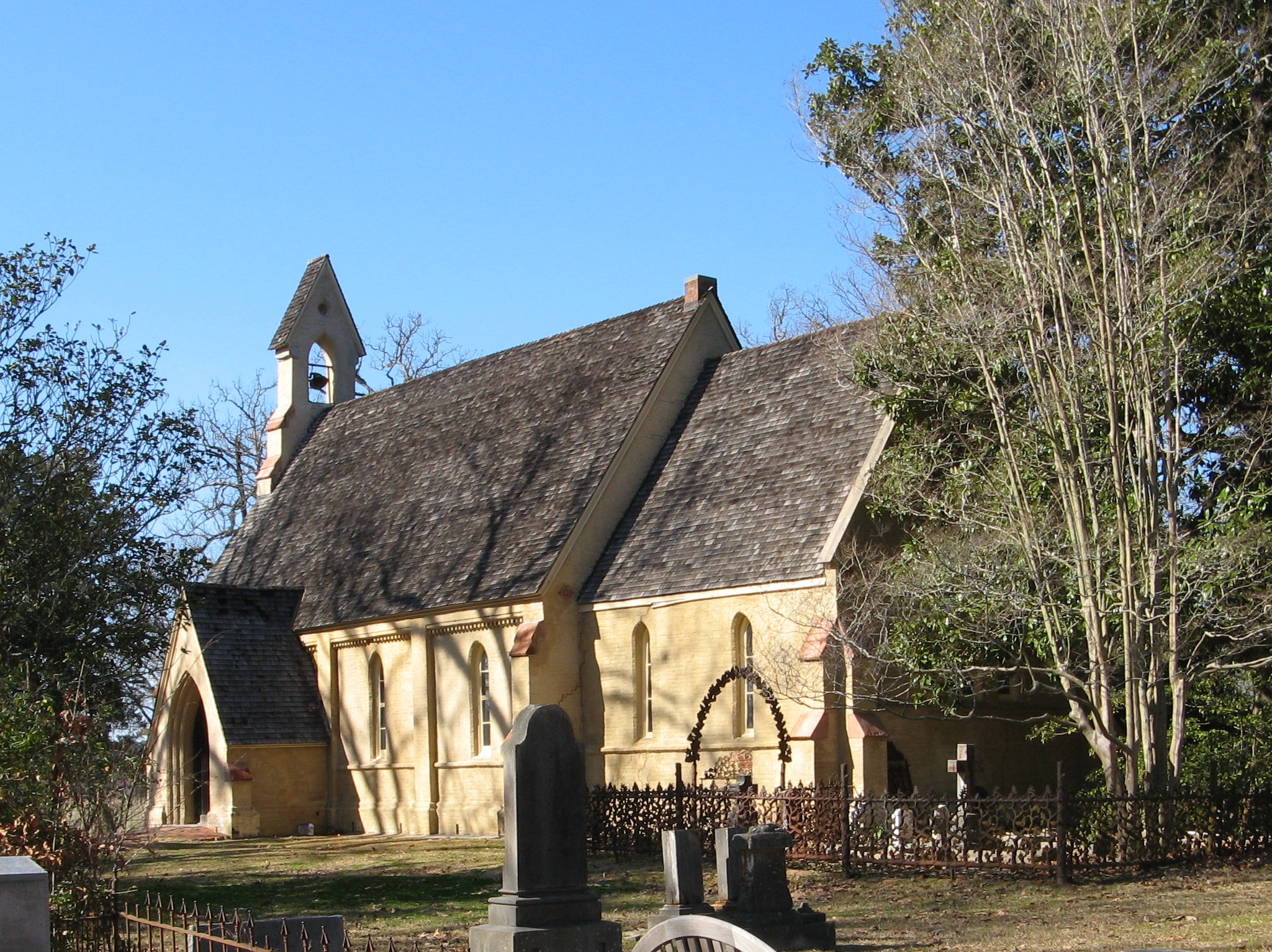
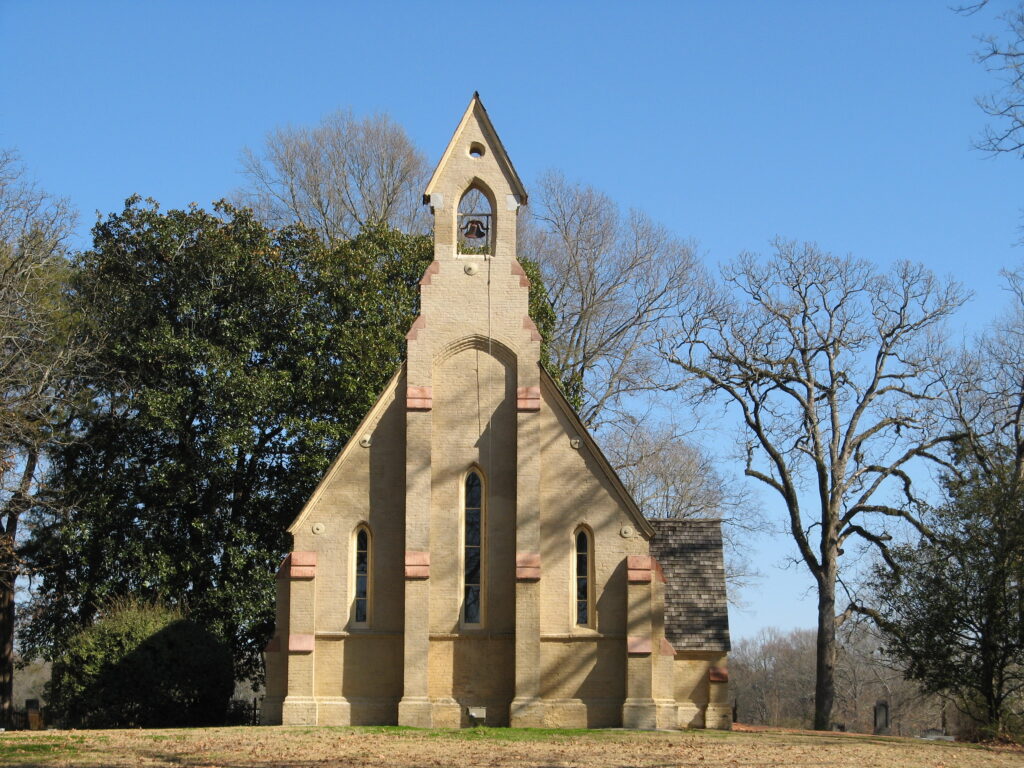
A wedding set for 21 May 1859 never took place, and the Chapel of the Cross ghost story grows out of the four days that separated the engagement from the funeral. The chapel itself is a small brick Episcopal church in the Mannsdale area of Madison, Mississippi, noted for Gothic Revival architecture that draws heavily from 14th-century English country churches. It was added to the National Register of Historic Places in 1972.
The building went up in the early 1850s. Margaret Johnstone deeded the church and 10 acres to the Episcopal Diocese of Mississippi in June 1851, and it was consecrated on 19 September 1852 by William Mercer Green, the first Episcopal bishop of Mississippi.
Annandale Plantation and the People Who Made the Bricks
John T. Johnstone migrated from North Carolina to Madison County in 1819 and established Annandale. Tradition holds that he was descended from the Johnstone family that once held the title Earl of Annandale and Hartfell in the Peerage of Scotland, and that he named the plantation in their honour. He had envisioned a chapel for the plantation but died in 1848, and after his death his widow Margaret began making plans for the construction of the church.
The chapel was built by enslaved labour. Johnstone had much of the work performed by people who were enslaved by her and imprisoned on her plantation, and they made all of the bricks by hand on site. The rest of the construction was handled by hired artisans, with Johnstone spending a total of $3,000. Any account of this church that skips that fact is telling you only half of it.
Who Drew the Plans: Frank Wills and the New York Ecclesiologist
Almost no primary records for the construction of the church survive, which is unusual for a building of this quality. Architectural scholars commonly believe that the English-born architect Frank Wills designed the Chapel of the Cross for Margaret Johnstone. What is certain is narrower: a sketch by Wills of an almost identical church, entitled “Sketch of a First-pointed church,” appeared in the October 1849 issue of the New York Ecclesiologist. Practically identical churches by Richard Upjohn are also known, among them his St. Thomas Episcopal Church of about 1849 in New York City. The attribution is an informed reading of the evidence rather than a documented commission.
From Extinct Parish to Federal Grant
Margaret Johnstone died in 1880 and her plantation was sold. The diocese then alternated between using the church and leaving it inactive, and declared the parish extinct in 1903. Margaret Britton Parsons, a granddaughter of John and Margaret Johnstone, persuaded the diocese to reactivate the church as a house of worship in 1911, and it was restored to the diocese in 1914. Priests have taken charge of operations since. A diocesan restoration began in 1956, and in 1979 the United States Department of the Interior awarded a $50,000 grant to finish the work.
The plantation house did not survive. The grand three-storey, 40-room Italianate Annandale mansion, built by Margaret Johnstone in the mid-1850s, stood unoccupied for some time and burned down on 9 September 1924.
Helen Johnstone, Henry Vick and the Grave Behind the Church
Helen was the youngest daughter of John and Margaret. Henry Grey Vick was descended from the founder of Vicksburg. They met at her sister’s home, Ingleside, in December 1855, became engaged in 1857, and set the wedding day for 21 May 1859. Vick was killed in a duel in Mobile, Alabama on 17 May 1859. His body was brought back to Annandale and buried in the churchyard to the rear of the church, where the grave can still be found.
Everything to that point is a matter of record. What follows is folklore. The story claims that the ghost of Helen now weeps at his grave.
The Two Hauntings in Print
The church’s ghost story has been chronicled in two books and one booklet. The Chapel of the Cross and Annandale appear in the short story “The Ghosts of Annandale” in Kathryn Tucker Windham’s Jeffrey introduces 13 more Southern ghosts, which sets out two distinct tales. The first concerns Annie Devlin, a former governess who died at the Annandale mansion in June 1860 and was said to haunt it until the night it burned in 1924. The second is the weeping figure at Vick’s grave. The same folklore is repeated in Norman and Scott’s Historic Haunted America and again in Jan Warner’s booklet Shadows of a Chapel.
Worth noting: one of those two hauntings has nowhere left to happen. The Devlin story was always attached to the mansion, and the mansion has been ash since 1924. Only the churchyard remains, which may be why the Helen Johnstone story is the one that has stuck.
Visiting the Churchyard at Mannsdale
The Chapel of the Cross is an active Episcopal church in the Mannsdale area of Madison, and priests have run it continuously since its restoration to the diocese in 1914. Visitors come chiefly for the architecture and for the graves behind the building, Vick’s among them. Treat it as what it is: a working parish and a burial ground, not an attraction. Services, funerals and weddings take priority over sightseeing, and the quietest visit is the most welcome one.
Address: Mannsdale area of Madison, Mississippi
See Chapel of the Cross for Yourself
Sources
- History of The Chapel of the Cross
- CHAPEL OF THE CROSS (MADISON COUNTY, MISS.)
- Historic Haunted America
- NPGallery Asset Detail (National Park Service)
- Wikipedia: Chapel of the Cross (Mannsdale, Mississippi)
Frequently Asked Questions
Where is Chapel Of The Cross Mannsdale located?
Chapel Of The Cross Mannsdale is located at Mannsdale area of Madison, Mississippi.
Can you visit Chapel Of The Cross Mannsdale?
Chapel Of The Cross Mannsdale is open to the public. Always follow posted rules and respect private property.
Reader sightings
Nobody has reported anything here yet. If you have been, you would be the first.
Report your own visit to Four Days Before the Wedding: the Chapel of the Cross Ghost
How haunted is this place?
Be the first to rate
Leave a Reply