
Reviewed by Josh N · Updated September 8, 2026 · How we verify
Reported Phenomena
- Phantom burning steamboat
- Ghost ship in fog
- Whispers along riverbanks
- Shoreline apparitions
Reported by visitors & local legend. Stories, not verified claims.
Fog on the haunted Tombigbee River has a way of turning ordinary water into something else. This is a working river in Alabama, a commercial channel with barge traffic and boat ramps and fishing camps, but it is also the river that people say gives back a burning steamboat on cold, windy nights. The history is documented. The ghost ship is not. Both are worth knowing before you go looking.
A Choctaw Name and a Cotton Highway
The Tombigbee rises in Mississippi, crosses into Alabama, and eventually joins the Mobile River on its way to the Gulf. Its name comes from Choctaw words understood to mean “box maker,” a reminder that the river mattered long before European maps recorded it. For the Choctaw and the Chickasaw it was a source of food and a transportation route, and the settlements along it reflected that.
European explorers reached the region in the mid-1500s, but the river’s commercial heyday came much later. In the 1800s the Tombigbee became a central artery of the cotton economy, with riverboats moving bales downstream and manufactured goods back up. In the 20th century the Tennessee-Tombigbee Waterway connected it to the Tennessee River, opening a new inland navigation route that still carries freight today. The river has therefore been three things in sequence: a Native trade corridor, a steamboat highway, and a modern engineered waterway. The ghost stories belong almost entirely to the middle chapter.
The Eliza Battle and the Ghost Ship Legend
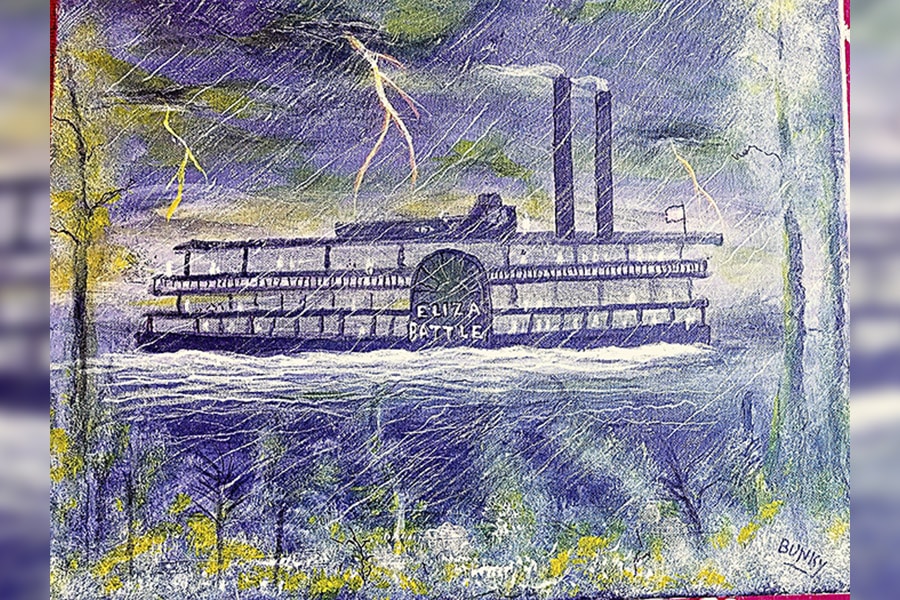
The best known story attached to the Tombigbee is that of the steamboat Eliza Battle. According to the account repeated in local lore, the vessel caught fire in 1858 and sank during a storm, and more than thirty people died. That loss is the historical core of the legend, and it is grim enough without embellishment: a boat burning on open water on a bad night, in a stretch of river where help was not close.
What follows the sinking is folklore rather than record. For generations, people along the river have claimed that on foggy nights, particularly when the weather turns cold and rough, the burning shape of the Eliza Battle reappears on the water before fading. There is no physical evidence for the apparition and no verified photograph or recording of it. What exists is a long chain of retellings, which is exactly how a river legend survives. Treat it as a story the region has kept alive, not as a documented event.
The Witch of Horebe
The river’s other well known spirit is the so-called “Witch of Horebe,” a woman remembered locally as a recluse whom townspeople branded a witch. The stories describe her as shunned in life, and the folklore insists that she was shunned in death as well, her spirit left to linger along the riverbanks rather than resting anywhere settled.
People who repeat the tale describe odd whispers near the water and sightings they cannot account for. As with the Eliza Battle, the accounts are anecdotal. What the legend does preserve, uncomfortably, is a real social pattern: a woman living alone, marked as strange by her neighbors, and turned into a ghost story after her death.
What People Report Along the Water
The reported phenomena on the Tombigbee are unusually consistent for a legend spread across so many miles of river. Accounts commonly include:
- The apparition of a burning steamboat seen in fog, associated with the Eliza Battle.
- Whispers and indistinct voices heard near the banks, particularly in stretches tied to the Witch of Horebe.
- Figures glimpsed along the shoreline that are gone when approached.
None of this is supported by physical evidence, and the stories lack the kind of dated, named witness testimony that would let anyone check them. They are part of the culture of the river rather than part of its record, and they are told most often by people who spend real time on the water at night, when fog, current, and firelight from camps all conspire to make shapes out of nothing.
Seeing the Tombigbee for Yourself
The Tombigbee is a public waterway, and there is no single haunted address to visit. Access comes through boat ramps, riverside parks, bridges, and the towns strung along its length in western Alabama. The legends attach themselves to the river generally rather than to one bend, so anyone chasing the Eliza Battle is chasing weather more than geography: the stories cluster around cold, foggy, stormy nights, which is also when the river is least forgiving to inexperienced boaters.
If you go, go for the history first. The steamboat era, the Choctaw and Chickasaw presence, and the engineering of the modern waterway are all documented and all visible in some form from the banks. The ghost ship, if it comes, comes as folklore, and folklore does not keep a schedule.
Sources
- Guide to the Ghost Towns of Alabama
- Ghost Towns of Alabama
- Alabama Ghost-Town Project
- Timeline: The rise and fall of Benson
- rootsweb.ancestry.com
- Wikipedia: List of ghost towns in Alabama
Frequently Asked Questions
Can you visit Tombigbee River?
Tombigbee River is open to the public. Always follow posted rules and respect private property.
Reader sightings
Nobody has reported anything here yet. If you have been, you would be the first.
Report your own visit to The Eliza Battle and the Haunted Tombigbee River
How haunted is this place?
Be the first to rate
Leave a Reply