
Reviewed by Josh N · Updated September 28, 2026 · How we verify
Reported Phenomena
- Gray Lady apparition
- Lady in Blue
- Unexplained cold spots
- Sounds of weeping
Reported by visitors & local legend. Stories, not verified claims.
The Gray Lady of Liberty Hall is the most persistent ghost story attached to any historic house in Kentucky, and it belongs to a building that would be worth the trip even if nobody had ever reported a thing. Liberty Hall was finished in 1796 as the home of John Brown, a lawyer and politician who became one of Kentucky’s first United States senators. The house he built has outlasted him by more than two centuries, and the stories told about it have proven just as durable.
A few basics for orientation. The property today is known as the Liberty Hall Historic Site, and it takes in two buildings: the original 1796 house and the later Orlando Brown House, set within about 4.5 acres of gardens and grounds. The site was designated a National Historic Landmark in 1971. It operates as a museum, holding documents, artifacts, and furnishings from the eighteenth and nineteenth centuries.
John Brown’s House and the Company It Kept
Liberty Hall was not built as a curiosity. It was built as a working political household. Brown’s standing as one of Kentucky’s earliest senators meant the house functioned as a center of political and social life almost from the moment it was finished, and the guest list over the following generations grew accordingly. Andrew Jackson and Theodore Roosevelt are both counted among the figures who passed through its rooms.
That long occupancy matters to the ghost stories, though not in the way people usually assume. A house that stays in one family’s orbit for generations accumulates deaths, departures, and remembered griefs, and those are exactly the raw materials from which house legends are assembled. Nothing about a long history proves a haunting. It does explain why a place like Liberty Hall has more candidates for a resident spirit than a building put up last decade.
Margaret Varick and the Gray Lady
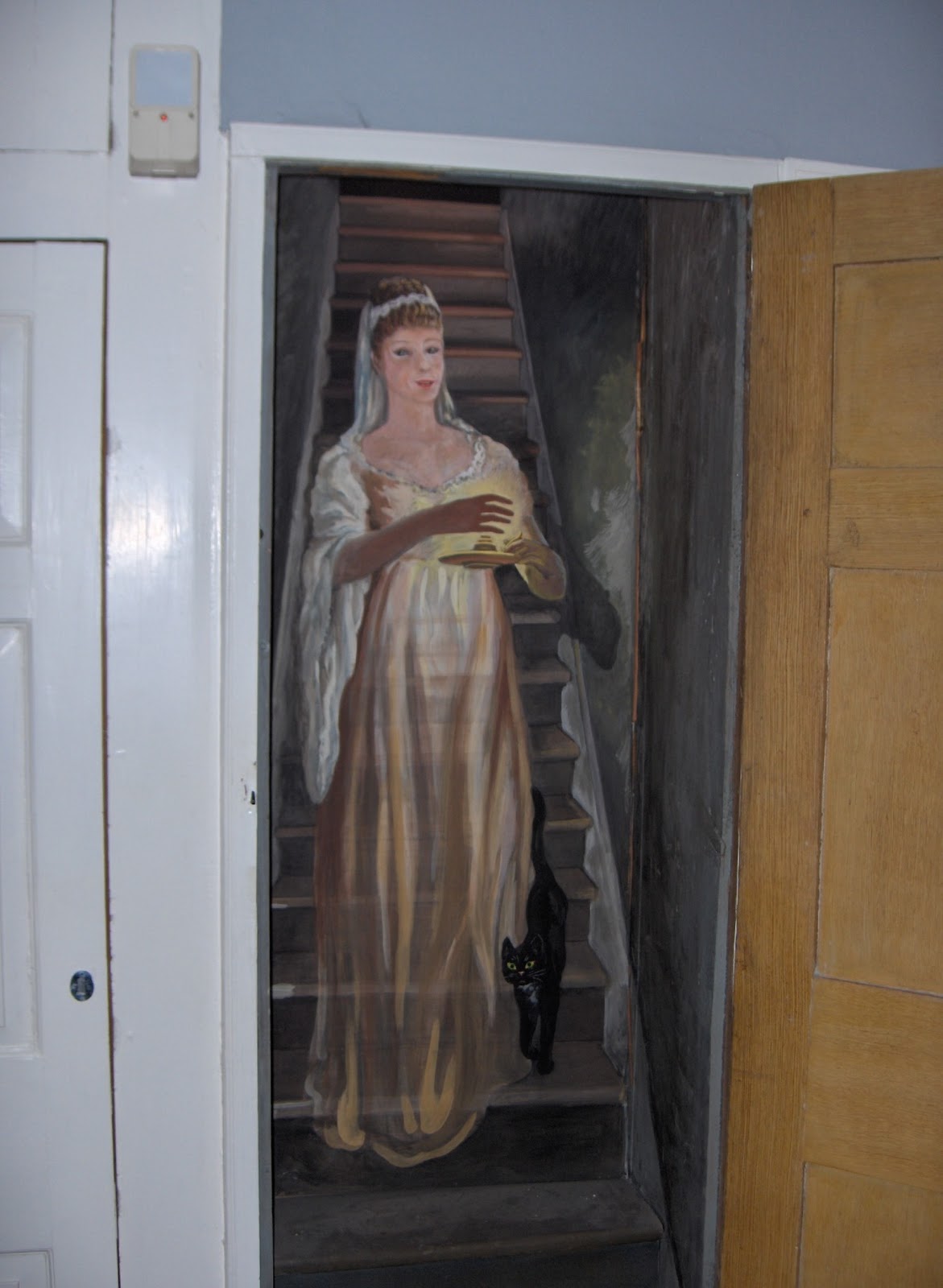
The best known figure in the Liberty Hall folklore is the Gray Lady, generally identified as Margaret Varick, who is said to have died under mysterious circumstances at the house in the nineteenth century. That identification is traditional rather than proven, and the phrase “mysterious circumstances” is doing a great deal of work in most retellings. What is consistent across the accounts is the description: a woman in gray, seen inside the house, usually briefly, usually by someone who was not expecting her.
Visitors and staff have also reported cold spots in the house that they connect to her, which is a claim worth handling carefully. An eighteenth century brick house with tall windows, unheated corners, and two centuries of settling produces temperature swings on its own. That does not make anyone a liar. It does mean a cold room is weak evidence for anything but drafts.
The Lady in Blue and the Sailor Who Never Came Back
The second story attached to Liberty Hall is quieter and sadder. The Lady in Blue is described as a young woman whose sailor sweetheart was lost at sea, and her presence is said to remain in the room where she once stayed, sometimes accompanied by the sounds of her grief. It is a story shape that recurs in American house lore from Maine to Georgia, which is either evidence that such things happen or evidence that people tell the same story about old houses everywhere. Readers can weigh that for themselves.
What Holds Up and What Does Not
No hard evidence of paranormal activity at Liberty Hall has ever been produced. What exists is a body of reported experience: apparitions glimpsed, cold spots felt, sounds heard by people who could not account for them. Those reports are real as reports. They are not the same thing as a documented event, and this guide does not treat them as one.
Worth flagging too: the house dates to 1796, which places it just after the Revolution rather than during it, a detail that popular accounts sometimes blur. Precision on that point costs nothing and keeps the rest of the story honest.
Visiting Liberty Hall Historic Site
Liberty Hall operates as a museum and an educational resource, not as a paranormal attraction, and visitors should arrive expecting the former. The interpretation covers the architecture of the period, the Brown family, and the wider context of early American and early Kentucky history, with the collection of period documents, artifacts, and furnishings as the centerpiece. The grounds, roughly 4.5 acres of gardens surrounding both houses, are part of the experience and are worth time in their own right.
Anyone going specifically for the Gray Lady should check the site’s own schedule before traveling, since access to the historic interiors is managed by the museum rather than open at all hours. Go for the house first. If something else turns up while you are there, you will be in good company, and in a very long line of people who have said the same.
Sources
- Wendell E. Berry biography (Neh (official))
- Academy members
- Dayton Literary Peace Prize names distinguished achievement award recipient
- At Hall of Fame ceremony, Wendell Berry laments 'public silence' on Ky. writers' work
- Wendell Berry, Writer Who Extolled America's Agrarian Past, Dies at 92 (The New York Times)
- Wikipedia: Wendell Berry
Frequently Asked Questions
Where is Liberty Hall located?
Liberty Hall is located at 202-218 Wilkinson St, Frankfort, KY 40601.
Can you visit Liberty Hall?
Liberty Hall is accessible by guided tour only. Always follow posted rules and respect private property.
Reader sightings
Nobody has reported anything here yet. If you have been, you would be the first.
Report your own visit to The Gray Lady of Liberty Hall, John Brown’s Kentucky Home
How haunted is this place?
Be the first to rate
Ghost Tours Nearby

Affiliate links: BeyondHaunted may earn a commission, at no extra cost to you.
Leave a Reply