
Reviewed by Josh N · Updated August 26, 2026 · How we verify
Reported Phenomena
- Apparition in library
- Woman in period dress
- Crying in bedroom
- Figure at barn windows
- Basement whispers
- Sudden cold spots
- Oppressive presence
Reported by visitors & local legend. Stories, not verified claims.
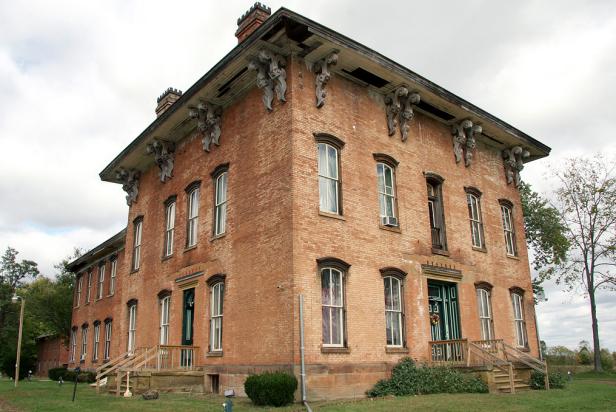
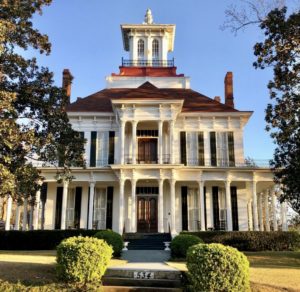
Twenty-nine rooms of brick sit at the roadside in Trinway, Ohio, just north of Dresden, and Prospect Place Mansion has spent most of its long life being either admired or nearly lost. The abolitionist George Willison Adams completed it in 1856 as the centerpiece of a working estate, and it survives today as the home of the non-profit G. W. Adams Educational Center. The documented history here is unusually rich: an arson fire, a family that freed its slaves and moved north, flour boats returning from New Orleans with refugees hidden below deck, a gravel company, and a demolition order that was canceled at the last moment. The ghost stories arrived much later, and they are worth separating from all of that.
Prospect Place at a Glance
- Built: 1856, by George Willison Adams, on the foundation of an earlier house
- Size: 29 rooms, at the center of land holdings that once totaled 14,500 acres
- Also known as: The Trinway Mansion, Prospect Place Estate, the George Willison Adams House
- Listings: National Register of Historic Places, and the Ohio Underground Railroad Association’s list of Underground Railroad sites
- Now: headquarters of the G. W. Adams Educational Center, Inc., with free weekend tours from March through November
The House Adams Had to Build Twice
The mansion standing today is the second house on the same foundation. The first was destroyed by an arson-related fire shortly after it was finished. Adams rebuilt, and he rebuilt defensively: the interior walls of the current house are solid brick, and a two-inch layer of mortar was laid between the first and second floors specifically to stop fire from climbing.
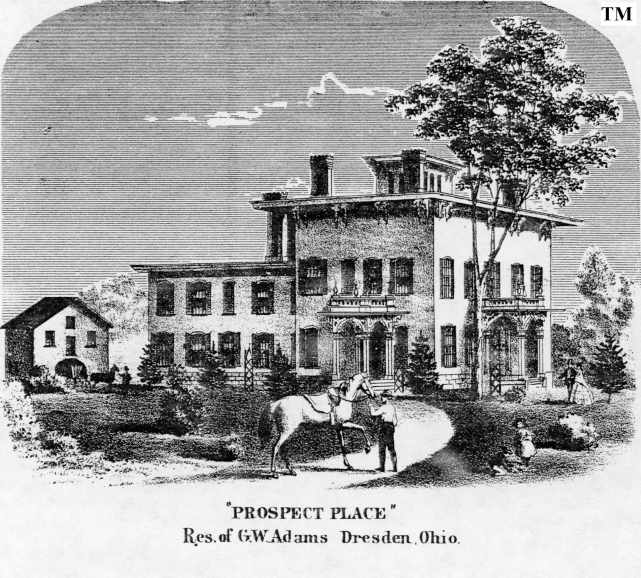
For 1856 the technology inside was remarkable. A copper tank cistern on the second floor pressurized water throughout the building, and two coal stoves fitted with copper tanks fed by that cistern gave the house both hot and cold running water. There was a refrigeration system for milk, cheese and butter, and a primitive form of air conditioning that drew cool basement air up into the living quarters in summer through ducts built into the outside walls. Visitors on the tour today are walking through what was, for its moment, an experimental building as much as a fashionable one.
Flour Boats, Freedom and the Adams Brothers
George Willison Adams was born in Fauquier County, Virginia, on October 29, 1799, the last of thirteen children. His father was a plantation owner who gave up his land and home to leave the slaveholding South. The family migrated to southeastern Ohio in 1808, freed their slaves, and settled in Madison Township, Muskingum County, near Dresden.
Adams became a committed abolitionist like his father. He and his brother Edward, who died in 1861, ran an Underground Railroad station out of their mill at what is now Adams Mills, Ohio. The operation was substantial rather than casual. The brothers ran a flouring mill on the Ohio and Erie Canal and owned warehouses, a boat yard and cooper shops in Dresden. When Adams company men took flour downriver to New Orleans, Louisiana, they returned with refugees concealed beneath the decks of their boats. That commercial infrastructure, the boats and the legitimate cargo, is what made the route work.
History is rarely tidy, and the record includes a complication worth stating: in 1856, the same year the mansion was completed, Adams donated money to the American Colonization Society.
Outside of abolition, Adams shaped the region in other ways. He served a term in the Ohio General Assembly. When investors in a stock company grew fearful that a suspension bridge across the Muskingum River near Dresden would lose them money, Adams built the bridge at his own expense, with his nephew George Copeland as engineer. It ran as a toll bridge for several years before Adams sold it to the county commissioners for one third of what it had cost him to build. Copeland went on to work on the Brooklyn Bridge. Later in life Adams was president of the Steubenville and Indiana Railroad and directed construction of the Cincinnati and Muskingum Valley Railroad. He died at home on August 31, 1879, at the age of 79, and is buried in Dresden Cemetery.
Gravel Pits, Baskets and a Cancelled Demolition
The house passed down through the Adams-Cox family to George Cox, a grandson of G. W. Adams, who held it until the 1960s. In 1969 it was sold to Eugene Cox, no relation, whose Cox Gravel Company mined the remaining 275 acres of the estate. The mansion was listed on the National Register of Historic Places during that period, but listing did not protect it. Maintenance stopped, vandals and thieves worked through the building until the interior was all but gutted, and by 1988 the estate was scheduled for demolition.
Local businessman Dave Longaberger bought the house to stop the wrecking crew. He put on a new roof and increased security, intending to restore the mansion as a headquarters for the Longaberger Basket Company. When the company built its new headquarters in Newark, Ohio, instead, the restoration went on hold. Longaberger died of cancer in the 1990s, and his company kept security on the property until 2001, when private investors bought it hoping to convert the mansion into a restaurant and bed and breakfast. That financing fell through. The 501(c)(3) G. W. Adams Educational Center, Inc. was founded in 2003 by Dr. Felix Spector and his partner George Jeffrey Adams, who is not related to the original family, and the center has run the site since. When George Jeffrey Adams retired as board chairman in 2017 citing failing health, a new board of trustees was installed and repair and restoration work resumed.
What People Report Inside the Mansion
Prospect Place is frequently described as one of Ohio’s most haunted buildings, and it has the television history to match. It appeared in an episode of Ghost Hunters on the SyFy Channel in April 2008, on Ghost Adventures on the Travel Channel on January 1, 2010, and on Ghost Brothers on the Travel Channel on April 26, 2016. None of those visits produced anything resembling proof, and the building is best described as allegedly haunted. What follows is what visitors and investigators say they experience, not what the record documents.
- The master of the house: a figure identified by visitors as G. W. Adams himself, reported in the library.
- A young woman in period dress: a daughter named Anna is said to appear in her old room, and crying is sometimes reported there.
- The man in the barn: the barn story concerns a bounty hunter said to have been killed by mistake, taken for a threat to people hiding on the property. Visitors report a figure at the barn windows.
- The basement: whispers, sudden cold and a sense of being watched are the most commonly repeated experiences, along with accounts of a heavier, oppressive presence that some visitors describe as hostile.
One legend deserves a footnote. The Anna story is usually told as a daughter who died young of tuberculosis, but the Adams family record does not support it: Anna Turner Adams Cox was born in 1847 and lived until 1924. Adams did lose children, including his son Edward, who died in 1853 aged about six, and a daughter, Florence, who was born and died in 1871. Whatever visitors are responding to in the upstairs rooms, the tragic Anna of the tour-night retelling is a legend rather than a documented death.
Visiting Prospect Place in Trinway
The mansion and grounds are open for free tours on weekends from March through November, from noon until 4 p.m. That daytime tour is the best introduction to the place, because the restoration story and the Underground Railroad history are the reasons the house still exists at all. Anyone hoping for an after-dark investigation should contact the G. W. Adams Educational Center directly rather than assume access, and should keep in mind that this is an actively restored building run by a small non-profit. Treat the interior accordingly: it survived arson, a gravel company, vandals and a demolition order, and it is still being put back together.
Sources
- Past and Present of the City of Zanesville and Muskingum County, Ohio
- The African Repository, Volume 32
- A New Chapter in Historic Preservation
- NPGallery NRHP Archive Search (National Park Service)
- Wikipedia: Prospect Place
Frequently Asked Questions
Where is Prospect Place Mansion located?
Prospect Place Mansion is located at 2003 by Dr.
Can you visit Prospect Place Mansion?
Prospect Place Mansion is accessible by guided tour only. Always follow posted rules and respect private property.
Reader sightings
Nobody has reported anything here yet. If you have been, you would be the first.
Report your own visit to Prospect Place Mansion: Arson, Abolition and the Trinway Barn
How haunted is this place?
Be the first to rate
Ghost Tours Nearby

Affiliate links: BeyondHaunted may earn a commission, at no extra cost to you.
Leave a Reply