
Reviewed by Josh N · Updated August 16, 2026 · How we verify
Reported Phenomena
- Headlamp-like lights
- Vanishing miner figures
- Whispers and moans
- Electromagnetic anomalies
Reported by visitors & local legend. Stories, not verified claims.
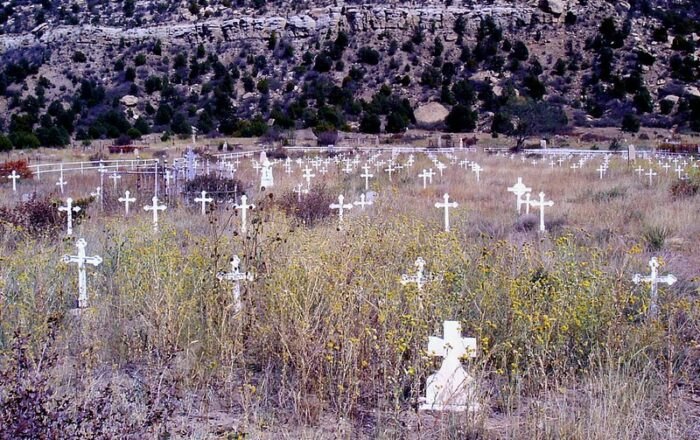
Dawson Cemetery is the last thing left standing of a company town that once fed coal to half the Southwest. The town of Dawson, in Colfax County, New Mexico, is gone: houses, tipples, shops, school, all of it cleared or collapsed. What survives on the ground above the old workings is a fenced burial ground established in 1913, holding roughly 600 marked graves, and a reputation for lights that move between the rows after dark.
Orientation Before You Go
- Established: 1913, the same year as the first of the town’s two mine disasters.
- Size: three sections, roughly 600 marked graves.
- Boundaries: the sections are enclosed by barbed wire or iron pipe fencing.
- Protection: listed on the National Register of Historic Places since 9 April 1992.
- Setting: open ground in a ghost town, with no surviving settlement around it.
Two Explosions, Ten Years Apart
Dawson was a coal town, productive and busy, and for a while it was one of the larger industrial settlements in the region. That history is defined by two disasters in the same mine field: one in 1913 and one in 1923. Together they are credited with killing more than 400 miners, and they are the reason the cemetery exists in the form it does. A burial ground opened in 1913 was immediately given more work than any small town cemetery should have to absorb, and ten years later it was given the same work again.
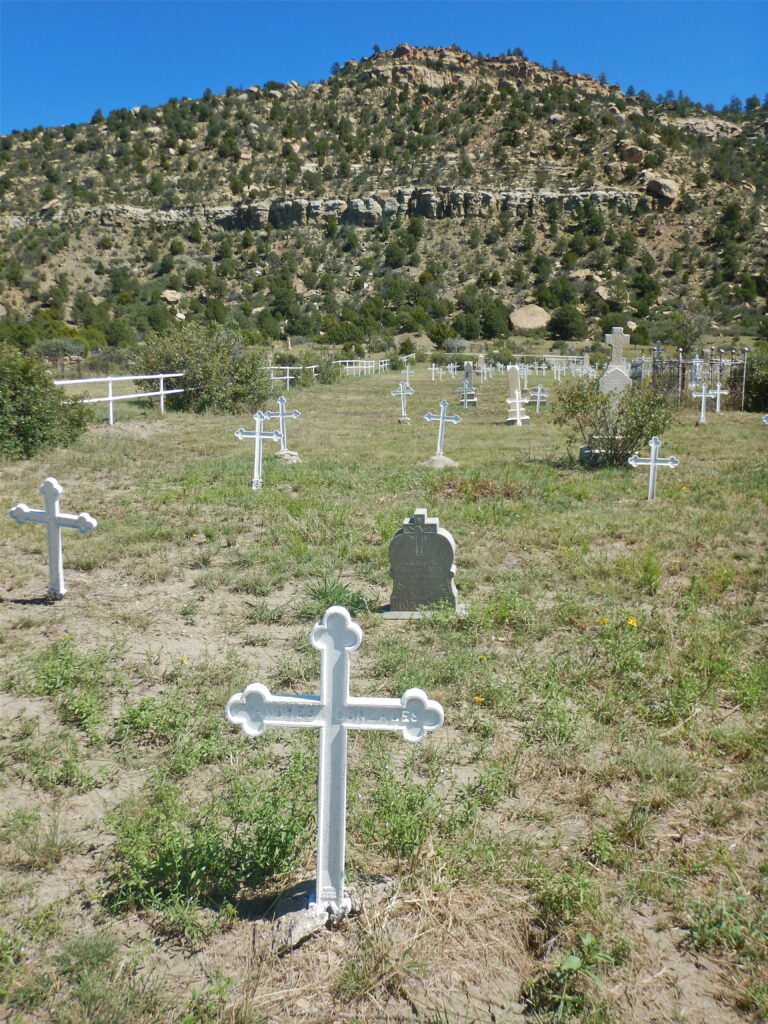
The town did not recover from being known for this. Dawson is a ghost town now, and the cemetery is the surviving structure of the community that dug the coal.
Who Lies Under the White Crosses
The rows of white iron crosses are the image most visitors carry away, and they are the graves of miners. But the ground holds a fuller cross section of the town than the disaster story suggests. The cemetery contains the graves of World War II casualties alongside the coal miners, and it holds immigrants from southern and eastern Europe and from Mexico, the labour force that American coal companies recruited by the shipload in the early twentieth century. Read the markers and you are reading a census of who was willing to go underground for wages in a place like this.
Phelps Dodge and the Fight to Keep the Fence Standing
A cemetery in an abandoned town has no municipal budget behind it, and Dawson’s survival has depended on outside interest. The Phelps Dodge Mining Company has historically invested in the restoration of the burial ground, work that was recognised in 1991 with an award from Representative E. Kelly Mora. The National Register listing followed in April 1992. Preservation here has been episodic rather than continuous, which is worth knowing before you arrive expecting mown grass and gravel paths.
Lights That Look Like Headlamps
Everything in this section is reported experience, not documented event. There is no inquest, no verified recording and no official account of anything unusual at Dawson Cemetery. What exists is a consistent body of visitor and ghost hunter testimony, and it is unusually specific.
The recurring report is of lights moving among the graves at night, described by witnesses as resembling the glow of miners’ headlamps. Figures are said to appear with them, sometimes described as still wearing work clothing, and to vanish when anyone walks towards them. Whispering and low moaning are also reported. Investigators who have brought equipment to the site claim unusual electromagnetic readings, which in an open field with iron fencing and a century of industrial ground beneath it proves considerably less than it sounds.
What is notable about the Dawson accounts is their tone. Almost nobody describes the place as threatening. The consistent characterisation, repeated by paranormal groups and casual visitors alike, is of something sad rather than hostile: presences that are searching rather than warning anyone off. Whether that says more about the site or about what people expect to feel while standing in front of 400 mining graves is a fair question, and it is one the reports themselves cannot answer.
Dawson on Screen
The abandoned town and its cemetery have fed into popular culture, most visibly as an influence on the Netflix series Godless, which borrowed the atmosphere of the emptied New Mexico coal country for its own purposes. The result has been a steady increase in visitors who arrive knowing the mood of the place before they know its history.
Visiting Dawson Cemetery
This is a burial ground, not an attraction, and it sits alone in country with nothing else left in it. Go in daylight if your interest is the history: the crosses, the immigrant names and the war graves tell the story of the town far more clearly than any night visit will. Respect the barbed wire and pipe fencing that marks the three sections, take nothing, move nothing, and remember that descendants still come here.
If you come for the reported activity, come with modest expectations. The accounts describe brief lights and vanishing figures rather than anything sustained, and the site offers no facilities, no lighting and no staff. Treat the roughly 600 markers as the point of the trip and anything else as a bonus you almost certainly will not get.
See Dawson Cemetery for Yourself
Sources
- Remembering the Dawson mining disaster, 100 years later
- NPGallery NRHP Archive Search (National Park Service)
- Geographic Names Information System (Nationalmap (official))
- Find a Grave
- Wikipedia: Dawson Cemetery
Frequently Asked Questions
Can you visit Dawson Cemetery?
Dawson Cemetery is open to the public. Always follow posted rules and respect private property.
Reader sightings
Nobody has reported anything here yet. If you have been, you would be the first.
Report your own visit to Headlamps in the Dark: The Iron Crosses of Dawson Cemetery
How haunted is this place?
Be the first to rate
Leave a Reply