
Reviewed by Josh N · Updated August 6, 2026 · How we verify
Reported Phenomena
- Screams in tunnels
- Shadow figures
- Unexplained encounters
- Oppressive atmosphere
Reported by visitors & local legend. Stories, not verified claims.
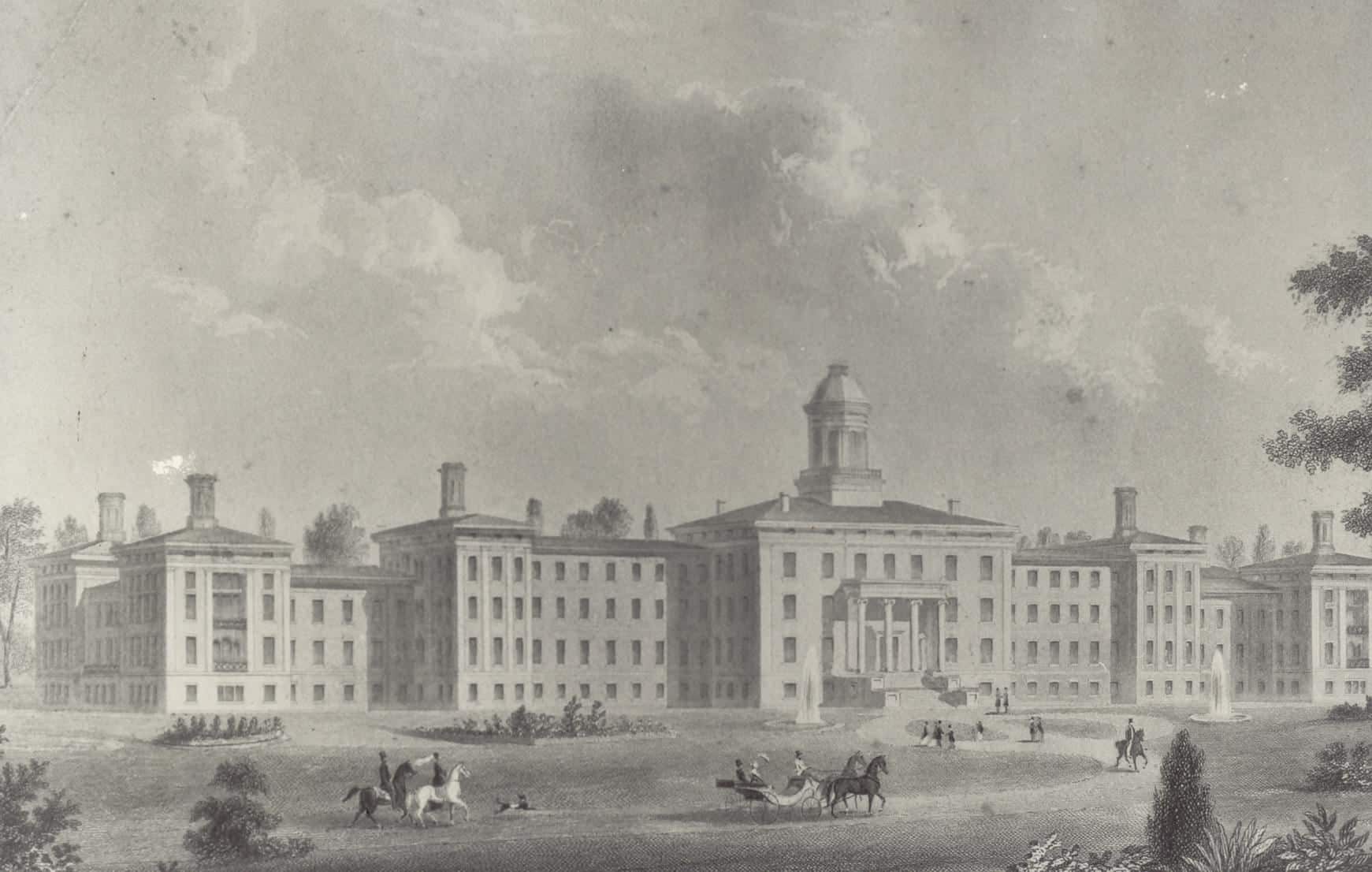
A broad, empty lawn on the west side of Indianapolis is the most honest monument Central State Hospital has. It marks the footprint of Seven Steeples, the ornate women’s ward that once dominated the grounds and was pulled down as unsound. For 146 years this campus in Indiana held the state’s mentally ill, and since its closure in 1994 it has held something else: a reputation for screams in the tunnels, shadows in corridors, and a sense of unfinished business that visitors keep describing in almost identical words.
Sorting the record from the rumour matters here more than at most sites, because the documented history is grim enough without embellishment.
- Opened: November 1848, with five patients, in a single brick building on over 100 acres west of downtown Indianapolis
- Names: Indiana Hospital for the Insane, renamed the Central Indiana Hospital for the Insane in 1889, and Central State Hospital after 1926
- Peak population: 2,500 patients in 1950
- Closed: 1994
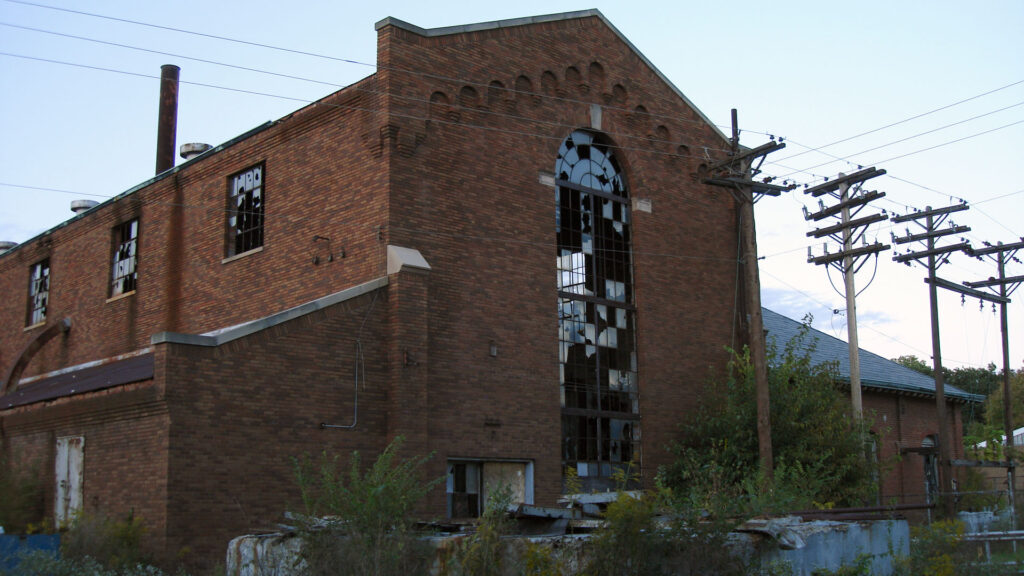
- Standing today: as of December 2022, only three original structures survive, including the 1886 power plant and the 1895 pathology building
From Five Patients to a Small City on Washington Street
The Indiana legislature authorised a “hospital for the insane” as early as 1827, but construction stalled for years. When the doors finally opened in November 1848, the institution consisted of one brick building and five patients. What grew around it over the following century was less a hospital than a self-contained town.
By the middle of the twentieth century the campus included two massive ornate buildings, one for male and one for female patients, a pathological department, a hospital for the “sick insane” treating physical ailments, a farm colony where patients worked under the banner of occupational therapy, a chapel, an amusement hall with an auditorium, billiards and bowling alleys, a bakery, a firehouse, a cannery staffed by patients, and formal gardens and fountains. It was designed to look like a place of recovery, and for a time it was promoted as one.
The more elaborate of the two great wards, home to the female patients, was known as Seven Steeples and followed the Kirkbride Plan, the nineteenth century model that used long staggered wings to give every patient access to a window, light and air. The Men’s Department Building took a different form, known as Straight Block, with the same intention behind it. It came down first, demolished across twelve years ending in 1941.
For half a century the hospital took patients from every part of the state. That changed by 1905, when Indiana had built institutions at Evansville, Logansport, Madison and Richmond, relieving an overcrowded Central State and leaving it responsible for the 38 counties of the central district. Even so, the numbers climbed. Physicians were caring for nearly 2,500 patients by 1928, and the population reached 2,500 again in 1950, its largest capacity.
Bonfires, Exposés and the Patients Who Wrote It Down
Central State’s reputation was contested in its own lifetime, not just in retrospect. William Baldwin Fletcher, superintendent from 1883 until he was fired in 1887, is remembered for burning the hospital’s mechanical restraints in a bonfire in 1885 and for opposing staff appointments made for political reasons. In 1884 the hospital hired Sarah Stockton, a graduate of the Woman’s Medical College of Pennsylvania, as its first female physician, working in the department for women. Earlier, in 1857, superintendent James Athon had to send patients home for lack of funding.
The most valuable testimony came from the wards themselves. Anna Agnew published Under the Cloud: Or, Personal Reminiscences of Insanity in 1886, describing the treatment she received across seven years as a patient. Albert Thayer, a Civil War veteran discharged in 1884, published exposés about the poor treatment of patients. Decades later, in 1950, Riah Fagan Cox wrote a short story called “I Remember Jones” about her own experience there in the 1940s; her daughter Jane Cox would become Kurt Vonnegut’s first wife. The Czech-trained artist John Zwara painted watercolours of the hospital while a patient in 1936, admitted by Alexander Vonnegut. Robert Dale Owen, the former U.S. Representative, spent three months under care at the hospital after a mental breakdown in 1875.
Later superintendents pushed the institution toward clinical medicine. George F. Edenharter, in charge from 1893 to 1923, was involved in establishing the pathology building that now houses the Indiana Medical History Museum. Max A. Bahr, superintendent from 1923 to 1952, trained as a clinical psychiatrist and worked in forensic psychiatry and the treatment of neurosyphilis, while Walter Bruetsch, educated in Switzerland and Germany, was hired in the 1920s as chief pathologist.
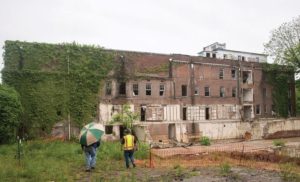
None of that saved the place. By the early 1970s most of the grand buildings had been condemned as structurally unsound and razed, replaced by plain institutional brick. Allegations of patient abuse, chronic funding shortfalls and a national move away from institutional care combined to close Central State Hospital in 1994.
What People Say Happens on the Old Grounds
The paranormal reputation attached itself quickly after closure, and it is worth being clear that these are reported experiences, not documented events. Visitors and former employees have described hearing screams from the underground service tunnels and seeing shadow figures moving along hallways in the surviving buildings. People who work on or patrol the property have reported encounters they could not explain. The general complaint is atmospheric rather than dramatic: cold, watched, unwelcome.
A persistent local story holds that unmarked graves were uncovered during redevelopment of the site, and it is repeated often enough that most visitors arrive already believing it. The documentary history summarised here does not record such a discovery, and the claim should be treated as folklore until someone produces the paperwork. The same caution applies to the tunnels. Old institutional campuses of this size routinely have utility tunnels, and old institutional campuses of this size routinely acquire tunnel legends.
What is not legend is the scale of suffering the buildings contained, and the fact that the people who lived it, Agnew, Thayer, Cox, left accounts of their own. The ghost stories tend to be told about anonymous screams. The record has names.
Visiting the Central State Hospital Site in Indianapolis
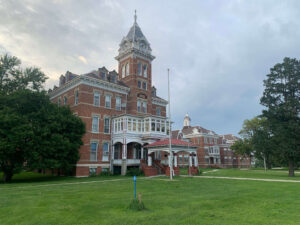
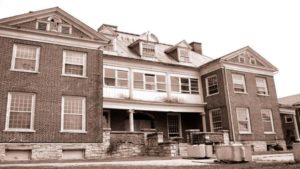
The city of Indianapolis bought the 160 acre property from the state in March 2003 for $400,000, on the 2800 to 3300 blocks of West Washington Street. In December 2006 it approved a sale to a developer for just over $2 million, with apartments, shops and green space discussed for the land. In late 2013 several buildings, including the Administration Building and the prominent powerhouse, were bought by a company that refurbishes derelict structures. Work to convert the 1938 Administration Building into student apartments began in January 2014, with some residents moving in that September. It now operates as Central State Mansion and keeps original architectural features along with decorations that nod to its past. Note that despite being the building most people picture when they think of Central State, it never housed patients.
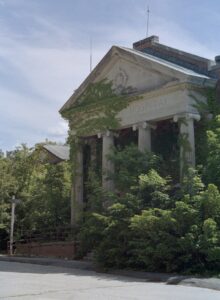
The best legitimate access is the Indiana Medical History Museum, occupying the well preserved 1895 pathology building, where the specimen rooms, laboratories and amphitheatre survive largely intact. The Indiana State Archives, the Indiana State Library and the museum together hold the surviving record of an institution that served the mentally ill of Indiana for 146 years. For a fuller picture before you go, the 2006 documentary Central State: Asylum for the Insane, produced and directed by independent filmmaker Dan T. Hall of Vizmo Films, covers the site’s history and legends. The 1895 laundry building has had its own second life: in 2005 the Beckmann Theatre was granted temporary occupancy to stage a production called Asylum, and the building later served as car storage.
Much of the remaining land is occupied housing and active redevelopment rather than open ruin. Treat the tunnels and the closed buildings as off limits, stick to the museum and the public lawns, and remember that the large empty stretch of grass where Seven Steeples stood is the closest thing this place has to a memorial.
See Indiana Central State Hospital for Yourself
Sources
- The Beckmann Theatre
- Central State grounds sold
- Central State (Video 2006)
- Digital Story Telling
- Central State Hospital – Encyclopedia of Indianapolis
- Wikipedia: Central State Hospital (Indiana)
Frequently Asked Questions
Where is Indiana Central State Hospital located?
Indiana Central State Hospital is located at 2800 to 3300 blocks of West Washington Street.
Can you visit Indiana Central State Hospital?
Indiana Central State Hospital is open to the public. Always follow posted rules and respect private property.
Reader sightings
Nobody has reported anything here yet. If you have been, you would be the first.
Report your own visit to Seven Steeples: Ghost Stories at Central State Hospital
How haunted is this place?
Be the first to rate
Ghost Tours Nearby
 Wicked Wraiths of White River: Indianapolis Ghost Tourfrom $26
 The Ghosts of Indianapolis Tour Family Friendly Haunted Historyfrom $30
 Indianapolis Adults Only Ghost and True Crime Tourfrom $35
Affiliate links: BeyondHaunted may earn a commission, at no extra cost to you.
Nearby Haunted Locations
- 1The Woman in White at the James Allison Mansion, IndianapolisIndiana6.8mi
- 2The Mail Cart on the Fourth FloorIndiana10mi
- 3109 Cat Graves and a Glass CoffinIndiana11mi
- 4Bullet Holes and Blues at Indiana’s Slippery Noodle InnIndiana11mi
- 5A Schoolhouse Fire No Record ConfirmsIndiana13mi
- 6Honk Your HornIndiana14mi


Leave a Reply