

Reviewed by Josh N · Updated September 30, 2026 · How we verify
Reported Phenomena
- Apparition of a girl
- Disembodied whispers
- Sense of being watched
- Reported activity
Reported by visitors & local legend. Stories, not verified claims.
Malabar Farm sits in a fold of Pleasant Valley in Richland County, Ohio, and it is one of the few haunted destinations in the state that arrived at its reputation by accident. The park exists because a Pulitzer Prize-winning novelist decided to prove that worn-out ground could be brought back to life. The ghost stories come from a small frame house up the road, where in 1896 a young woman poisoned her entire family at the breakfast table.
Quick Facts on Malabar Farm State Park
- Where: Pleasant Valley, Richland County, Ohio, near Lucas and Mohican State Park
- Built: 1939, by author Louis Bromfield, who lived there until his death in 1956
- The house: designed with Mansfield architect Louis Lamoreux, built to look as though wings had been added over generations
- The dark chapter: the murder of the Rose family in 1896, at the nearby miller’s house
- Status today: an Ohio state park since 1976, open to the public
The Rains Came Paid for Pleasant Valley
Louis Bromfield grew up in Pleasant Valley, developed a passion for horticulture while living in France, and made two long trips to India that produced one of his most acclaimed bestsellers, The Rains Came, in 1937. He put the proceeds into farmland back home, remarking that “nothing could be more appropriate than giving the farm an Indian name because India made it possible.”
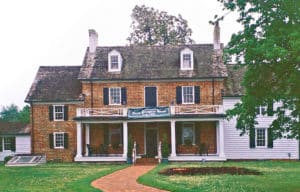
He bought a farm from Clement Herring in December 1938, then picked up adjacent farms in 1940 and 1941, ending with 580.6 acres. The Bromfield family moved to Pleasant Valley in 1939 and lived in the Fleming house while their own home went up. The original Herring house became the core of the new structure, and Bromfield kept reordering rooms and walls until the build had dragged on for eighteen months. The result, known as the Big House, is described variously as a 19-room Greek revival design and as a 32-room Western Reserve-style homestead, a reflection of how much the plan changed while it was being built.
Bogart, Bacall and 20,000 Visitors a Year
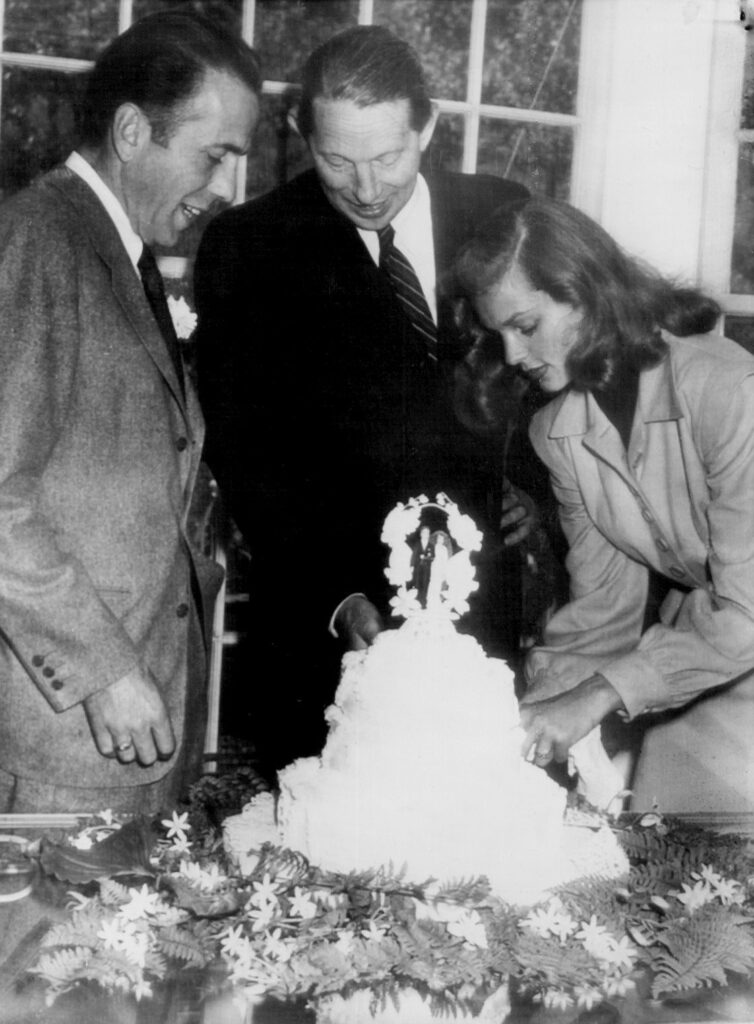
Bromfield wrote many of his books in that house, and the house drew a crowd. Film stars, artists, politicians, writers and conservationists came through annually, and at its peak as many as 20,000 people visited the farm each year, with Sunday tours alone pulling 100 to 200 people. On May 21, 1945, Bromfield hosted the wedding and honeymoon of Humphrey Bogart and Lauren Bacall at Malabar Farm. Kay Francis, Joan Fontaine, Ina Claire, Mayo Methot and James Cagney were among the other visitors.
Conservation Farming and the New Agriculture
The farming was the point, not a hobby. Bromfield used expertise and labor from New Deal agencies including the Soil Conservation Service and the Civilian Conservation Corps to rehabilitate his land, and in the process learned the principles of soil conservation. He turned Malabar into a showcase for what he called the New Agriculture: green manures, contour plowing, “trash farming,” sheet composting and strip cropping. Square fields were reshaped to follow the lie of the land to discourage erosion. He composted with manure from his own livestock, set 140 acres aside for timber, and developed a grass-based approach he called conservation farming, which produced large quantities of forage and pasture.
Not everything worked. Two hundred acres of apple trees cost him money and he got out of apple production. He dropped egg production, sheep and hog breeding too, and concentrated on beef and dairy. The farm nonetheless became a national model for sustainable agriculture.
From Foreclosure to State Park
In 1958, Bromfield’s children gave the farm to a conservation foundation, Friends of the Land, in lieu of debts he had incurred. In August 1972 the state of Ohio accepted the deed after the Louis Bromfield Malabar Farm Foundation, which had been operating the property, faced foreclosure. It became a state park in 1976.
On April 4, 1993, fire destroyed the main barn. In September 1994, 150 volunteers from the Timber Framers Guild of North America raised a new barn in resemblance of the original. That timber frame barn is now where the park’s October plays are staged.
1896: The Miller’s House and Ceely Rose
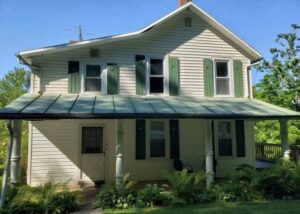
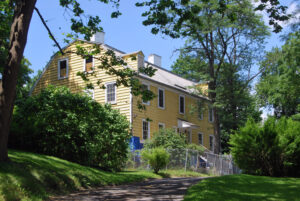
The building that gives Malabar Farm its darker reputation was the miller’s house, home in the 19th century to a young, mentally challenged woman named Ceely Rose. In 1896 she murdered her three-person family by poisoning their food with arsenic.
That much is the record. The motive usually attached to the killings in local retellings, an infatuation her family opposed, belongs to the storytelling tradition rather than to anything in the park’s own account, and a visitor should treat it as such. The house is named in the Pleasant Valley collection of ghost stories, which is a useful reminder of how the site’s reputation was built: through a book of regional folklore, then through decades of repetition, and only much later through paranormal television.
What People Report at the Ceely Rose House and the Big House
Reported experiences at Malabar Farm cluster around two buildings, and they are experiences rather than verified events.
- Sightings of the apparition of a young girl near the Ceely Rose House
- Unexplained whispers and disembodied voices
- A general sense of being watched or accompanied inside the house
- Claims of activity inside Bromfield’s Big House as well as the murder site
In 2014 the SyFy series Ghost Hunters filmed an episode at the Ceely Rose House, titled “Family Plot,” investigating claims of paranormal activity stemming from the 1896 triple murder. The crew also spent time inside the Big House attempting to document reported activity there. Television investigations are entertainment first and evidence a distant second, but the episode did fix Malabar Farm in the minds of a much larger audience than the local ghost story collections ever reached.
Worth weighing before you go: this is a small, plain 19th century house attached to one of the most genuinely disturbing crimes in Richland County history, visited overwhelmingly by people who already know what happened inside it. That is a powerful combination, and expectation accounts for a great deal of what gets felt on a doorstep like that one.
The Inn, the Spring and the Shawshank Cabin
Malabar Farm Inn is a historic stagecoach inn built in 1820, a two-story brick building restored as a restaurant serving home-cooked food. Its operation has been sporadic in recent years: it closed in 2018, reopened in 2021, and closed again in July 2023. Just east of it lies Malabar Spring, where in 1946 Bromfield designed a roadside market stand that used the spring water to keep produce cool. The garden market ceased operation when the restaurant closed in 2018.
Pugh Cabin, a rustic log-cabin style home, was built in the 1940s by Bromfield’s neighbor Jim Pugh. It was used to film several of the opening scenes of the 1994 film The Shawshank Redemption.
A 19-bed youth hostel operated in a farmhouse acquired when the farm passed to the state, running continuously from 1979 until Hostelling International closed it in late 2017 because of diminished use. The building is currently unused.
Visiting Malabar Farm State Park
The park is public land near Lucas, in the hills between Mansfield and Mohican State Park, and no trespassing or special permission is involved. Wagon tours run seasonally. The Maple Sugaring Festival takes place over the first two weekends in March, with demonstrations of harvesting sap, boiling it down, and making candies and sugar, and free admission. Heritage Days is one of the state’s largest outdoor craft shows and includes living history reenactments spanning Civil War era and buck-skinner groups. Square dances are held monthly in the Big Barn with a live band during the warmer seasons, informal attire, all ages and experience levels, with wagon rides usually offered at the dance near Halloween.
If the ghost story is what brings you, October is the month to come. The Ceely Rose Play is performed annually in the timber frame barn as part of a trilogy of ghost stories, alongside Phoebe Wise and Louie. It is the rare case where a haunted site tells its own story out loud, on its own ground, with the audience sitting in a barn raised by volunteers after a fire. Go for the farm and the valley in daylight; stay for the play if you want the version people repeat.
See Malabar Farm for Yourself
Sources
- Youth Hostel Lucas Ohio Budget Backpacker Cheap Hotel
- The Louis Bromfield Legacy – Malabar Farm
- NPGallery NRHP Archive Search (National Park Service)
- Malabar Farm State Park (Ohiodnr (official))
- Home | Malabar Farm Foundation
- Wikipedia: Malabar Farm State Park
Frequently Asked Questions
Can you visit Malabar Farm?
Malabar Farm is open to the public. Always follow posted rules and respect private property.
Reader sightings
Nobody has reported anything here yet. If you have been, you would be the first.
Report your own visit to Ceely Rose and the Ghost Stories of Malabar Farm
How haunted is this place?
Be the first to rate
Leave a Reply