
Reviewed by Josh N · Updated July 31, 2026 · How we verify
Reported Phenomena
- Room 11 disturbances
- Unexplained whispers
- Objects moving alone
- Child spirit sightings
- Drawings on mirrors
- Apparition in pink gown
Reported by visitors & local legend. Stories, not verified claims.
Gold built it, fire flattened it twice, and slot machines saved it from becoming a genuine ghost town. That sequence is the reason haunted Cripple Creek, Colorado, has so many stories attached to so few blocks: the surviving buildings are almost all the same age, almost all built in a hurry by people who had just watched the town burn, and almost all still standing on the same square mile of high valley where roughly 8,000 men once went underground for three dollars a day.
What follows separates what the historical record establishes from what visitors, staff and local guides say happens after dark. The first part is well documented. The second part is testimony, and should be read as such.
Cripple Creek at a Glance
- Where: Teller County, Colorado, about 20 miles southwest of Colorado Springs near the base of Pikes Peak.
- Elevation: 9,494 feet. Dress for it, even in summer.
- Population: 1,155 at the 2020 census, down from a boom-era peak of around 35,000 in the town itself.
- Status: The Cripple Creek Historic District has held National Historic Landmark status since 1961 and takes in the whole city and the surrounding area.
- Access: A working town open to the public year round, with casinos, museums, a mine tour and a narrow gauge railroad.
Bob Womack’s Ore and the Last Great Colorado Gold Rush
For years the high valley was written off as cattle pasture, and prospectors gave it a wide berth after the Mount Pisgah hoax, a small gold rush manufactured by salting worthless rock with gold. Then on 20 October 1890, Robert Miller “Bob” Womack found rich ore, and the last great Colorado gold rush was on.
A post office followed in July 1891. By November, hundreds of prospectors were camped in the area. Denver realtors Horace Bennett and Julius Myers decided the safer money was in land rather than mines, platting 80 acres as a townsite they called Fremont: 30 blocks, 766 lots, $25 each and $50 for a corner. Within a year those lots were going for at least $250. Bennett and Myers filed a second plat near the Broken Box Ranch and named it Cripple Creek. The town incorporated on 9 June 1892.
Growth was violent in its speed. The population went from five hundred to ten thousand in three years. The Palace and Windsor hotels filled so completely that chairs were rented out to sleep on for a dollar a night. Winfield Scott Stratton located the Independence lode, one of the largest gold strikes in history. Around $500 million in gold ore came out of Cripple Creek and the district produced more than 30 millionaires. Womack was not one of them. He had sold his claim for $500 and a case of whiskey, and he died penniless on 10 August 1909.
Some of the local colour is a matter of record rather than legend. Arrivals were met by the marshal, who confiscated their firearms; the guns were sold in Denver and the proceeds paid the salaries of Cripple Creek’s teachers.
The Two Fires of 1896 and Why This Is a Brick Town
Anyone walking Bennett Avenue today is walking through 1896, and that is not an accident.
On 25 April 1896, a bartender named Otto Floto and his dancehall girlfriend Jennie LaRue struggled on the second floor of the Central Dance Hall on Myers Avenue. An oil lamp was thrown, curtains caught, and the fire went on to incinerate most of the buildings on Myers Avenue before it was stopped. Four days later a cook at the Portland Hotel spilled a kettle of grease onto a hot stove. That second fire ran from Myers to Bennett Avenue and burned a third of Cripple Creek.
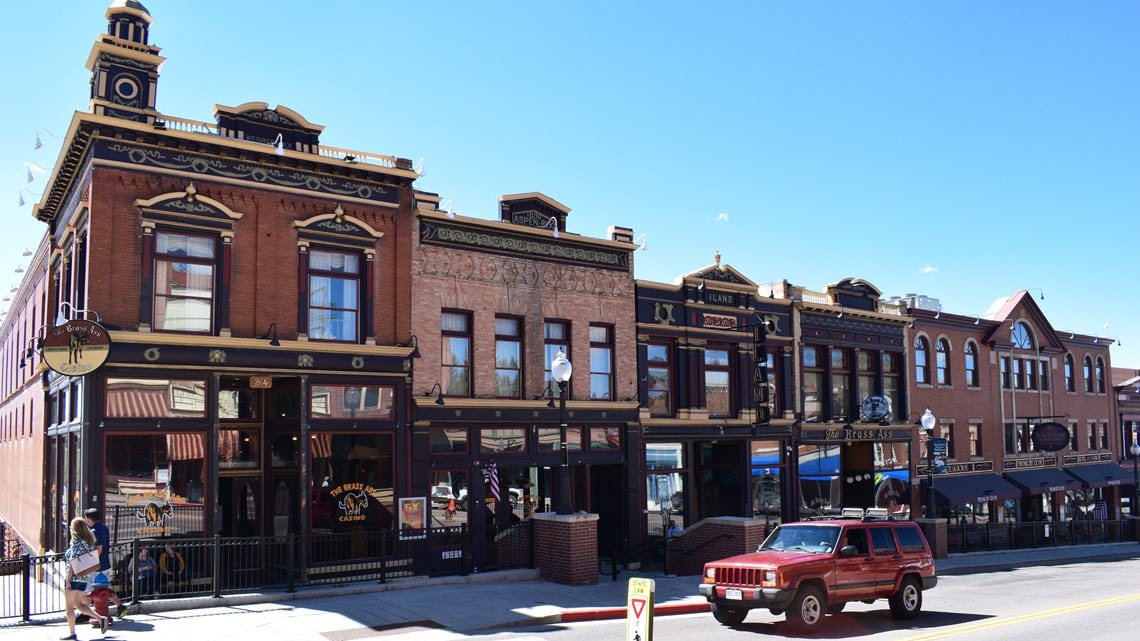
The town rebuilt in brick, with better construction, in a matter of months. Most of the historic buildings standing now date from that rebuild. It is worth holding onto when you hear a ghost story pinned to a Cripple Creek address: the fabric of the place is, almost without exception, post-fire.
Myers Avenue, the Old Homestead and Pearl De Vere
Between 1894 and 1902 roughly 50,000 people lived in the mining district. The town supported 150 saloons, 12 casinos, 34 churches, 15 newspapers, 72 lawyers, 90 doctors, several opium dens, 20 houses of ill repute, 26 one-room cribs and over 300 prostitutes. Prostitution flourished into the 1920s and was openly taxed: $6 a month per prostitute, $16 a month per madame.
At the top of that trade was Pearl De Vere, remembered as the “soiled dove of Cripple Creek”. She owned The Old Homestead, a high class brothel serving wealthy mine owners and entrepreneurs, and was known to charge clients upwards of $250 a night at a time when a miner earned three dollars a day.
The story told about her death belongs to local tradition rather than the historical record as set out here. In the version repeated on tours, an admirer sent her an $800 pink gown, worth something in the region of $23,000 today, and she died of a laudanum overdose while wearing it. Treat the gown, the price and the manner of death as legend unless you find primary sources. The woman, the house and the money were all real.
Union Halls, the National Guard and the Colorado Labor Wars
Cripple Creek’s other inheritance is conflict. Many district miners joined the Western Federation of Miners during the 1890s. The 1894 strike was one of the very few occasions in American history when a sitting governor called out the national guard to protect strikers from anti-union violence by forces under mine-owner control. By 1903 the state had switched sides: Governor James Peabody sent the Colorado National Guard into Cripple Creek specifically to break union power in the gold camps. The strike and the response set off the Colorado Labor Wars, which took many lives. If you want a reason why a gold camp accumulates ghost stories, the death toll in the district was never only a matter of cave-ins.
From Empty Storefronts to Casino Floors
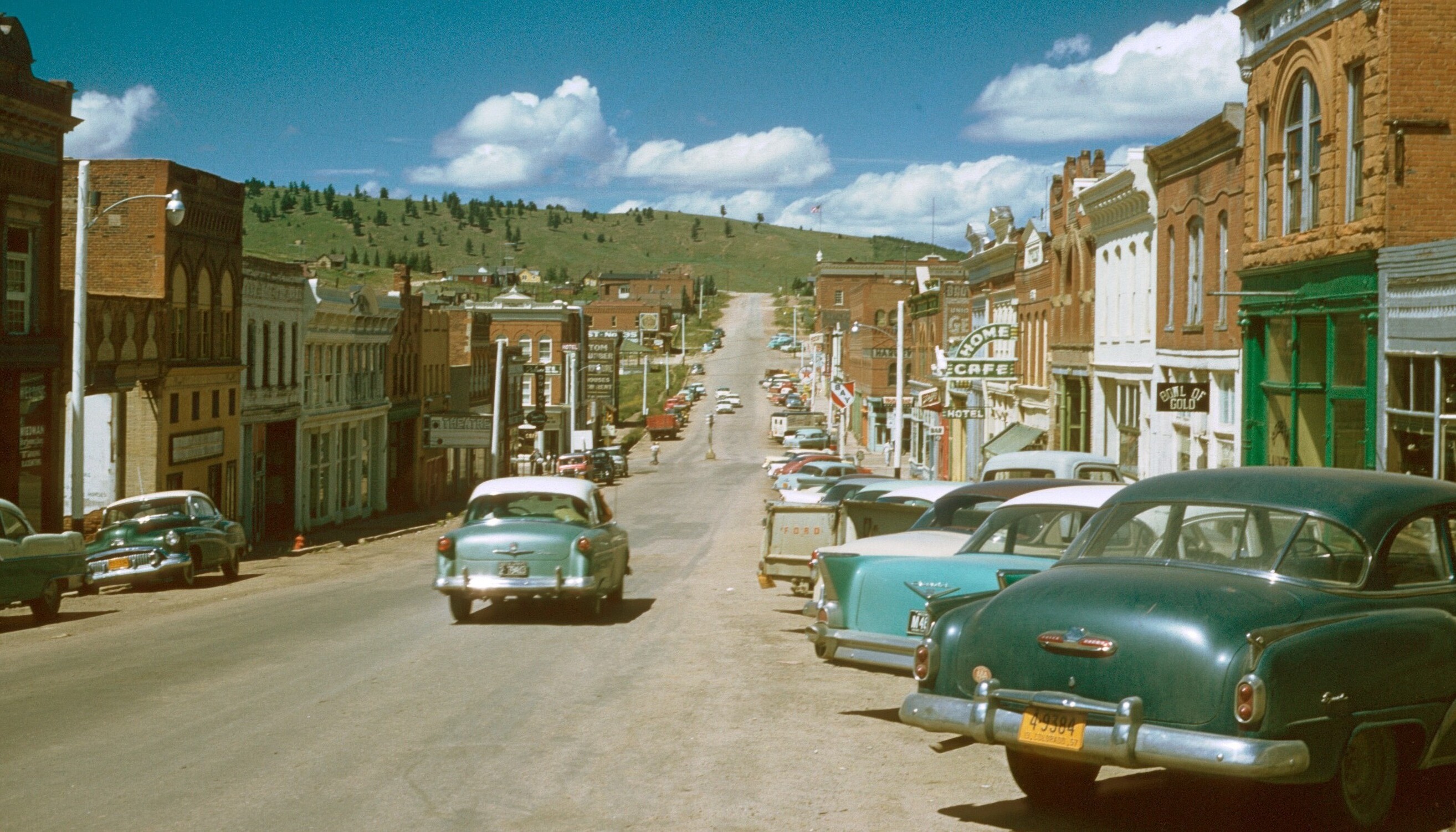
Decline began in 1905 as mines started closing. By 1920 only 40 were operating; by 1945, 20. The population fell to a few hundred, though the town was never entirely abandoned. Through the 1970s and 1980s Cripple Creek was a photographer’s ruin, a beautiful decaying place of weathered empty houses with lace curtains hanging in broken windows, kept barely alive by a handful of restaurants and bars.
Colorado voters approved legalized gambling here in 1991, and casinos moved into the historic buildings. That money brought the town back and feeds the State Historical Fund, administered by the Colorado Office of Archaeology and Historic Preservation. It also means the rooms where people now report strange things are, in many cases, rooms with a gaming floor attached.
What People Report Inside Cripple Creek’s Buildings
None of the following is verified. It is what guests, staff and long-time residents describe.
Room 11 at the Hotel St. Nicholas
The Hotel St. Nicholas dates from 1898 and did not begin life as a hotel: it served the town as a hospital. Room 11 draws the bulk of the accounts, with guests reporting unexplained sounds, whispering, and objects that move without anyone touching them. Given the building’s original function in a district with 8,000 working miners and a long list of industrial injuries, it is not hard to see why the stories attached themselves here.
Lily at Buffalo Billy’s
Buffalo Billy’s Casino, formerly the Turf Club, is associated with a spirit locally called Lily, described as benign and childlike. Children are said to notice her more readily than adults, and staff and visitors report drawings appearing on windows and mirrors that fade and return. Whatever the cause, the reports are consistent in one respect: nobody describes Lily as frightening.
The Woman in the Pink Gown
At the Old Homestead, the reported apparition is Pearl De Vere herself, still in the pink dress of the legend. It is the most repeated ghost story in town and the one most thoroughly shaped by retelling.
Planning a Visit to Cripple Creek
This is a functioning tourist town rather than a ruin, so access is straightforward and mostly free of the trespass problems that dog other haunted sites.
- Mollie Kathleen Gold Mine: guided tours into a real gold mine, led by a real gold miner.
- Cripple Creek and Victor Narrow Gauge Railroad: a short train ride past small ghost towns, gold mines and glory holes.
- Cripple Creek Heritage Center: over 11,000 square feet of displays and a theatre showing historical films. Admission is free.
- Butte Opera House: home of the Mountain Rep Theatre Company, with plays, musicals and classic melodramas year round.
- Events: the Cripple Creek Ice Festival, Donkey Derby Days, the July 4 celebration, the Ice Castles and Gold Camp Christmas.
Casinos and hotels are private businesses. Book a room if you want a night in a historic building, and ask staff about the stories rather than wandering into areas that are not open to guests. The altitude is genuine at nearly 9,500 feet, so give yourself time to acclimatise before a long day on foot, and remember that the open pit and heap leach operation east of town near Victor is an active industrial site run by Cripple Creek and Victor Gold Mining Company, working 24 hours a day, 365 days a year. It is not a place to explore.
See Cripple Creek for Yourself
Sources
- Active Colorado Municipalities (Colorado (official))
- Decennial Census P.L. 94-171 Redistricting Data (US Census Bureau)
- ZIP Code Lookup
- Cripple Creek Colorado – Worlds Greatest Gold Camp – Page 2
- Tracked by Bloodhounds; or, A Lynching at Cripple Creek (1904)
- Wikipedia: Cripple Creek, Colorado
Frequently Asked Questions
Where is Cripple Creek located?
Cripple Creek is located at the fabric of the place is, almost without exception, post-fire.
Can you visit Cripple Creek?
Cripple Creek is open to the public. Always follow posted rules and respect private property.
Reader sightings
Nobody has reported anything here yet. If you have been, you would be the first.
Report your own visit to Pearl De Vere’s Pink Gown: Haunted Cripple Creek, Colorado
How haunted is this place?
Be the first to rate
Ghost Tours Nearby
 Colorado Springs – Guided Walking Ghost / History Tourfrom $30
 Private Ghost Walking Tour of Colorado Springsfrom $572
Affiliate links: BeyondHaunted may earn a commission, at no extra cost to you.
Leave a Reply