
Reviewed by Josh N · Updated August 27, 2026 · How we verify
Reported Phenomena
- Vanished chieftain
- Underwater palace
- Watching presence
Reported by visitors & local legend. Stories, not verified claims.
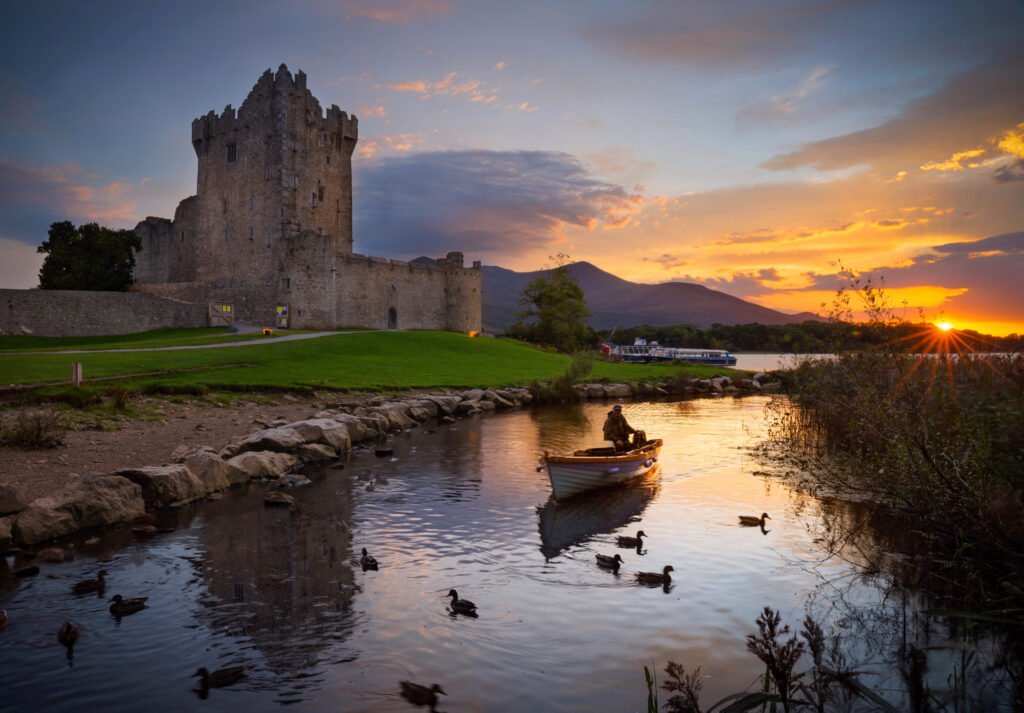
Lough Leane laps close to the walls at Ross Castle Killarney, in County Kerry, and that proximity explains almost everything about the place: how it was finally taken in war, and why its best known story ends with a man disappearing under the water rather than in a grave. The castle is a 15th-century tower house and keep on the edge of the lake, inside Killarney National Park, and it is the ancestral home of the Chiefs of the Clan O’Donoghue, later associated with the Brownes of Killarney. It is run today by the Office of Public Works and opens seasonally with guided tours.
Who Built the Tower House at Ross
The castle was built in the late 15th century by the local ruling clan, the O’Donoghues Mór (Ross). Ownership shifted during the Second Desmond Rebellion of the 1580s to the MacCarthy Mór, who then leased the castle and its lands to Sir Valentine Browne, ancestor of the Earls of Kenmare. That lease is the hinge on which the rest of the property’s history turns.
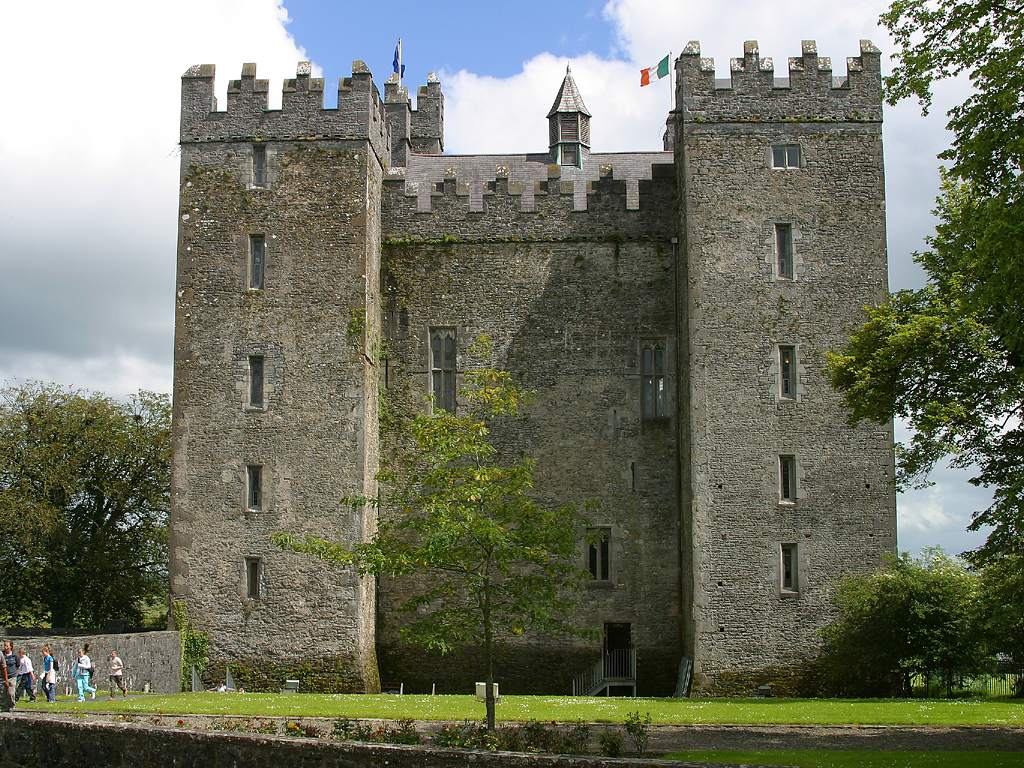
The building itself is typical of the strongholds Irish chieftains raised in the Middle Ages: square bartizans on diagonally opposite corners, a thick end wall, and originally a square bawn defended by round corner towers at each end. Inside, the arrangement was strictly practical. The first floor was storage. The second was living space for house attendants and guards, straw on the floor to sleep on and typically no furniture at all. The third was for food preparation and for eating. The fourth was the sleeping and living space for the chieftain and his family, roofed with an arch of stone that carried the floor above it rather than timber beams. The fifth floor was the great room where the chieftain ate and entertained, and it doubled as the last refuge, its stone floor acting as a fire break against a blaze in the storeys below.
The Prophecy of the Ship on Lough Lein
Ross was among the last castles to surrender to Oliver Cromwell’s Roundheads during the Irish Confederate Wars, and it fell only when artillery was brought in by boat via the River Laune. Lord Muskerry (MacCarthy) held it against Edmund Ludlow, who marched to Ross with 4,000 foot-soldiers and 200 horse, and then attacked by water instead. The Irish had a prophecy that Ross could never be taken until a warship could swim on the lake, a prospect nobody thought credible:
Ross may all assault disdain / Till on Lough Lein strange ship shall sail.
Whether the defenders truly gave up because they believed the prophecy fulfilled, or simply because guns had appeared on the waterline, is not something the record settles. The verse survives; the motive does not.
Barracks, Exile and the Brownes’ Departure
When the wars ended the Brownes managed to prove that their heir had been too young to take part in the rebellion, and they kept the lands. By about 1688 they had built a mansion house near the castle, but their loyalty to King James II after the Glorious Revolution saw them exiled. The castle then became a military barracks and remained one until early in the 19th century. Its governors included Pierce Ferriter, who held the post until 1652, and Lieutenant General Sir Henry Johnson, governor from 1801 to 1835. The Brownes never came back to live at Ross; they built Kenmare House near Killarney instead.
The Chieftain Who Went Out the Window
The haunting attached to Ross Castle is a single old legend rather than a catalogue of visitor sightings, and it is worth saying so plainly. The story goes that O’Donoghue leapt, or was sucked, out of the window of the grand chamber at the top of the castle and vanished into the waters of the lake, taking his horse, his table and his library down with him. He is said to live now in a great palace on the lake bed, keeping a close eye on everything he sees.
There is no documented death, no date and no contemporary account behind it. What there is instead is a plausible piece of geography: the grand chamber sits at the top of a tower whose walls run down almost to the shoreline of Lough Leane, and a fall from that window would put a man in deep water. Folklore rarely needs more encouragement than that.
What the Defences Show You on the Tour
The guided tour is worth taking for the entrance alone. The front door was reached through a small anteroom secured by an iron grill, or yett, at the outer wall, closable from the inside by a chain even when the front door was shut. That anteroom had small side access holes and a murder-hole above it, so anyone trapped there could be attacked from several directions at once. The door beyond was two layers of thick Irish oak laid at ninety degrees to one another and riveted together, a design meant to stop an attacker splitting the boards along the grain, and it was backed by two heavy beams set into the stone.
Above, two machicolations project from the wall, one over the front door and one on the back, each with a hole in the floor for dropping stones or boiling oil on whoever was working at the only entrance. The lower windows are thin vertical slits, wide enough to shoot through and no wider; the upper ones are larger, on the reasoning that nobody would get that high. The roofline parapet is crenellated, merlons to hide behind and crenels to fire through.
Planning a Visit to Ross Castle
Ross Castle is operated by the Office of Public Works and opens to the public seasonally, with access to the interior by guided tour only. It sits within Killarney National Park on the shore of Lough Leane, so the setting is open even outside tour hours. Visitor information is published by Heritage Ireland; check current opening before travelling, as the season and tour times vary.
Address: Ross Castle, Killarney National Park, County Kerry, Ireland
See Ross Castle for Yourself
Sources
- Ross Castle page (Killarney National Park Website)
- Killarney's Ross Castle reopens for the tourist season
- Heritage Ireland – South-West – Ross Castle
- A genealogical and heraldic history of the landed gentry of Ireland
- Individual Page
- Wikipedia: Ross Castle
Frequently Asked Questions
Where is Ross Castle Lough Leane Killarney located?
Ross Castle Lough Leane Killarney is located at Ross Castle, Killarney National Park, County Kerry, Ireland.
Can you visit Ross Castle Lough Leane Killarney?
Ross Castle Lough Leane Killarney is accessible by guided tour only. Always follow posted rules and respect private property.
Reader sightings
Nobody has reported anything here yet. If you have been, you would be the first.
Report your own visit to O’Donoghue Beneath the Lake: Ross Castle Killarney
How haunted is this place?
Be the first to rate
Ghost Tours Nearby
 Haunted Dublin Walking Tourfrom $29
 Haunted Dark Dublin Walking Tour: Torture, Murder and Mysteryfrom $29
 Dublin Mythology and Folklore Tour with Irish Stories and Legendsfrom $29
Affiliate links: BeyondHaunted may earn a commission, at no extra cost to you.
Leave a Reply