
Reviewed by Josh N · Updated March 14, 2026 · How we verify
Reported Phenomena
- Spectral figures
- Cold spots
Reported by visitors & local legend. Stories, not verified claims.
Address: 25865 County Road 162, Nathrop, CO 81236, which is the listed address for the St. Elmo General Store in the historic district.
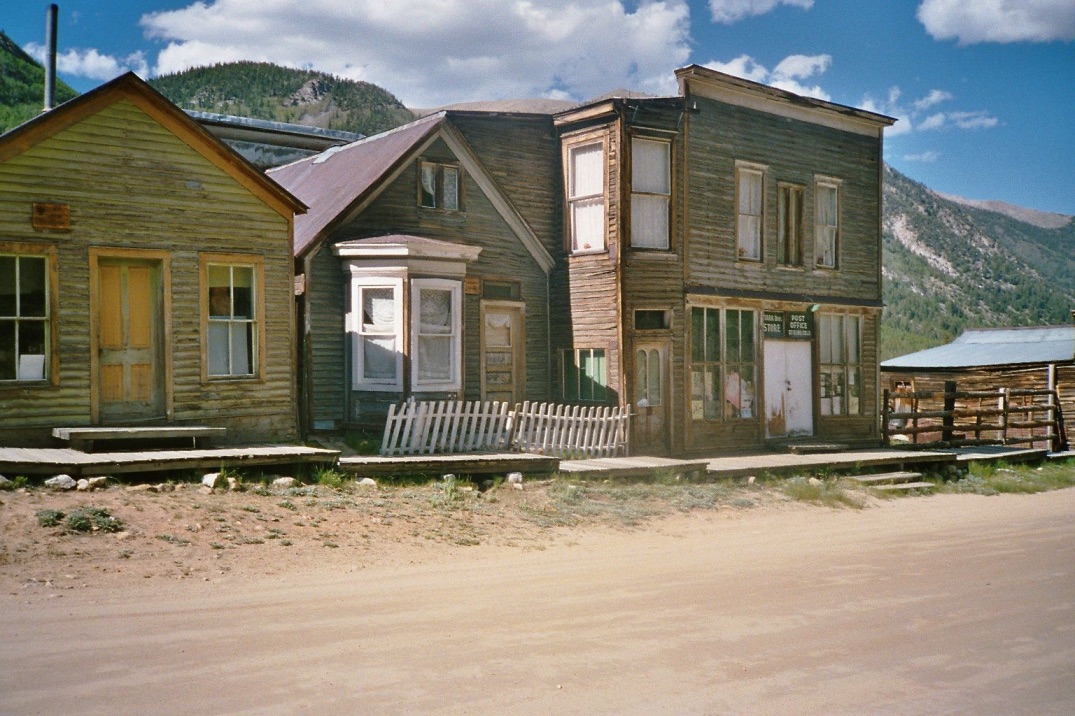
St. Elmo is one of those rare Western ghost towns where the history is not just romanticized, it is well documented. Founded in 1880 in Chalk Creek Canyon, the town grew out of Colorado’s mining boom and became a transportation and supply point for the surrounding district. Today, it remains one of the state’s best-preserved ghost towns, with an unusually intact wooden streetscape that still looks like the late nineteenth century never fully left.
What gives St. Elmo its lasting paranormal pull is that the place already feels suspended in time before you even get to the ghost stories. The preserved storefronts, surviving homes, old hotel, and mountain setting create a natural sense of unease, and local legend has long focused that feeling on one person in particular: Annabelle Stark, the woman many believe never really left town.
The history behind the Ghost Town of St. Elmo
St. Elmo owed its existence to mining development in Chaffee County, especially around the Mary Murphy Mine, which the National Register nomination identifies as the region’s most important and long-lived producer. The settlement was first platted in October 1880 as Forest City, but the U.S. Postal Service objected to the name because it could be confused with Forest City, California. The town was then renamed St. Elmo.
Its best years came in the 1880s. Railroad lines reached town, stagecoach firms used it as a jumping-off point for routes over Tin Cup Pass, and St. Elmo also served for a time as a staging point for construction connected to the Alpine Tunnel. Population peaked at around 1,800 people in the mid-1880s, which made it busy by high-country mining-camp standards.
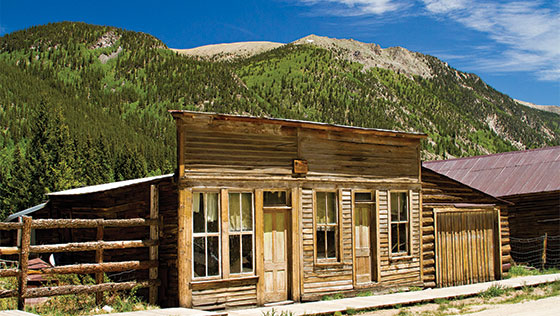
One reason St. Elmo matters architecturally is that so much of its early wooden fabric survived. The National Register nomination notes forty-three structures from the 1880s and 1890s that contributed to the town’s historic integrity, while SAH Archipedia describes St. Elmo as one of the West’s best-preserved ghost towns. Some fires damaged parts of the business district in the 1890s, but the town avoided the kind of total destruction that forced large-scale rebuilding elsewhere, which helps explain why its original character still reads so clearly today.
Why St. Elmo became a ghost town
Like many mining communities, St. Elmo rose fast and faded slowly. The mines never made the town as dominant as places like Leadville or Central City, and as ore played out and railroad service disappeared, residents drifted away. By the mid-twentieth century, the post office had closed and the town had largely fallen quiet.
That said, St. Elmo did not become a total ruin. A few residents remained, some buildings stayed in use, and the town’s survival depended heavily on people who refused to let it vanish completely. That continuity is part of what makes the place so interesting. It is a ghost town, but not an erased one.
Annabelle Stark and the legend of Dirty Annie
Any serious look at St. Elmo’s haunted reputation has to start with the Stark family. They were central to the town’s later history, and Annabelle Stark was a real person, not a made-up campfire character. History Colorado materials note that by 1943 only siblings Annabelle and Tony Stark remained as full-time residents, and oral-history material tied to History Colorado identifies Annabelle Stark Ward as someone who spoke about the old days of St. Elmo and running the telegraph office.
Later storytelling transformed Annabelle into the town’s most famous ghostly figure. Legends of America records that locals called her “Dirty Annie” because of her disheveled appearance in later life, and says she was known to roam town with a rifle to protect property. That protector image is important because it shapes almost every haunting story attached to St. Elmo today. She is not usually described as a random phantom. She is described as a watchful presence still guarding what remains.
According to that same account, Tony died not long after the siblings were briefly institutionalized, Annabelle was later sent to a nursing home in 1958, and she died in 1960. After her death, the haunting legend around the Stark property and old hotel only grew stronger.
Reported hauntings at St. Elmo
This is where the line between history and folklore becomes important. There is no official historical record proving paranormal activity in St. Elmo. The town’s haunting reputation comes from local legend, repeated witness stories, and stories passed along by residents and later writers. Those stories are still worth covering because they are the backbone of St. Elmo’s haunted identity, but they should be read as anecdotal reports, not verified facts.
The most repeated stories connected to Annabelle Stark include doors in the old hotel slamming shut on their own, sudden temperature drops in rooms where no one could explain the change, and tools left neatly stored at night that were found scattered on the floor the next morning. Another oft-retold account describes a skier seeing a woman in white framed in a second-story hotel window, apparently watching over the street before vanishing. Legends of America also notes that part-time residents came to believe Annabelle’s ghost still watched over the town and protected it from vandals and trespassers.
What makes these stories stick is that they fit the emotional logic of the place. Annabelle was one of the last people who held on when almost everyone else had left. In ghost-lore terms, that makes her an ideal guardian spirit. Whether someone believes the reports literally or not, St. Elmo’s haunting mythology is much stronger because it is tied to a real resident whose life overlapped with the town’s final chapter.
What to know before visiting St. Elmo
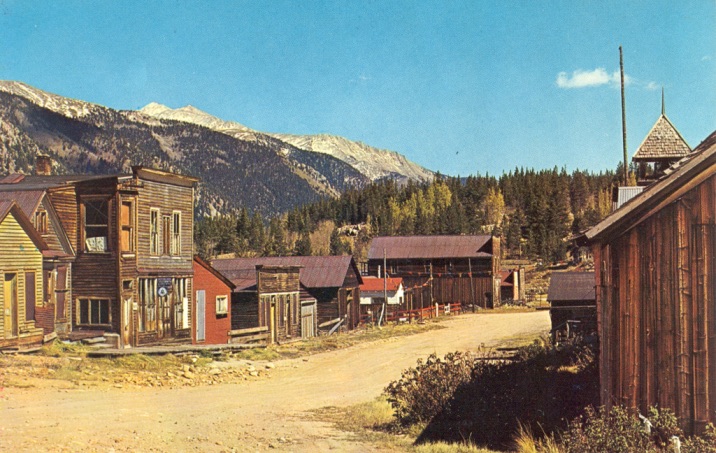
St. Elmo is not a fake frontier attraction built from scratch for tourists. It is a real historic district with privately owned buildings, and that matters. The general store still operates seasonally, but the broader town should be approached as a preserved historic place, not an abandoned playground.
For paranormal travelers, the appeal is easy to understand. You get authentic mining-town history, a visually striking mountain setting, and a haunting legend centered on a real family rather than a generic made-up ghost. Even if you leave unconvinced by the paranormal side, St. Elmo still delivers as one of Colorado’s most fascinating and photogenic ghost towns.
Final thoughts
The Ghost Town of St. Elmo works so well as a haunted destination because the history comes first. The mining boom, the rail connections, the preserved wooden buildings, the slow decline, and the Stark family’s stubborn presence are all real. The paranormal stories come afterward, filling in the emotional spaces left by a town that never entirely disappeared. That combination is what keeps St. Elmo from feeling like a gimmick. It feels like a place where memory lingers, and for many visitors, that is more unsettling than any jump scare could ever be.
Never trespass on property that is not yours without permission, and remember that ghost hunting is dangerous, especially around remote historic sites and old mining areas, so always use caution.
Sources
Frequently Asked Questions
Where is Ghost Town Of St Elmo located?
Ghost Town Of St Elmo is located at 25865 County Road 162, Nathrop, CO 81236, which is the listed address for the St. Elmo General Store in the historic district.
Reader sightings
Nobody has reported anything here yet. If you have been, you would be the first.
Report your own visit to St. Elmo Ghost Town Colorado: Haunted History, Annabelle Stark, and Visitor Guide
How haunted is this place?
Be the first to rate
Leave a Reply