
Reviewed by Josh N · Updated June 30, 2026 · How we verify
Reported Phenomena
- Spectral figures
- Shadow figures
- Disembodied voices
- Phantom footsteps
- Sense of being watched
- Unexplained sounds
Reported by visitors & local legend. Stories, not verified claims.
Oak Alley Plantation is located at 3645 Highway 18, also known as Great River Road, in Vacherie, Louisiana 70090. The Oak Alley Foundation lists the main phone number as 225-265-2151, with 800-44ALLEY also available. The historic site is generally open daily from 8:30 a.m. to 5:00 p.m., with guided “Big House” tours offered from 9:00 a.m. to 4:30 p.m. The site closes on New Year’s Day, Mardi Gras, Thanksgiving Day and Christmas Day. Visitors are advised to check the official site before going because hours, ticket policies and access rules can change.
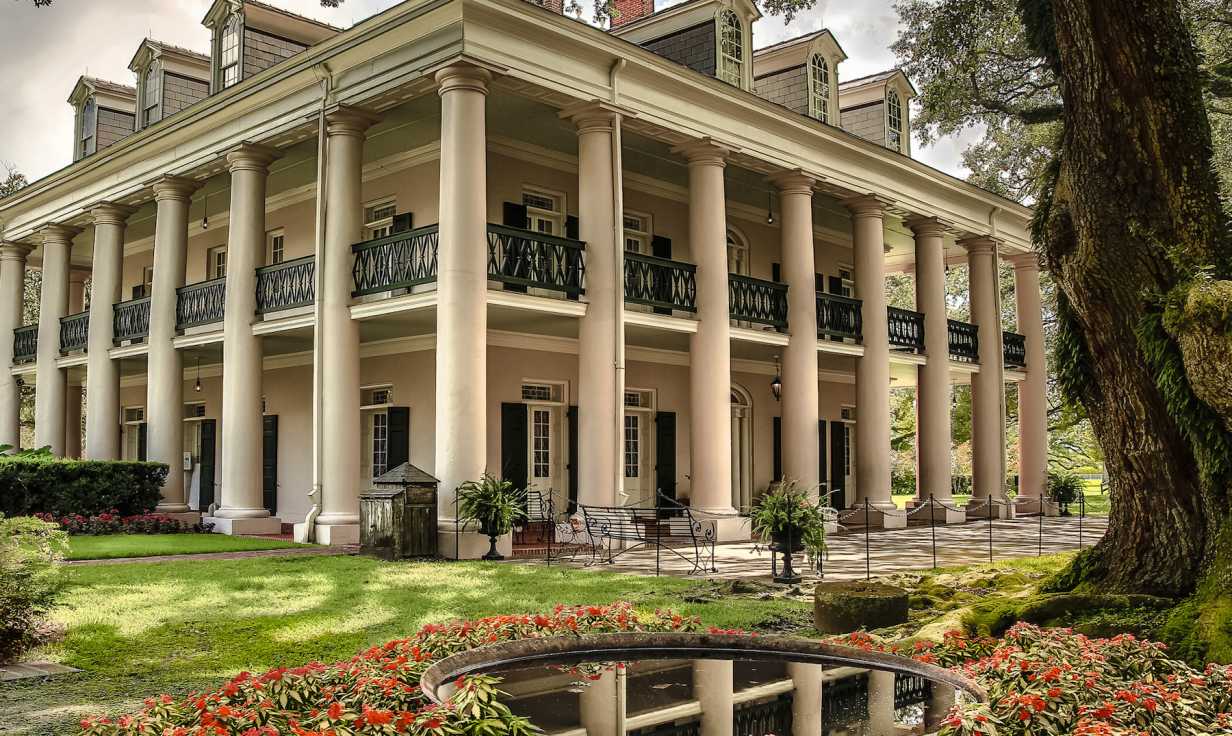
Oak Alley is one of the most recognizable historic plantations in Louisiana, famous for the long corridor of live oaks leading toward the mansion. It is also one of those places where beauty and tragedy exist side by side. The house, the trees and the landscape are striking, but the plantation’s story is inseparable from the enslaved men, women and children who built, worked and sustained the property. Today, Oak Alley is preserved as a historic site and National Historic Landmark, with exhibits that cover the mansion, the sugarcane economy, the landscape and the enslaved community.
The History of Oak Alley Plantation
Oak Alley was originally known as Bon Sejour. According to the National Register of Historic Places nomination, the mansion was built between 1837 and 1839 by George Swainey for Jacques Telesphore Roman. Joseph Pilie, the father of Roman’s wife, is believed to have provided the design. The house is especially known for its 28 massive Doric columns and its dramatic setting among ancient live oaks.
The property’s most famous feature is the allée, the double row of 28 live oak trees that stretches from the mansion toward the Mississippi River. Oak Alley Foundation describes these trees as the oldest “historians” on the property, noting that they witnessed the plantation’s evolution long before modern visitors began walking beneath them.
The Cultural Landscape Foundation notes that Oak Alley was laid out in the typical Louisiana Colonial plantation pattern, with the “Big House” closest to the river and the enslaved workers’ dwellings, overseer’s house and sugar mill located farther back near the cane fields. The foundation also notes that the property was purchased by Andrew and Josephine Stewart in 1925, restored with the help of architect Richard Koch and later transferred to the Oak Alley Foundation.
Oak Alley and the Enslaved Community
Any honest article about Oak Alley has to start with the people who were enslaved there. Oak Alley Foundation states clearly that the sugar plantation was built by and relied on enslaved men, women and children. Its “Slavery at Oak Alley” exhibit focuses on individuals who were owned and kept at the plantation, their living conditions and the lives of laborers who continued living in poor housing after emancipation.
The enslaved community at Oak Alley usually numbered between 110 and 120 people. Most lived in 20 double or duplex structures in an area known as “the quarters,” located between the mansion and the sugar mill. Some were included when Jacques Telesphore Roman purchased the plantation in 1836, some were brought from his mother’s plantation and others were purchased between 1836 and 1844.
The daily labor was brutal. Field workers cultivated sugarcane, maintained the plantation, repaired levees and cared for animals. During harvest season, known as “the grinding,” the workday could turn into 18-hour rotating shifts. Others worked as blacksmiths, gardeners, carriage drivers, oxcart drivers and domestic workers inside the house.
One of the most documented individuals enslaved at Oak Alley was Antoine, a Creole gardener born around 1809. Oak Alley’s slavery database identifies him as a gardener and notes that he grafted the papershell pecan. The National Park Service also credits Antoine with successfully grafting 16 pecan trees in 1846, creating a variety known as Centennial and helping establish a productive pecan orchard.
The Architecture and Landscape
Oak Alley’s architecture is a major reason the property became a landmark. The National Register nomination describes the mansion as a full peripteral plantation house, meaning it is surrounded by columns on all sides. It also calls out the 28 Doric columns, the central hall layout and the alley of 28 ancient live oak trees connecting the house to the levee landing.
The allée is roughly 800 feet long and was planted before the mansion was built. The National Register nomination calls the double row of live oaks a historic landscape design long recognized for its beauty.
Oak Alley Foundation adds another important detail: the allée reflects multiple landscaping efforts. Some oaks were already present before Jacques Roman purchased the property, while enslaved men and women later moved mature trees to complete the alignment. The foundation describes this as a major task, involving the repeated moving of mature live oaks with massive root systems.
Is Oak Alley Plantation Haunted?
Oak Alley has a long reputation as a haunted Louisiana plantation, but it is important to separate documented history from reported paranormal claims. There is no proof that Oak Alley is haunted. What exists are stories from staff, visitors, paranormal writers and television investigations.
The most common reported activity includes:
- A shadowy figure or apparition seen in an upper window
- A woman in black said to appear in or around the mansion
- Sounds of phantom crying inside the house
- Reports of horse or carriage sounds on the grounds
- Rocking chairs moving without an obvious cause
- Footsteps, whispers or unexplained sounds reported by overnight guests
Haunted U.S. describes one of the best-known stories as a figure seen in an upstairs bedroom window after staff noticed a light on during closing. The story claims the figure resembled Josephine Stewart, the last resident owner connected to Oak Alley’s preservation. This should be treated as a reported ghost story, not a verified event.
Oak Alley also appeared on the paranormal television series Ghost Hunters. Syfy’s episode recap says TAPS returned to Louisiana to investigate the historic Oak Alley sugar plantation in Vacherie, and Philo lists “Oak Alley Plantation” as a Ghost Hunters episode involving a historic sugar plantation near New Orleans.
The Ghost Stories Connected to Oak Alley
The most repeated apparition story is often described as a woman in black. Some paranormal sources connect this figure to Josephine Stewart, who purchased the property with her husband Andrew in 1925 and helped preserve it. Oak Alley Foundation states that Josephine Stewart created the nonprofit Oak Alley Foundation shortly before her death on October 3, 1972, so the connection between her and the ghost story likely grew from her strong association with the property’s survival.
Other accounts focus less on a single ghost and more on atmosphere. Visitors and paranormal writers have reported crying sounds, footsteps, whispers, movement in empty rooms and the feeling of being watched. These stories are part of Oak Alley’s modern haunted reputation, but they should not be confused with the site’s documented history.
The most responsible way to look at Oak Alley is this: the plantation has a real and painful history, and it also has a modern folklore tradition. The ghost stories may be what attract some paranormal readers, but the lives of the enslaved people at Oak Alley are the true heart of the site.
Can You Ghost Hunt at Oak Alley Plantation?
Oak Alley is not currently presented as a public ghost-hunting venue in the same way some haunted prisons, asylums or historic jails are. Day visitors must follow the historic site’s admission rules, tour times and access limits. The official admissions page says visitors should allow at least two hours, all admissions must be purchased by 4 p.m. and the historic site closes at 4:45 p.m.
Photography is allowed on the grounds, but not inside the “Big House” exhibit. Oak Alley also prohibits drones and aerial photography devices, and only service animals are permitted on the historic site.
Overnight guests staying in the cottages have a different experience. Oak Alley Plantation Restaurant & Inn’s FAQ says overnight cottage guests have access to walk the historic grounds while staying there, although a separate ticket is required to enter the “Big House” exhibit. The inn site also includes guest testimonials describing nighttime walks on the grounds.
For anyone interested in the paranormal, the safest answer is to book an official tour or stay overnight through the inn, then follow all posted rules. Do not bring equipment, enter closed areas or attempt an investigation without written permission from the property.
What You Can See Today
A visit to Oak Alley today includes more than the mansion. The historic site includes exhibits and landscape features that help explain the plantation’s full story.
Key areas include:
- The “Big House” exhibit
- The Slavery at Oak Alley exhibit
- The East and West Gardens
- The Sugarcane Theatre
- The People of Oak Alley exhibit
- The Blacksmith Shop
- The live oak allée
- The Roman family tombstone and Stewart family graveyard
The “Slavery at Oak Alley” exhibit is self-guided and has no time restriction, with Oak Alley Foundation suggesting visitors allow at least an hour for that exhibit alone. The “Big House” tour is guided, while other parts of the site can be explored at a slower pace.
Final Thoughts on Oak Alley Plantation
Oak Alley Plantation is visually stunning, historically important and widely linked to Louisiana ghost lore. The grand columns and massive oaks make it one of the most photographed plantations in the South, but the deeper story is not romantic. It is a place built by enslaved labor, sustained by the sugar economy and later preserved as a historic site.
For paranormal readers, Oak Alley offers plenty of reported hauntings, from the woman in black to phantom sounds and ghostly figures in windows. Still, the most powerful thing about the property is not whether a visitor hears footsteps in an empty hallway. It is the documented history of the people who lived, worked, suffered and survived there.
Never trespass on property that is not yours without permission. Ghost hunting can be dangerous, so always use caution, follow posted rules and respect historic sites.
Sources
Oak Alley Foundation, Admissions and Hours
Haunted U.S., Oak Alley Plantation Haunted Reports
Frequently Asked Questions
Where is Oak Alley Plantation located?
Oak Alley Plantation is located at Great River Road, in Vacherie, Louisiana 70090.
Can you visit Oak Alley Plantation?
Oak Alley Plantation is a place where you can stay overnight. Always follow posted rules and respect private property.
Reader sightings
Nobody has reported anything here yet. If you have been, you would be the first.
Report your own visit to Oak Alley Plantation: History, Hauntings and Ghost Stories
How haunted is this place?
Be the first to rate

Leave a Reply