

Reviewed by Josh N · Updated October 2, 2026 · How we verify
Reported Phenomena
- Recurring bloodstains
- Sounds of a killing
- Children's laughter
- Shadow movement
Reported by visitors & local legend. Stories, not verified claims.
Set at a crossroads in Sevier County, where Boyds Creek Highway meets Cedar Springs Valley Road, Wheatlands Plantation is one of the oldest surviving estates in East Tennessee and, by most assessments, the finest Federal-style house left in the county. It is also one of those places where the documented history and the ghost stories have grown into each other so tightly that visitors often cannot tell which they are being told. The record covers a Revolutionary War veteran, a 4,600-acre farm, a distillery that shipped whiskey to New Orleans, and a Union cavalry encampment. The stories cover bloodstains that will not wash out.
Wheatlands at a Glance
- Where: Boyds Creek, roughly halfway between Sevierville and Seymour, at the corner of Tennessee State Route 338 and Cedar Springs Valley Road.
- Founded: 1791, by Revolutionary War veteran Timothy Chandler of Virginia.
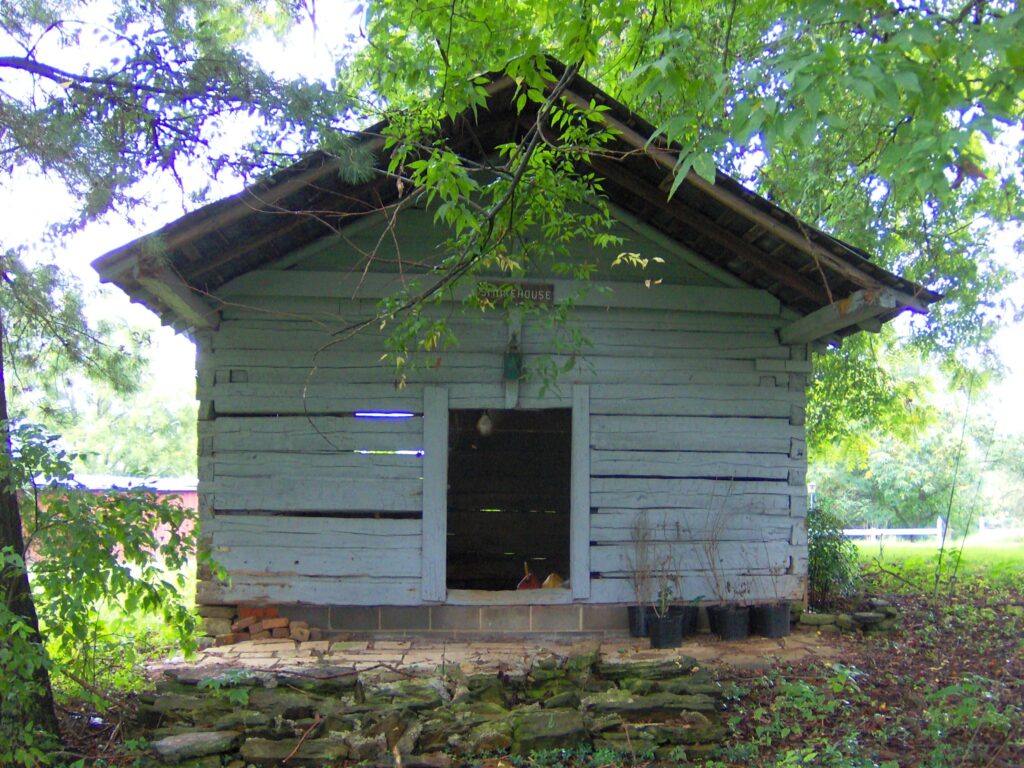
- What stands: The plantation house, a storage shed, and a smokehouse, all listed on the National Register of Historic Places.
- Status: Privately owned. Three Pigeon Forge businessmen bought the property in 2011 with plans to restore the house, and the museum and ghost tours that once operated here have been paused for renovation work.
A Battlefield Before It Was a Farm
The highway that runs past the house follows an older line. State Route 338 traces part of the Great Indian Warpath, the 18th-century Native American trail that carried traffic through this part of the Tennessee Valley long before any wheat was planted. In 1780, John Sevier took that path across the French Broad River and defeated a Cherokee force at the Battle of Boyd’s Creek. The fighting took place on the ground that would later become Wheatlands.
Timothy Chandler arrived by the same route. A Revolutionary War veteran from Virginia, he moved his family to Boyd’s Creek in 1791 and established the farm that took its name from its large annual wheat crop. Position mattered: Boyd’s Creek empties into the French Broad about a mile east, at Brabson’s Ferry Plantation, which gave Wheatlands a line to the interior waterways and a way to get its wheat whiskey downriver to New Orleans.
John Chandler’s 4,600 Acres
Timothy Chandler died in 1819 and his son John, born in 1786, inherited the farm. Under John the place became one of the largest agricultural operations in Sevier County. Accounts of its peak extent differ, with the figure given variously as 3,700 acres and some 4,600 acres by 1850. The inventory from that year is more precise and more revealing: 15 horses, 10 mules, 40 cattle, 50 sheep, and 300 hogs. Chandler and 14 enslaved people produced 3,000 bushels of corn, 400 bushels of oats, 200 bushels of sweet potatoes, 12 bushels of buckwheat, 10 tons of hay, 150 pounds of wool, 200 pounds of butter, and 200 gallons of honey. The distillery turned out 6,000 gallons of whiskey.
That distillery stood until the late 1930s, when it burned. The surviving outbuildings include a smokehouse of hewn logs with a batten door, dating to the first half of the 19th century, and a frame storage shed built around 1825 that may at various times have held a distillery, an ice house, or a loom house.
The Fire That Took the First House
The original Chandler farmhouse was clapboard with a large front porch. It burned in the 1820s, with the date given as 1823 in some accounts and 1824 in others, and John Chandler built the present house on the site to replace it in 1825. Local tellings add that eight people died in the blaze, and that a lantern started it. Neither detail appears in the architectural record for the property, and readers should treat the death toll as part of the oral tradition rather than something established.
What replaced the farmhouse is a two-story, five-bay brick house with a one-and-a-half-story kitchen and dining wing at the rear forming an L. The front facade is laid in Flemish bond, the sides and rear in common bond, with a brick cornice running around the building. Inside, much of the original work survives: hand-planed railings and windows, and mantels copied from Adamesque models in pattern books, with hand-carved detail and entablatures. Unusually for its period, the house uses a central floor plan rather than a parlor hall plan. The Queen Anne porch and windows that now soften the Federal lines were added in 1889.
Union Winter Quarters and the Soldiers at the Door
During the Civil War, Wheatlands served as winter quarters for Union forces, specifically the Tenth Regiment Cavalry out of Michigan and the 8th division from western Pennsylvania. From here they ran raids into Sevierville, Gatlinburg, and Newport, sent troops to seize the ferry at the Brabson plantation, and turned Bartley Chandler’s home in Sevierville into a prison. Two cannons from Wheatlands were sent to the Battle of Fair Garden and fired over Rose Glen Plantation.
The legend attached to the occupation is darker and less verifiable. It holds that two Confederate soldiers came to the house with the intention of killing its master and were shot dead at the front door by Union men camped on the grounds. The ghostly bloodstains visitors report on the doorstep belong to that story. The house does have the narrow side entrance that East Tennessee tradition calls a coffin door, which has done the legend no harm at all.
Chandler Gap and the Graves on the Hill
After emancipation John Chandler began paying the people he had enslaved to stay on at Wheatlands. When he died in 1875 he left them a portion of land along the south side of the plantation, and the settlement they founded there, Chandler Gap, remained a predominantly African-American community well into the 20th century. It is the most concrete legacy on the property and the part of its history most often skipped over in favor of the ghost stories.
Burials on the grounds are said to include seventy African Americans, twenty-eight Cherokee, and several generations of the Chandler family. The graves give the property a weight that the folklore borrows from freely.
What People Report at Wheatlands
These are reported experiences, not documented events, and nothing about them has been independently verified.
- Bloodstains near the front entrance, associated with the two soldiers of the legend, said to reappear.
- Sounds interpreted as a father being killed by his son, heard inside the house.
- Children’s laughter on the grounds, usually placed among the old trees.
- Shadow movement and a general sense of occupancy in a house that has stood empty.
Worth noting: no single named ghost dominates the Wheatlands tradition the way one usually does at a house this old. The stories are diffuse, which is often a sign of a reputation that accumulated gradually rather than one that grew from a single documented tragedy.
Visiting Wheatlands Plantation
This is private property. The house operated for a period as a museum with ghost tours, but those were suspended for restoration after the 2011 purchase, and anyone making the drive should confirm current access before turning up rather than assuming the gate is open. The exterior can be appreciated from the road at the junction of Route 338 and Cedar Springs Valley Road, and the brick facade with its 1889 porch is the main event architecturally. Do not walk the grounds, the graves, or the outbuildings without permission. The Boyd’s Creek battlefield context and the Chandler Gap story are both worth reading up on first; they are the reasons this corner of Sevier County matters whether or not anything answers you at the door.
See Wheatlands Plantation for Yourself
Sources
- NPGallery Asset Detail (National Park Service)
- Sevier County, from Goodspeed's History of Tennessee
- GeoHack – Wheatlands (Sevierville, Tennessee)
- Wikipedia: Wheatlands (Sevierville, Tennessee)
Frequently Asked Questions
Can you visit Wheatlands Plantation?
Wheatlands Plantation is on private property and best viewed from a distance. Always follow posted rules and respect private property.
Reader sightings
Nobody has reported anything here yet. If you have been, you would be the first.
Report your own visit to Blood on the Doorstep: Wheatlands Plantation, Tennessee
How haunted is this place?
Be the first to rate
Ghost Tours Nearby
 Franklin Haunted Pub Crawlfrom $35
 Ghost Tour of Downtown Franklin Haunting Stories and Historyfrom $30
 What Waits in the Dark Adults Only Tourfrom $35
Affiliate links: BeyondHaunted may earn a commission, at no extra cost to you.
Leave a Reply