
Reviewed by Josh N · Updated August 13, 2026 · How we verify
Reported Phenomena
- Apparition of a boy
- Puddles and wet footprints
- Disembodied sobbing
- Beds turned down
- Unseen tidying
Reported by visitors & local legend. Stories, not verified claims.
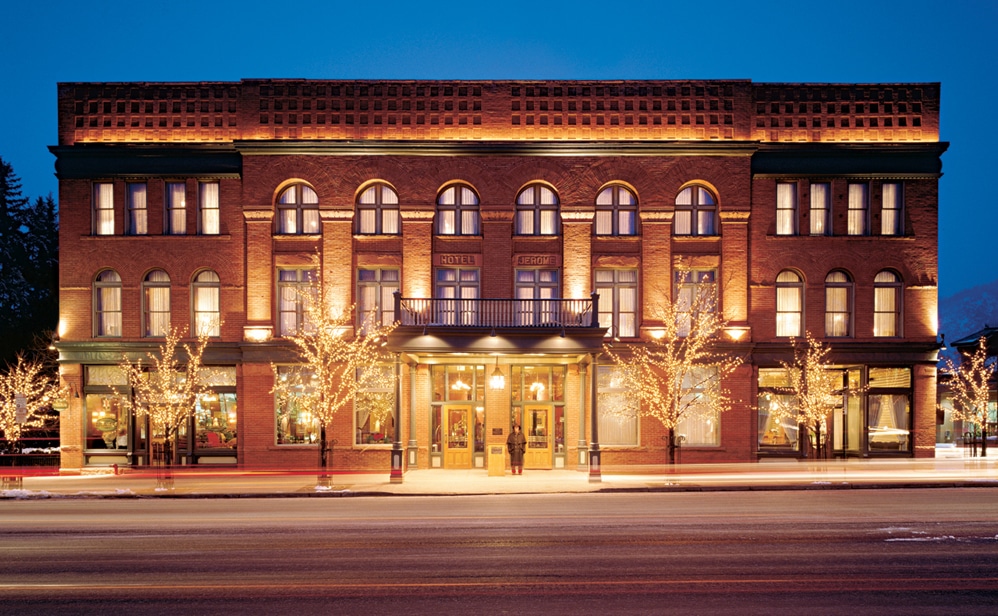
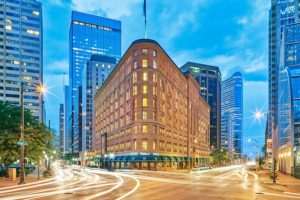
Brick, three storeys and unmissable on East Main Street, the Hotel Jerome has been Aspen’s front parlour since the silver boom, and the stories about the Hotel Jerome ghosts have accumulated in it the way soot accumulates in a chimney. Colorado has grander mining-era buildings and better documented hauntings, but few places have hosted this range of humanity: eastern investors, Olympic bobsledders, soldiers on skis, Gary Cooper, Hunter S. Thompson. The hauntings attached to the building are folklore rather than record. The building’s history, by contrast, is unusually well documented, and worth knowing before you decide which parts of the ghost story you believe.
Quick Orientation for Visitors
- Built in the 1880s by Jerome B. Wheeler, then a co-owner of Macy’s and a major investor in Aspen.
- Listed on the National Register of Historic Places in 1986.
- Operated by Auberge Resorts, with 94 guest rooms ranging from roughly 500 to 750 square feet.
- Home of the J-Bar, birthplace of the Aspen Crud, and of the only above-ground ballroom in Aspen.
- Reported activity centres on Room 310, the hallways, and housekeeping oddities in guest rooms.
Jerome Wheeler’s Very Expensive Idea
Wheeler came to Aspen in 1883 while vacationing in Colorado, saw what the Roaring Fork Valley could become, and started buying into it. He finished a smelter so local ore no longer had to be hauled back to Leadville, won a legal fight over the Smuggler Mine, left Macy’s, and commissioned both the Wheeler Opera House and a hotel meant to stand comparison with Claridge’s in London and the George-V in Paris.
It went the way ambitious building projects usually go here. Wheeler loaned $60,000 to another local innkeeper to put the hotel up. Costs more than doubled, and a month before the scheduled opening the builders left town without warning, leaving Wheeler on the hook for roughly $150,000. What he got for the money was genuinely remarkable: running water and indoor plumbing, steam heat, an elevator, and full electric lighting, which made the Jerome one of the first buildings west of the Mississippi to have it. It opened on the night before Thanksgiving with 90 rooms, or 76 depending on which account you read, renting for up to $4 a night.
The boom did not last. In 1892 Wheeler sold the hotel to a Denver man named Archie Fisk for $125,000 as part of a general liquidation of his Aspen holdings. The following year Congress repealed the Sherman Silver Purchase Act, the Colorado Silver Boom ended, Fisk could not pay the taxes, and the building passed to Pitkin County and then back into Wheeler’s hands.
The Quiet Years: Morgue Parlors and Spiked Milkshakes
Aspen’s population fell from thousands to hundreds. The Jerome stayed open as the town’s only hotel, frequently functioning as a boardinghouse and remaining the social centre partly because it had the only public bathroom downtown. In 1911 it passed to Mansor Elisha, a Syrian American drummer with a travelling band who had stopped in Aspen, taken a job as the hotel’s bartender, and eventually bought the place from a bankrupt Wheeler who could no longer cover the taxes.
Two details from the Elisha years matter to anyone interested in why this building feels heavy. In 1918 the Jerome’s parlors were pressed into service as morgues during the flu epidemic. The next year Elisha threw a welcome-home dance for local soldiers returning from the First World War. By then Prohibition had arrived and the J-Bar had converted itself into a soda fountain, which is how the Aspen Crud was born: essentially a vanilla ice cream soda or milkshake generously spiked with bourbon. Whole families were known to stop in after church and share one. It is still on the menu.
Mansor died in 1935 and his son Laurence took over, running the hotel through the years when skiing arrived. When Tenth Mountain Division soldiers finished a long cross-country exercise over the mountains, they skied straight to the Jerome, where Laurence let them stay the night and bought them drinks; through their training he offered them a room and a steak dinner for a dollar. Afterwards came Walter Paepcke, the Bauhaus architect Herbert Bayer, grey paint over the brick, the swimming pool, and the movie stars who lounged beside it. Later still came Hunter S. Thompson, who used the J-Bar as an office through the 1970s and whose 2005 memorial service was held in the hotel ballroom.
The Boy in Room 310
The best known story here concerns a child. According to the legend repeated by guests and staff, a ten-year-old boy drowned in the hotel’s pool in 1936, and people who stay in Room 310 encounter him: a soaking wet child who leaves puddles or wet prints behind and is gone when anyone looks properly. It is a vivid story and an old one in circulation, but it is a reported experience, not a documented death, and one detail in the hotel’s recorded history sits awkwardly with it. The swimming pool and poolhouse were added during the postwar renovation commissioned by Walter Paepcke, more than a decade after the date the legend supplies.
The room number is worth a second thought too. The guest room layout at the Jerome has changed repeatedly and drastically: 90 rooms at opening, cut to 39 by the Bayer renovation, down to 34 under John Gilmore in 1968, and 94 today after the restoration work of the 1980s and the $6 million project that rebuilt the guest rooms in the early 2000s. Whatever Room 310 was in 1936, it is not the same space now.
Henry O’Callister and Katie Kerrigan
Two further figures appear in Jerome folklore, neither of whom can be traced in the documentary record of the hotel. The first is Henry O’Callister, described as a miner who struck it rich but was refused permission to marry Clarissa Wellington by her father. Guests and staff report hearing sobbing in the hallways and attribute it to him. The second is Katie Kerrigan, said to have been a maid tormented by jealous colleagues who tricked her into believing her kitten had drowned; she fell into the pond going after it, survived, and died of pneumonia soon after. She is the gentle one in the cast. Beds found neatly turned down, tidying nobody remembers doing, the sense of somebody working quietly in a room: all of it gets laid at Katie’s door.
Treat both as stories the building has grown rather than history. The Jerome served for decades as boardinghouse, morgue, bar and social hall to a town that shrank to a few hundred people, and towns like that produce narratives about their landmark building with or without evidence.
What People Report Inside the Jerome
Reports gathered from guests and staff over the years cluster into a short list: the apparition of a wet young boy on the third floor, water or footprints left where nobody has walked, sobbing and other unexplained sounds in the corridors, and small acts of housekeeping performed by nobody. Nothing about it is aggressive. Compared with most hotels of this vintage that carry a reputation, the Jerome’s ghost stories are unusually domestic.
Staying at the Hotel Jerome
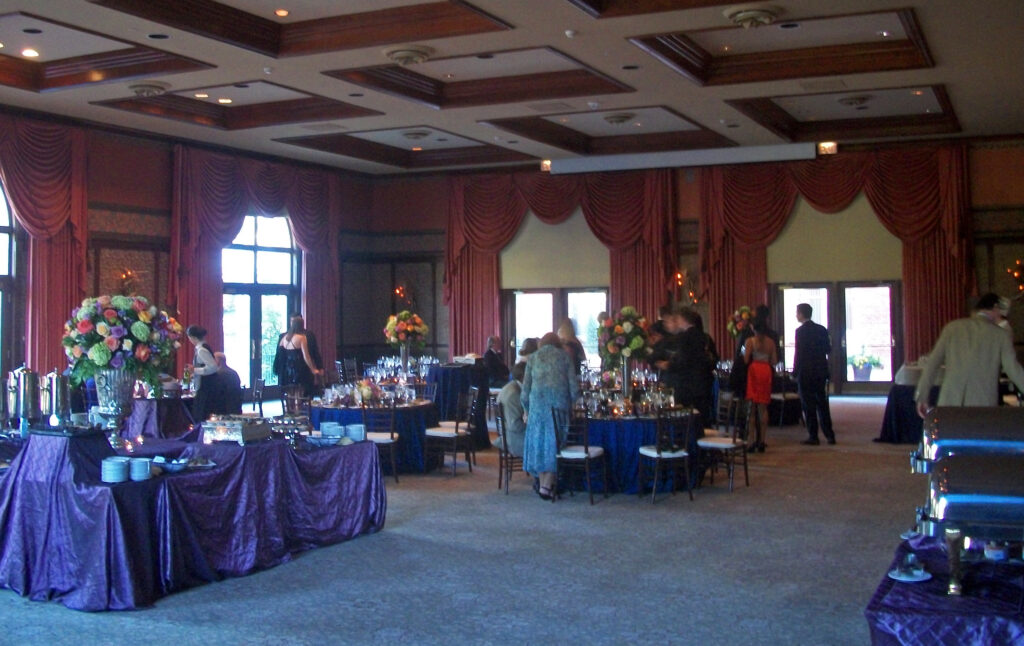
This is a working luxury hotel rather than an attraction, and it is priced accordingly. Rooms run from singles to suites, with marble bathroom vanities, mini-bars and high thread count linens. Guests do not need to book Room 310 to see the parts of the building that carry the history: the lobby has been restored to its original appearance, the maple bar in the J-Bar was rebuilt in 1998 using photographs more than a century old, and the Grand Ballroom in the rear block, with 16-foot ceilings, is the only above-ground ballroom in the city. Three restaurants occupy the ground floor, including the J-Bar behind the wood and glass storefront at the west end of the facade.
The building itself repays a slow look from the sidewalk. The sills, stringcourses and frieze are locally quarried rough-cut peachblow sandstone; the words “Hotel” and “Jerome” are carved into the second-storey windows; and the brick you are looking at is the original, exposed again in the 1980s when Bayer’s grey and blue paint scheme was blasted off. That decision was as popular with Aspen as the paint job had been unpopular. If you want the ghost stories, order an Aspen Crud and ask the bartender. If you want the history, it is all still standing in front of you.
Sources
- Hotel Overview
- Hotel Jerome Historical Timeline
- 120 N. Mill Street, Aspen, CO
- Aspen Quadrangle, Colorado, Pitkin Co.
- Pitkin County
- Wikipedia: Hotel Jerome
Frequently Asked Questions
Where is Hotel Jerome located?
Hotel Jerome is located at 120 N. Mill Street, Aspen, CO.
Can you visit Hotel Jerome?
Hotel Jerome is a place where you can stay overnight. Always follow posted rules and respect private property.
Reader sightings
Nobody has reported anything here yet. If you have been, you would be the first.
Report your own visit to Room 310 and the Hotel Jerome Ghosts of Aspen
How haunted is this place?
Be the first to rate

Leave a Reply