
Reviewed by Josh N · Updated May 20, 2026 · How we verify
Reported Phenomena
- Spectral figures
- Shadow figures
- Phantom children
- Mists & orbs
Reported by visitors & local legend. Stories, not verified claims.
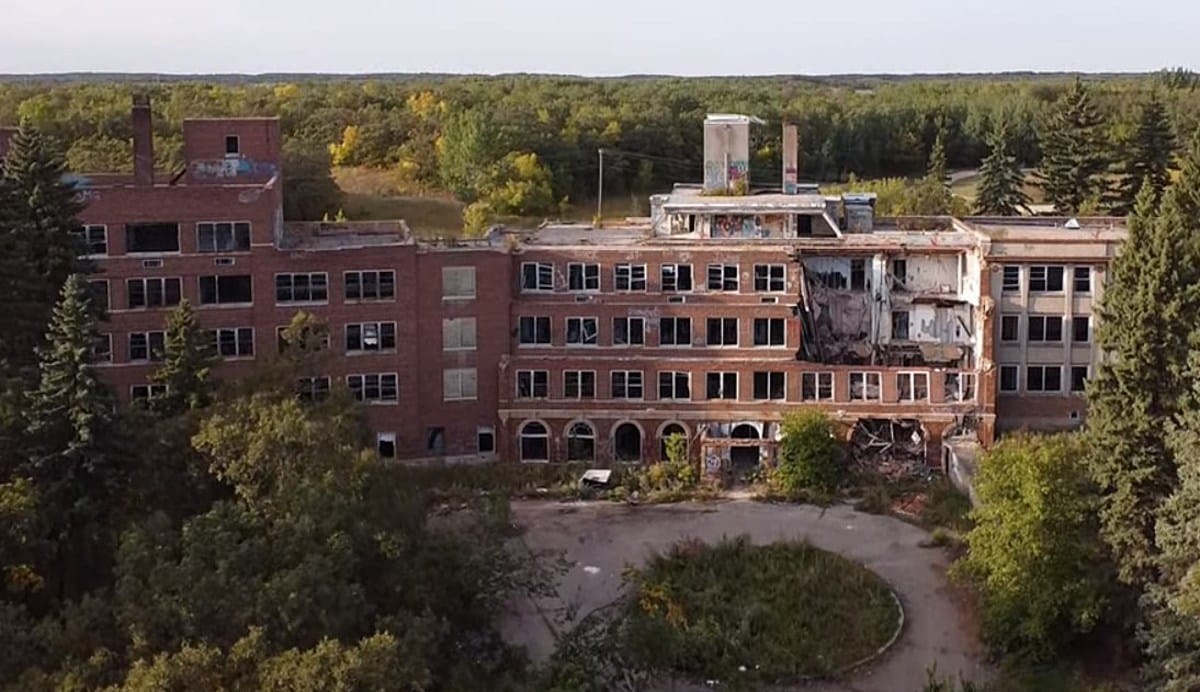
San Haven Sanatorium, later known as San Haven State Hospital, was a former tuberculosis treatment center and state hospital near Dunseith, North Dakota. The site was located at 98th Street NE, Dunseith, ND 58329, according to the EPA’s San Haven Asbestos Site profile. It is not a public ghost hunting attraction, and the former hospital property has been part of cleanup, demolition, and redevelopment planning in recent years.
Quick facts:
- Location: 98th Street NE, Dunseith, North Dakota 58329
- Region: Turtle Mountains, Rolette County
- Original purpose: North Dakota Tuberculosis Sanitarium
- First patients arrived: November 1912
- Later use: State hospital and care facility for people with developmental disabilities
- Closed: December 1987
- Current status: KFYR reported in October 2025 that the former San Haven State Hospital had been demolished
- Public access: No verified public access or official ghost tours
Why San Haven Was Built
At the beginning of the 1900s, tuberculosis was one of the most feared diseases in North Dakota. Before antibiotics, treatment often meant isolation, long periods of rest, exposure to fresh air, and a carefully controlled environment. In 1909, North Dakota created the state tuberculosis sanitarium, and in 1911, Dunseith was selected as the site. The first patients arrived in November 1912.
The Turtle Mountains were chosen because doctors and public health officials believed the area offered the right combination of isolation, clean air, altitude, lower moisture, fertile ground, and natural protection from hills and trees. The North Dakota Newspaper Association’s historical series notes that the state purchased the site for $4,052 and also received an additional 100 acres as a gift.
The name “San Haven” fit the mission. It was meant to be both a sanatorium and a haven for patients who had few other options.
Life Inside the Sanatorium
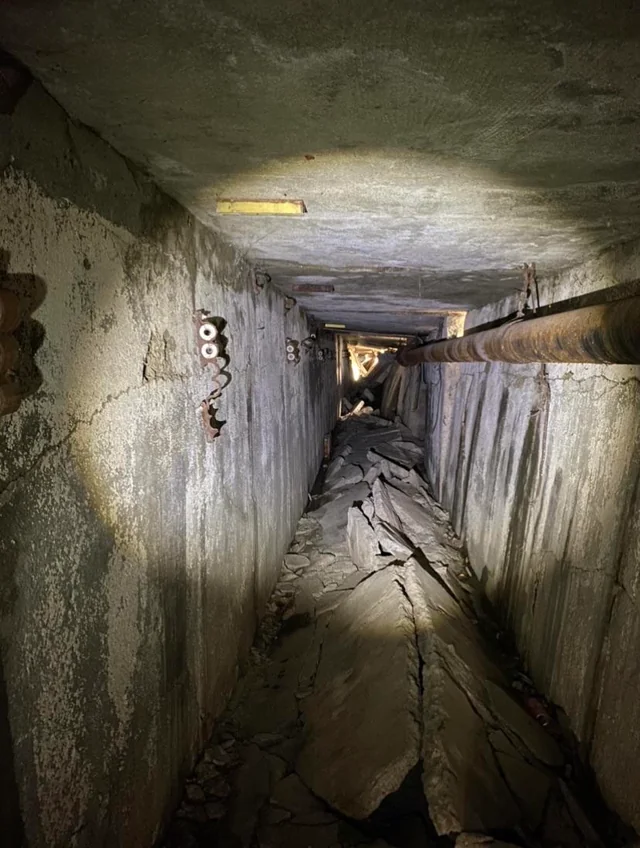
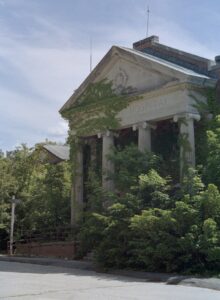
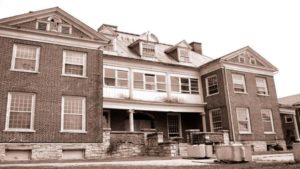
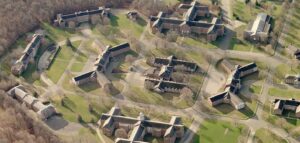
San Haven was not just a hospital building. Over time, it grew into a large medical campus. Historic accounts describe a complex with multiple buildings, gardens, walking paths, treatment spaces, and underground tunnels that helped staff and patients move between buildings during cold North Dakota winters. Ghosts of North Dakota documented the abandoned site before demolition and described a sprawling complex with crumbling structures, dry water features, overgrown stairways, and tunnels connecting the buildings.
For tuberculosis patients, life at San Haven could be strict, lonely, and physically difficult. Treatment during the early years often focused on:
- Fresh air
- Sunshine
- Rest
- Nutritious food
- Isolation from the general public
- Long hospital stays
- Surgical procedures in some serious cases
This was the medical reality before modern antibiotics made tuberculosis far more treatable. San Haven’s role began to change after antibiotic treatment became available. The North Dakota Newspaper Association reported that San Haven began using antibiotics on July 1, 1949, and by 1958 the number of beds being used for tuberculosis patients had declined greatly.
From Tuberculosis Hospital to State Hospital
As tuberculosis cases declined, San Haven shifted toward a different role. In 1957, a section of the sanitarium was remodeled for residents transferred from Grafton State School due to overcrowding. By the 1960s, San Haven was also serving people with developmental disabilities.
The official State Historical Society of North Dakota archive notes that in 1971 the North Dakota Tuberculosis Sanitarium was referred to as San Haven State Hospital. In 1973, San Haven became a division of the Grafton State School, although it continued treating tuberculosis patients for a time. That same year, North Dakota authorized the discontinuation of the tuberculosis sanitarium operation, with tuberculosis care moving increasingly to general hospitals and physicians chosen by patients.
This transition is important because many haunted stories about San Haven mix together two very different eras: the tuberculosis sanatorium years and the later state hospital years.
Controversy and Closure
By the late 20th century, large institutions across the United States were being questioned, criticized, and often replaced by community-based care models. San Haven was part of that larger shift.
The State Historical Society of North Dakota states that questions arose about adequate care for developmentally disabled residents because state resources did not cover all costs of maintaining the facilities. A 1980 lawsuit between the North Dakota Association for Retarded Citizens and the State of North Dakota led to court-ordered changes that modernized the custodial system and gave residents the opportunity to live in their own communities. San Haven State Hospital closed in December 1987.
The buildings were vacated by the state in 1989. In 1992, the Turtle Mountain Band of Chippewa Tribe purchased the San Haven properties from the State of North Dakota.
The Abandoned Years
After the closure, San Haven became one of North Dakota’s most talked-about abandoned places. Its remote location, hospital history, empty halls, broken windows, and decaying brick buildings made it a magnet for photographers, urban explorers, ghost hunters, and local legends.
The site also became extremely dangerous. The EPA later identified serious hazards at the complex, including asbestos-containing materials, lead, polychlorinated biphenyls, vandalized buildings, damaged structures, and debris. In 2021, the EPA described Building #9 as collapsing and structurally unsound, with friable asbestos posing a threat to human health.
In 2023, the EPA announced a $1 million Brownfields Cleanup Grant to the Turtle Mountain Band of Chippewa Indians. The funding was designated for cleanup of the main hospital building on 14 acres of the 600-acre San Haven complex. The EPA stated that the Tribe planned to reuse the area for housing, an RV park, a campground, and community revitalization.
By September 2025, Prairie Public reported that cleanup was continuing and quoted EPA Region 8 Brownfields Project Manager Ted Lanzano as saying the site looked very different from what many people remembered and that everyone was relieved to have such a safety hazard removed. Prairie Public also reported that plans included a heritage park, recreation, a memorial area, and possibly an events center.
In October 2025, KFYR reported that the San Haven State Hospital in Dunseith was gone, describing the former hospital as a more than 100-year-old piece of North Dakota history that some had called one of the state’s most haunted places.
Is San Haven Sanatorium Haunted?
San Haven’s haunted reputation comes from a mix of real suffering, long abandonment, dangerous ruins, and decades of local stories. It is easy to understand why the site developed a paranormal reputation. It was isolated, medical in nature, tied to tuberculosis deaths and long-term institutional care, and later left to decay.
That does not mean every story is proven. The most responsible way to cover San Haven is to separate documented history from reported paranormal claims.
Commonly reported ghost stories include:
- Sounds of babies crying
- Shadow figures moving through rooms
- Faces seen in windows
- Apparitions inside the abandoned buildings
- Orbs appearing in photographs
- A heavy or uneasy feeling around the grounds
Haunted Rooms America lists San Haven as one of North Dakota’s most haunted locations and notes reports of a crying baby, faces in windows, dark shadows, orbs, and apparitions. The same source also cautions that specific details are hard to pin down.
PANICd’s paranormal database lists San Haven as a documented haunted location with two logged paranormal claims. Its listed claims include people hearing babies crying and seeing apparitions around the windows of the abandoned building.
The Sounds in the Children’s Pavilion
One of the more grounded explanations for some eerie reports comes from Ghosts of North Dakota, whose photographers explored and documented the site. They described the atmosphere as spooky because of the abandonment, the overgrown grounds, and the stillness of the complex. They also noted that in the children’s pavilion, birds cackling two floors above could sound surprisingly similar to children’s voices.
That detail matters. It does not dismiss every paranormal claim, but it shows how an abandoned hospital can create frightening experiences through acoustics, animals, wind, broken doors, and expectation. At a place like San Haven, ordinary sounds could easily feel supernatural.
The Tragic Elevator Shaft Death
One of the most tragic modern stories connected to San Haven is not a ghost story. It is a real warning about the danger of abandoned buildings.
Ghosts of North Dakota noted that a teenager died after falling down an open elevator shaft at the abandoned site. PANICd also summarizes the incident, reporting that on October 13, 2001, a 17-year-old boy fell 40 feet down an elevator shaft and died, while a 16-year-old boy was injured in the same incident. According to that account, the teens had been exploring the facility for ghosts.
This tragedy became part of San Haven’s modern lore, but it should be treated first as a safety warning. The old hospital was not a controlled haunted attraction. It was an unstable, contaminated, abandoned medical complex.
Why San Haven Feels So Haunted
San Haven has nearly every ingredient that creates a powerful haunted legend:
- A remote setting in the Turtle Mountains
- A history tied to tuberculosis, isolation, and long-term illness
- Later use as a state hospital
- Decades of abandonment
- Underground tunnels
- Empty patient rooms
- Broken windows and collapsing structures
- Local memories passed down through families
- Real danger and tragedy after closure
The haunting stories are part of the site’s cultural afterlife, but the true history is already haunting without exaggeration. San Haven was a place where people went when they were sick, isolated, disabled, or unable to receive care elsewhere. Some recovered. Some did not. Some former residents and families remembered the place with sadness, while others remembered care, community, and complicated human experiences.
That complexity is what makes San Haven more than another abandoned asylum legend.
What Is Left of San Haven Today?
The San Haven that ghost hunters and photographers once knew is no longer the same place. EPA records show the site had serious environmental and structural hazards, and cleanup plans included demolition, disposal, and redevelopment.
KFYR reported in October 2025 that the former San Haven State Hospital had been demolished. Prairie Public reported days earlier that cleanup was still continuing and that the Tribe had plans for future reuse of the 600-acre property.
The ruins may be gone, but San Haven remains one of North Dakota’s most memorable haunted locations because its legend was built on real history. Its story includes public health, medical isolation, institutional care, abandonment, danger, redevelopment, and folklore.
Final Thoughts on San Haven Sanatorium
San Haven Sanatorium is often remembered as a haunted hospital, but it deserves to be remembered as more than a ghost story. It was North Dakota’s state tuberculosis sanatorium, a later state hospital, a controversial institution, an abandoned ruin, and now a site being reshaped after years of environmental hazards.
The paranormal reports are part of its modern reputation, especially stories of crying sounds, shadows, faces in windows, and apparitions. Still, the strongest part of San Haven’s story is its real past. The people who lived, worked, suffered, recovered, and died there are what give the place its lasting emotional weight.
Never trespass on property that is not yours without permission. Ghost hunting can be dangerous, especially around abandoned buildings, unstable structures, asbestos, lead, open shafts, and restricted land, so always use caution.
Sources
- State Historical Society of North Dakota, “San Haven State Hospital”
- North Dakota Newspaper Association, “San Haven: A history of saving lives from TB”
- U.S. Environmental Protection Agency, “EPA awards $1 million for cleanup and revitalization of abandoned hospital in the City of Dunseith, North Dakota”
Frequently Asked Questions
Where is San Haven Sanatorium located?
San Haven Sanatorium is located at 98th Street NE, Dunseith, North Dakota 58329.
Reader sightings
Nobody has reported anything here yet. If you have been, you would be the first.
Report your own visit to San Haven Sanatorium: The Haunted History of North Dakota’s Forgotten Tuberculosis Hospital
How haunted is this place?
Be the first to rate
Nearby Haunted Locations
- 1Sophia Eberlen and the Ghosts of Harvey Public LibraryNorth Dakota75mi
- 2Totten Trail Historic InnNorth Dakota81mi
- 3White Lady Lane North DakotaNorth Dakota104mi
- 4Shadows in the StacksNorth Dakota142mi
- 5The Gray Lady of Sims, a North Dakota Coal Town Gone QuietNorth Dakota154mi
- 6The Old Armory in WillistonNorth Dakota163mi

Leave a Reply